

### Blog Post:
Flooring installation costs are a crucial factor for any full-room upgrade, whether you’re managing a DIY project or hiring a professional. 2026 brings new price ranges, material choices, and lessons direct from real homeowners. Here’s how to avoid common budgeting mistakes and hidden headaches when comparing vinyl plank and hardwood floors for your home.
Key Takeaways
- LVP install averages $1.50 to $3.00 per sq ft, hardwood runs $6 to $18 (material plus labor).
- Beware of cheap flooring: issues with edge lift, moisture, and tricky repairs are often reported in consumer forums.
- True total cost includes annual maintenance ($0.30–$0.60 per sq ft), warranty details, and the expense of refinishing or replacing over time.
- Quick 2024 cost snapshot (headline numbers)
- How location and job complexity change those numbers
- Cheap flooring options consumers cite (and why people choose them)
- Common post-installation problems reported by homeowners
- What top competitors leave out (the long-term picture)
- Vinyl plank flooring vs hardwood — an ownership cost framework
- Warranty and installer questions to ask (red flags & must-asks)
- Practical budgeting checklist and cost-saving moves
- Quick sample budgets (use these ranges to estimate your job)
- Next steps / CTA for the reader (what to do after reading)
- FAQ
Quick 2024 cost snapshot (headline numbers)
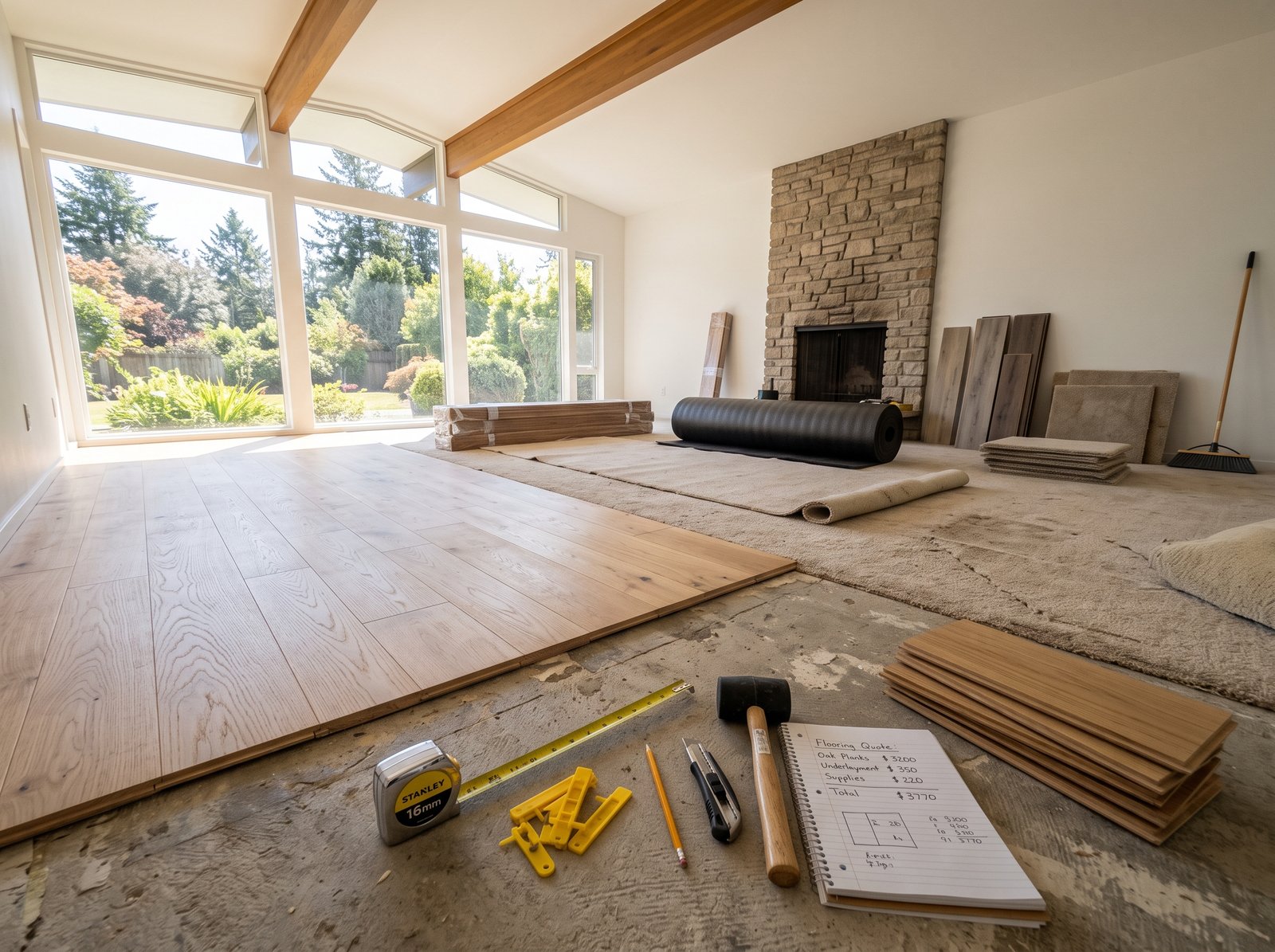
If you want to ballpark flooring installation costs quickly, here’s what you need for 2024. For click-lock luxury vinyl plank (LVP), most reputable sources report a professional install cost between $1.50 and $3.00 per square foot nationwide. High-demand metros with required subfloor prep can see totals push to $4 or $5 per sq ft. For hardwood, expect $6 to $18 per sq ft all-in: material runs $3 to $10 per sq ft, while labor ranges from $3 to $8 per sq ft. Premium woods and complex projects often reach the upper end. These figures align with national averages [source] and mirror consumer reports across the US. Always separate labor from materials on any quote.
How location and job complexity change those numbers
The price for installing your floor isn’t just about square footage and material. Labor rates swing by region: in the Pacific Northwest, Midwest, and South, you’ll often see costs at the lower end of national averages. In expensive metros like New York City or San Francisco, it’s easy for vinyl plank to exceed $4 per sq ft—especially when sub-floor prep or old floor removal is needed. For hardwood, using premium woods or working around stairs and tricky layouts will lift your total sharply. Always ask for line-item pricing on extras like transitions, stairs, and sub-floor leveling. If you’re considering other projects—such as window replacements or even a whole home generator—remember that regional labor patterns are similar across trades.
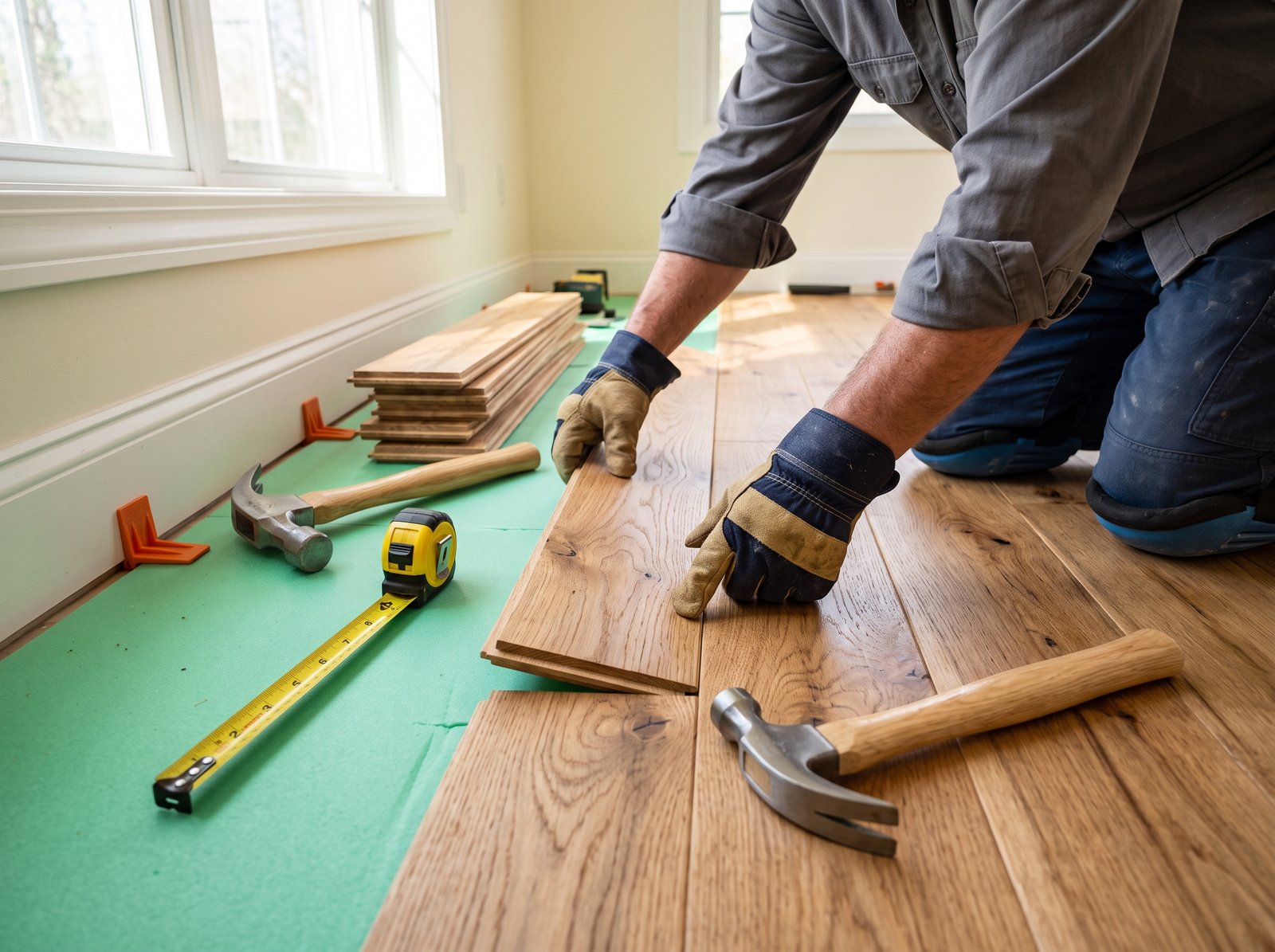
Job complexity isn’t just about aesthetics—it’s real money. Projects involving patterned layouts, angled rooms, undercutting door jambs, or multiple staircases almost always run above published averages. Don’t just rely on a per-square-foot rate; audit every room for unique details.
Cheap flooring options consumers cite (and why people choose them)
Forums and budget-network communities are full of homeowners sharing experiences with cheap flooring options. The most common picks: peel-and-stick vinyl tiles or sheet, basic laminate flooring, and low-grade sheet vinyl. These all come in under $2 to $3 per square foot for materials, sometimes even less at discount warehouses. They make sense in low-traffic, temporary rooms, or rental units needing a very quick facelift. The DIY “appeal” is strong, but long-term owners frequently cite regrets. Cheap products skip many of the protections and locking systems found in mid-tier and premium flooring—a key difference if you want long-lasting results. If you’re researching flooring for other rooms like a garage ADU conversion or for a new plant room, these cheap options may seem tempting but often require replacement in under a decade.
Common post-installation problems reported by homeowners
Homeowners frequently report the following headaches when they choose cheap flooring or rush installation:
- Edge lifting and seam separation—usually when adhesive fails or humidity spikes.
- Moisture problems—vinyl and laminate can bubble or warp in wet basements or kitchens.
- Repairs are tough—cheap floors without click-lock systems make single-board fixes nearly impossible. Often, entire sections need removal even for small dents or tears.
- Hidden maintenance—cheaper products soil and scratch more easily, requiring patching or full replacement sooner.
For example, on major flooring forums, users often post about vinyl plank “edges curling up” after a winter, or seams popping in older sheet vinyl where there’s traffic or tracked-in moisture. Cost-conscious buyers often regret skipping underlayment or not moisture-testing the slab, something you should never overlook.
If you’re working in a humid climate or considering a basement upgrade, prioritize moisture protection and confirm your warranty covers damage from water—many do not.
What top competitors leave out (the long-term picture)
Most online guides on flooring installation costs focus only on upfront pricing. In reality, it’s the long-term expense that separates smart projects from costly mistakes:
- Annual maintenance: Most floors need $0.30–$0.60 per sq ft per year for cleaning, minor repairs, and—if hardwood—periodic refinishing or resealing. Ignore this, and costs will pile up fast.
- Warranties: Standard vinyl plank flooring comes with a 10–20 year wear warranty, but many exclude water damage or issues caused by improper installation. Hardwood warranties run 5–25 years but often only cover factory finish—not refinishing cycles or major dents.
- Lifecycle costs: Refinishing hardwood usually costs $3–$8 per sq ft. Vinyl planks, especially basic models, typically require complete replacement every 15–20 years. These lifecycle costs are rarely mentioned in surface-level cost guides, but they can easily double your long-term spend (source).
Always demand full warranty documentation before buying—and budget realistic annual upkeep. For more on how long different materials last in real homes, see our deep-dive on SPC versus LVP flooring.
Vinyl plank flooring vs hardwood — an ownership cost framework
To make a truly fair choice, compare vinyl plank flooring vs hardwood over both the short- and long-term.
| Expense/Feature | Luxury Vinyl Plank (LVP) | Hardwood |
|---|---|---|
| Install cost (2024) | $1.50–$3.00 per sq ft | $6–$18 per sq ft (material $3–$10 + labor $3–$8) |
| Expected lifespan | 15–20 years | 30–100 years (with refinishing) |
| Major maintenance | Replace at end of lifecycle | Refinish every 10–20 years ($3–$8 per sq ft) |
| Annual maintenance | $0.30–$0.60 per sq ft | $0.30–$0.60 per sq ft |
| Warranty typical | 10–20 years (may exclude water/improper install) | 5–25 years, often finish only |
| Weak points | Moisture, denting, repair complexity | Scratching, denting, higher install cost |
Warranty and installer questions to ask (red flags & must-asks)
Before you hire an installer or buy flooring, arm yourself with these exact questions:
- What is the exact length of the manufacturer’s warranty? Is it transferable?
- Does the warranty exclude water damage or improper installation? (For LVP, this is common.)
- Is sub-floor preparation included, or will there be additional costs?
- What installation method will be used for transitions and stairs?
- For hardwood: Is refinishing covered or recommended? At what interval?
Red flags seen in forum complaints include: missing warranty docs, vague language about “wear only” coverage, installer refusal to clarify who pays for moisture protection, and quotes that blur labor, material, or prep. Always demand clarity. If you spot any of these signs, walk away or negotiate hard.
Practical budgeting checklist and cost-saving moves
- Measure your actual room area—add 10 percent for waste and cuts.
- Line-item your quote: include sub-floor prep, removal of old flooring, all transitions, matching stair work, undercutting door jambs, and complex layout allowances.
- Seek click-lock LVP or higher-grade laminate for easier floating installs and less labor cost (install typically $1.50–$3.00 per sq ft).
- Consolidate multiple rooms for better contractor discounts.
- Avoid the cheapest products—long-term failure outweighs upfront savings.
Smart upgrades like cabinet refacing or an easy-apply peel-and-stick backsplash similarly show that running the real numbers beats blindly chasing the lowest initial cost.

Quick sample budgets (use these ranges to estimate your job)
Wondering what your actual spend might look like? Here are three examples using 2024’s most realistic installation cost ranges:
- Small room (200 sq ft): LVP: $300–$600; Hardwood: $1,200–$3,600
- Medium room (500 sq ft): LVP: $750–$1,500; Hardwood: $3,000–$9,000
- Large room (1,000 sq ft): LVP: $1,500–$3,000; Hardwood: $6,000–$18,000
Always request breakdowns and written estimates so you can compare apples to apples.
Next steps / CTA for the reader (what to do after reading)
Start by measuring your space and listing any special needs. Get three written quotes—ensure they separate material, labor, and prep. Demand full warranty documentation and check trusted forums for reviews of the product codes you’re considering. Set aside an annual maintenance budget of $0.30–$0.60 per sq ft. For hardwood, budget for refinishing ($3–$8 per sq ft per cycle); for vinyl plank, plan a full replacement every 15–20 years. If you want more practical home budgeting guides, check out our resources on adding a mudroom or making a small bathroom remodel work on a strict budget.
FAQ
What’s the cheapest way to install decent flooring in 2024?
Opt for click-lock vinyl plank or mid-grade laminate with a good locking system. These minimize installation labor and long-term repair headaches compared to the lowest-cost peel-and-stick products.
Are flooring installation costs higher in big cities?
Yes, metro labor is much higher. In places like NYC or San Francisco, expect LVP install rates closer to $4–$5 per sq ft due to labor, logistics, and disposal costs. Rural and suburban markets trend lower.
How often do I need to refinish or replace my floor?
Plan to refinish quality hardwood every 10–20 years ($3–$8 per sq ft per cycle). Vinyl plank typically requires full replacement every 15–20 years, as patch repairs can be tough on cheap models.
Do I need to prep my sub-floor before flooring install?
Absolutely. Ignoring sub-floor prep is a leading cause of failure (lifting, squeaks, moisture). Always clarify with your installer if prep is included in your quote.
Can I install flooring myself to save money?
DIY is possible for click-lock LVP or simple laminate with the right tools and patience. Expect to invest significant time, and double-check all substrate prep. For hardwood, pro install is strongly recommended unless you already have tools and experience.