

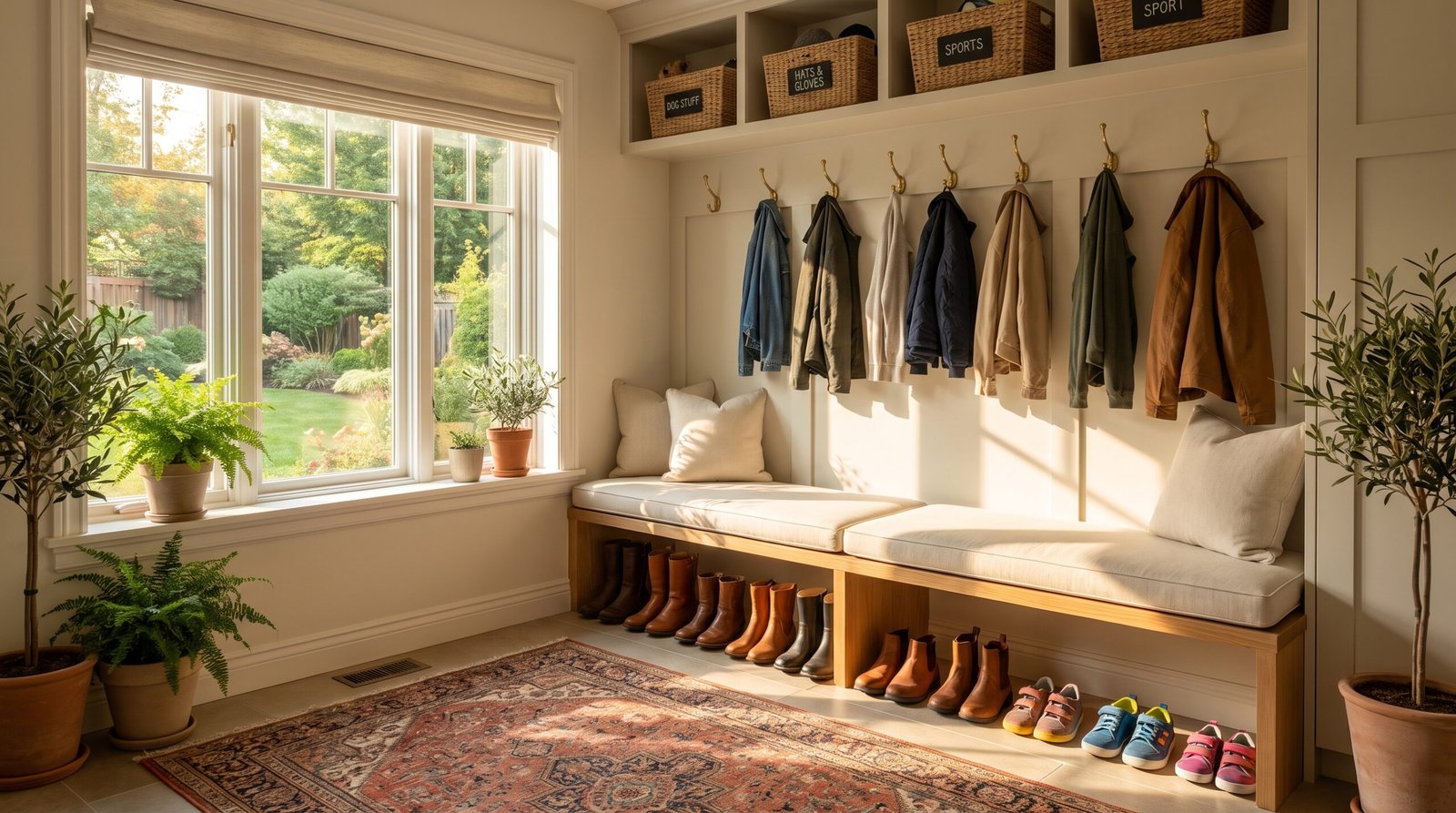
Ready to reclaim your cluttered entrance? Mudroom addition ideas can transform even the smallest, most awkward entryway into a functional, attractive landing zone that stands up to family life—and fits your budget. If you want real numbers, proven layouts, and material choices that do not warp or stain, you’re in the right place.
Key Takeaways
- Expect to spend $6,000–$20,000 for a typical mudroom project, or just a few hundred for small DIY updates.
- Bench sizing and clearance rules can prevent entryway bottlenecks—standard benches are 36–48″ long and 15–18″ deep.
- Choose moisture-resistant finishes like marine-grade plywood or powder-coated metal to avoid future repairs.
- Quick snapshot — cost, timeline and ROI for mudroom projects
- Step-by-step: Budgeting, layout and material choices
- Advanced analysis & common pitfalls
- Conclusion
- Frequently Asked Questions
Quick snapshot — cost, timeline and ROI for mudroom projects
Adding a mudroom—whether it’s a mini-entry update or converting a laundry nook—solves space, mess, and wear that small entries face. Nationwide, most mudroom remodels cost between $6,000 and $20,000 with the average falling around $15,000. At least $3,500–$6,000 goes to labor, and built-in benches or lockers run $1,250–$4,000. DIY paint or prefab upgrades often cost less than $1,000 and wrap up in 2–4 weeks, while fully custom jobs can stretch 4–6 weeks. ROI for mudroom/entry-bench upgrades usually ranges from 60–70% at resale—a solid result, especially in homes where organized storage is often a buyer’s top request. These mudroom addition ideas help address storage bottlenecks and protect home value in a practical way.
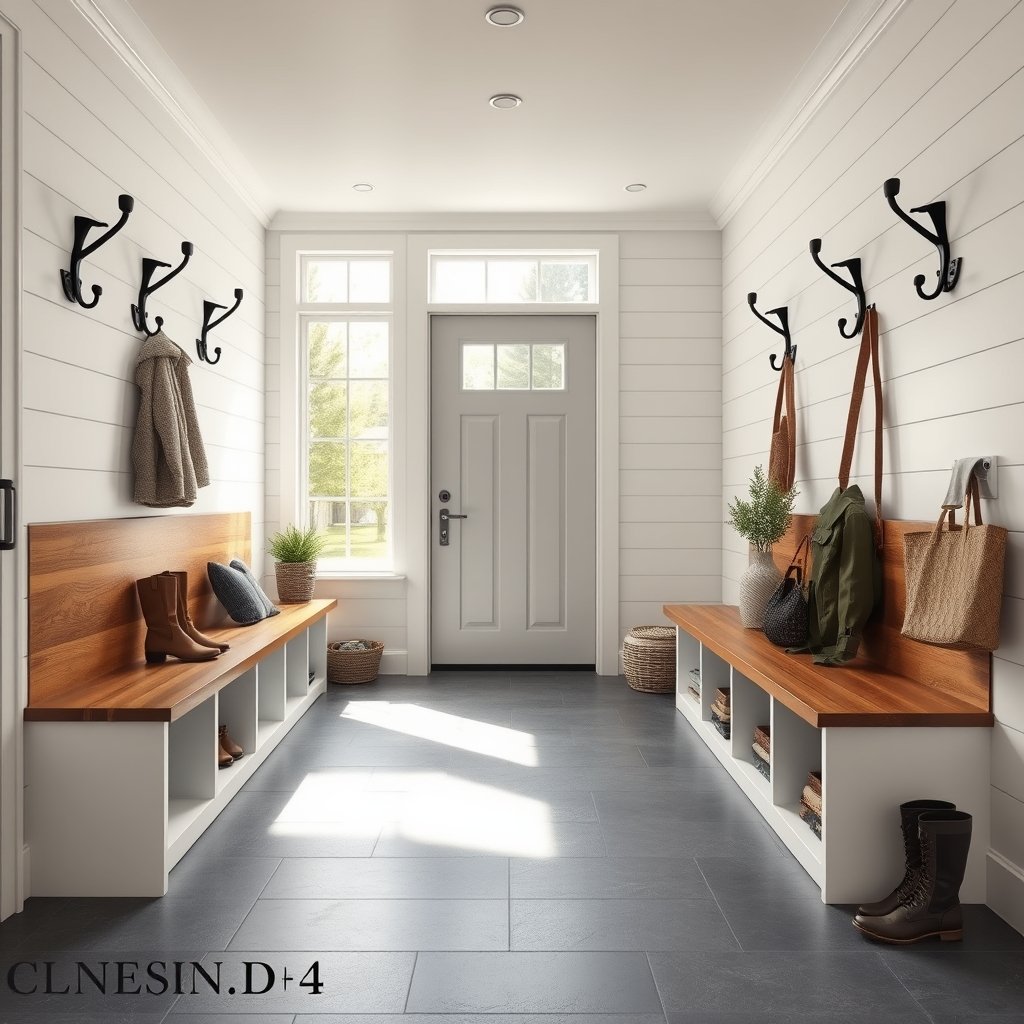
Step-by-step: Budgeting, layout and material choices
To design a mudroom that solves your entryway pain points and fits your local budget, follow these action steps:
-
Set your budget with regional context.
Check local multipliers—Midwest projects are often 10–15% under national averages, Southeast 5–10% less, while the West Coast and Northeast run 10–20% higher. Use the averages as a start and adjust for your ZIP. -
Measure your entryway and confirm layout minimums.
For a bench to work, plan at least 36–48″ long, 15–18″ deep, and 18–20″ high. Leave at least 36″ aisle clearance for main walkways. Cubbies should be 12–18″ wide—enough for a bag or boots. -
Pick the right bench and storage configuration.
In narrow foyers, a wall bench with cubbies below and hooks above saves space. For corners, an L-shaped lift-top bench maximizes hidden storage. Larger entries allow for full-height lockers or a run of cabinets (expect $500–$1,200 per linear foot for custom work). -
Select moisture-resistant materials.
Marine-grade plywood, sealed hardwoods, powder-coated metal, and porcelain or tile flooring stand up to wet shoes and snow. Avoid standard MDF or unsealed woods, which warp. -
Create a maintenance plan.
Wipe surfaces daily in wet weather, check hardware monthly, and reseal or touch up paint annually. This prevents staining, rust, and warped panels. -
Decide what to DIY and when to hire a pro.
Painting, adding hooks, installing floating shelves, or peel-and-stick tile can be tackled for under $1,000. But hire a contractor for built-in millwork, any electrical or plumbing, or if you need permits. Labor often makes up $3,500–$6,000 of a pro job.
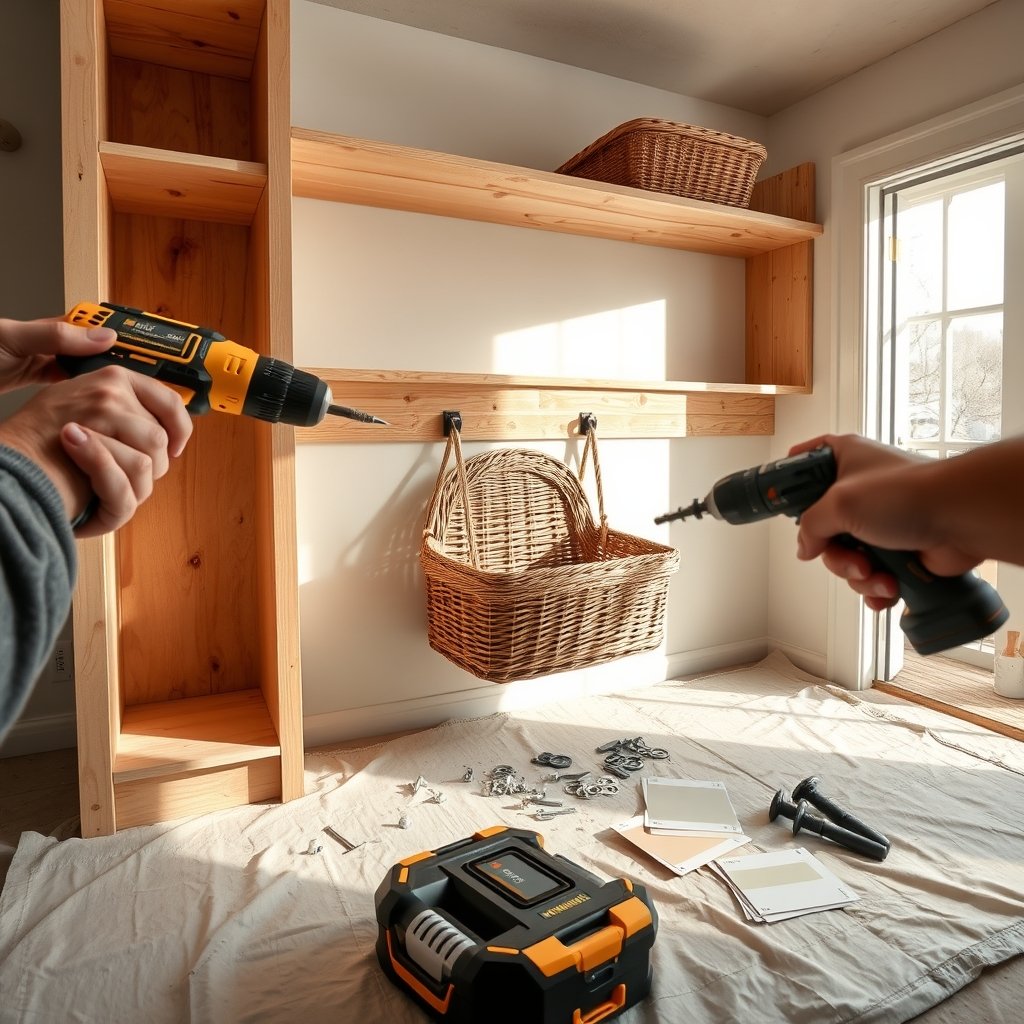
For more on maximizing storage, see our garage storage system DIY guide for crossover concepts in durable cabinetry.
Material costs shift fast, so always get three contractor quotes. Use a printable sizing checklist to avoid expensive mistakes and see how the project impacts potential home equity loan decisions.
Looking for inspiration for other entry-area upgrades? Explore our small bathroom remodel on a budget guide for more budget strategies that work for mudrooms too.
Advanced analysis & common pitfalls
Even good mudroom addition ideas fall short if you miss budgeting or skip durability factors. Here’s where most go wrong—and how to prevent regret:
| Common Mistake | Impact | How to Avoid |
|---|---|---|
| Under-budgeting due to regional price differences | Run out of funds mid-project or forced to use lower quality materials | Apply regional adjustment: Midwest (–15%), Southeast (–10%), West Coast/NE (+20%) |
| Cramped clearances and poor traffic flow | Benches block doors, can’t open cubbies, entry feels tighter | Stick to 36″+ aisles, 15–18″ bench depth; mock up with tape |
| Using MDF or unsealed woods in wet entryways | Panels warp, stain and paint peels within months | Opt for sealed hardwood, marine plywood, or powder-coated metal |
| Forgetting to integrate laundry, HVAC, or ADA clearances | Expensive rework if laundry or vents can’t be reached | Review adjacent system layouts before demo |
| Skipping permits or not checking local codes | Fines, halted work, insurance issues at resale | Check with your building department—permits range $125–$3,000 |
| Over-customizing in starter neighborhoods | ROI drops, can’t recover costs at resale | Keep total project under 10% of home value |
Neglected maintenance is the #1 reason benches warp, stains set in, or hinges corrode. Make cleaning quick by choosing easy-wipe surfaces and laying down washable mats.
Lastly, many guides skip the details on integrating universal design or adjacent systems: if you have a laundry, HVAC vent, or need ADA width, confirm your design fits before finalizing your plan. For larger home upgrades, review our garage conversion ADU guide—multifunction entryways often impact rest of the home.
Cost and Value—What Really Adds Resale Appeal?
Entry door and garage door upgrades top ROI charts at almost 190% per this analysis, but functional mudrooms still recoup 60–70% if you stick to practical budgets and avoid overbuilding for the area. Spend for durability and organization, not luxury frills.
Conclusion
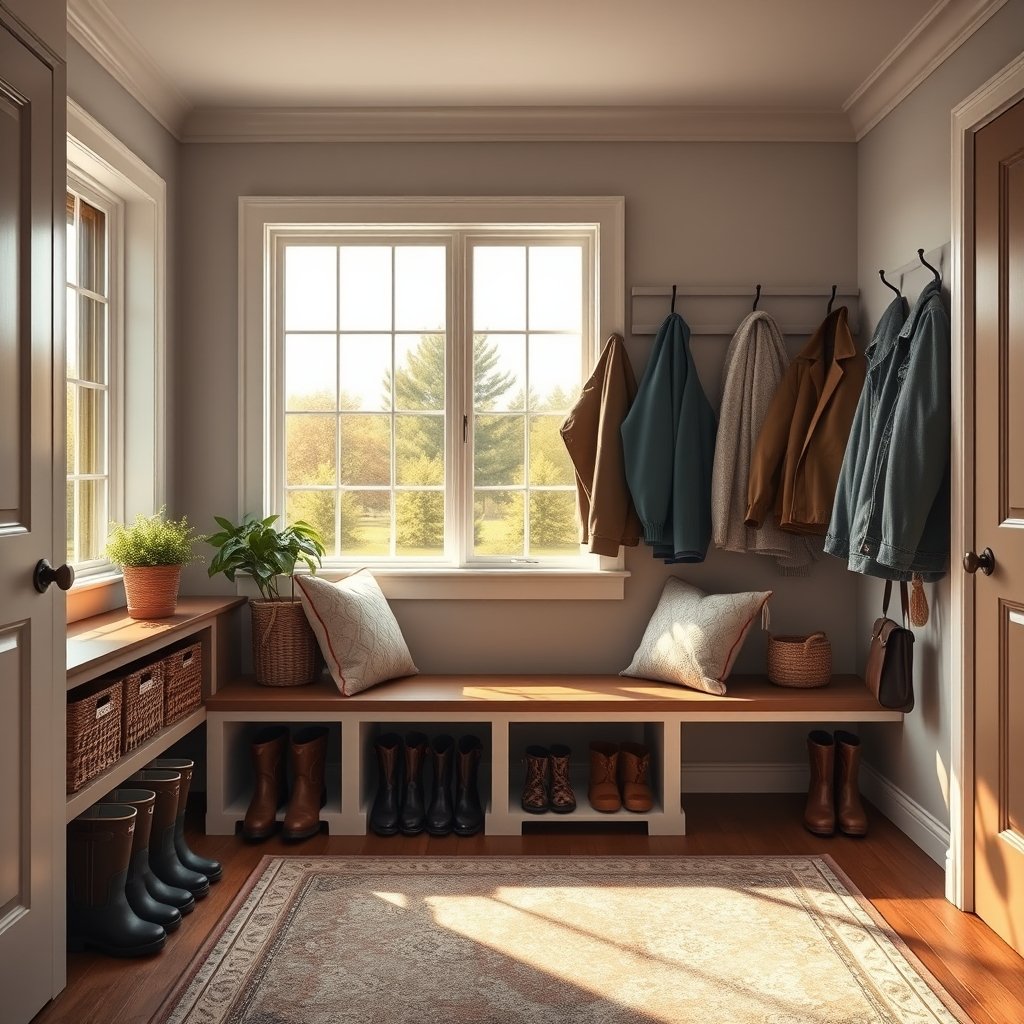
For every busy homeowner with a cramped entrance, smart mudroom addition ideas can be the difference between daily chaos and stress-free order. Start with proven layouts, size formulas, and local cost benchmarks. Choose finishes that last and sketch your plan to scale. Then get three bids or, for smaller updates, grab supplies and tackle a weekend DIY. Want fast wins? Download our printable layout cheat-sheet and put your mudroom plan into action today.
Next, explore energy savings in your home upgrade journey—try our guide to smart thermostat returns or see the ROI of window upgrades in our window replacement cost guide.
Frequently Asked Questions
How much does it cost to add a mudroom in 2024?
Most mudroom additions cost between $6,000 and $20,000, with national averages around $15,000 including both materials and labor. Small DIY refreshes (like paint and hooks) can be done for $1,000 or less.
What is the standard size for a mudroom bench in a small entry?
Standard benches are 36–48 inches long, 15–18 inches deep, and 18–20 inches high. Always allow at least 36 inches of aisle space in front for walking past.
What materials are best for a mudroom bench with storage?
Marine-grade plywood, sealed hardwood, and powder-coated metal are moisture-resistant and durable. Avoid MDF and low-cost laminated particleboard—they warp and stain quickly.
Which mudroom upgrades add the most resale value?
Functional built-in benches, lockers, and easy-clean storage are most valued by buyers, typically recouping 60–70% of their cost. Entry doors and garage doors earn even higher ROI, so coordinate upgrades for maximum impact.
Do I need a permit for a small mudroom entry upgrade?
Paint, surface hooks, and simple benches usually do not require a permit, but adding plumbing, electrical, or structural changes will—check with your municipal building department before starting.