

### Blog Post:
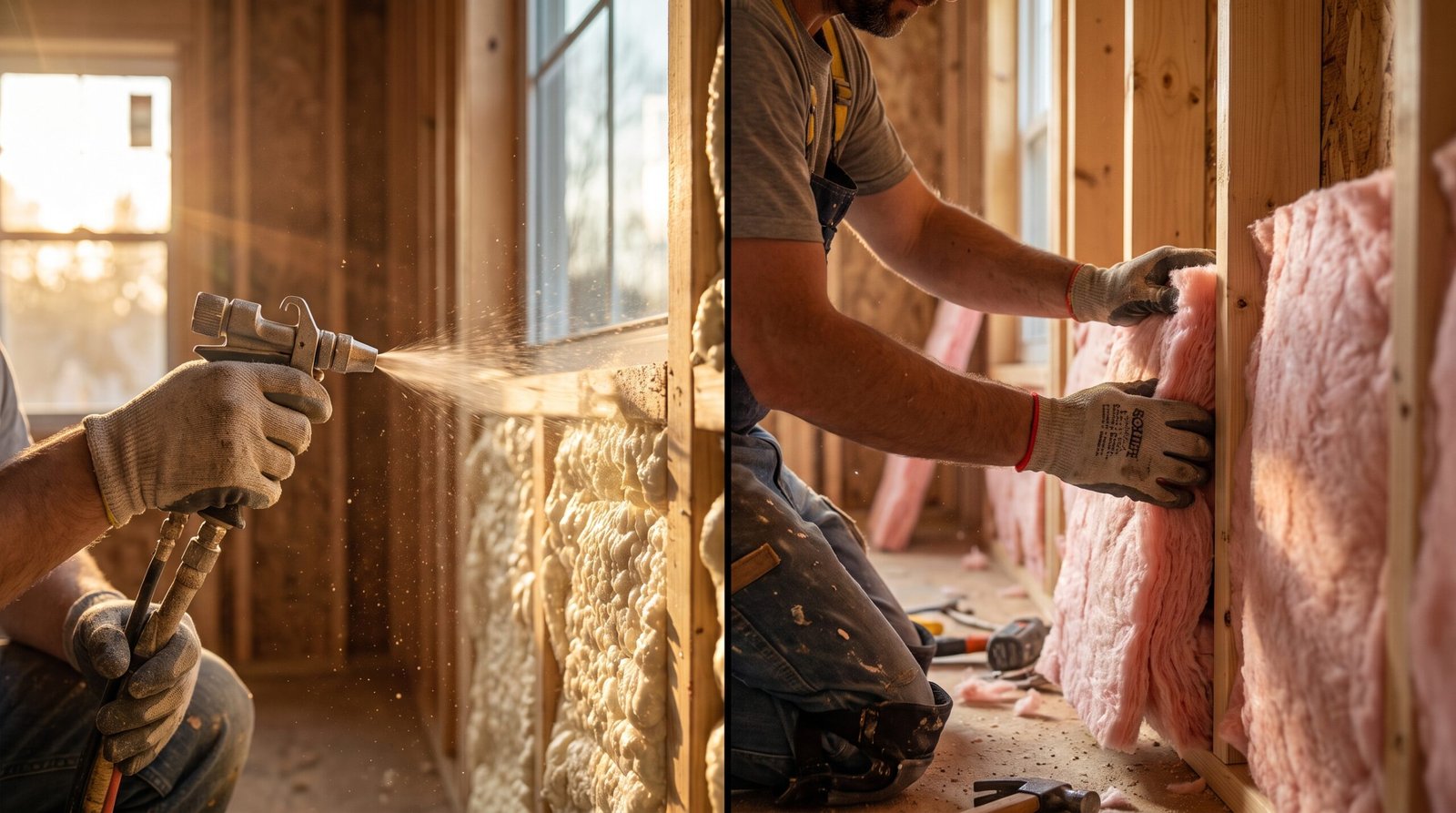
Foam insulation vs fiberglass is one of the most important choices homeowners make for attic upgrades—ultimately impacting your comfort, energy bills, and even potential for attic mold. If you’re planning a project and want a realistic, purchase-ready comparison, read on for a no-nonsense breakdown of cost, performance, and the exact pitfalls to watch out for before you sign a contract.
Key Takeaways
- Spray foam costs 2-6x more installed than fiberglass ($1.50–$6.00/sq ft vs $0.30–$1.00/sq ft), but delivers superior air-sealing and R-value per inch [Research].
- Closed-cell foam is best for air and vapor control; open-cell needs careful moisture management. Fiberglass is affordable but vulnerable to settling, moisture, and airflow leaks.
- Choose based on budget, risk, and attic type—get bids, demand detailed install QA, and insist on post-install checks to avoid costly headaches.
- Quick take — foam insulation vs fiberglass (TL;DR recommendation)
- Step-by-Step Homeowner Decision Guide
- Advanced Analysis & Common Pitfalls
- Conclusion & Next Steps
- FAQs
Quick take — foam insulation vs fiberglass (TL;DR recommendation)
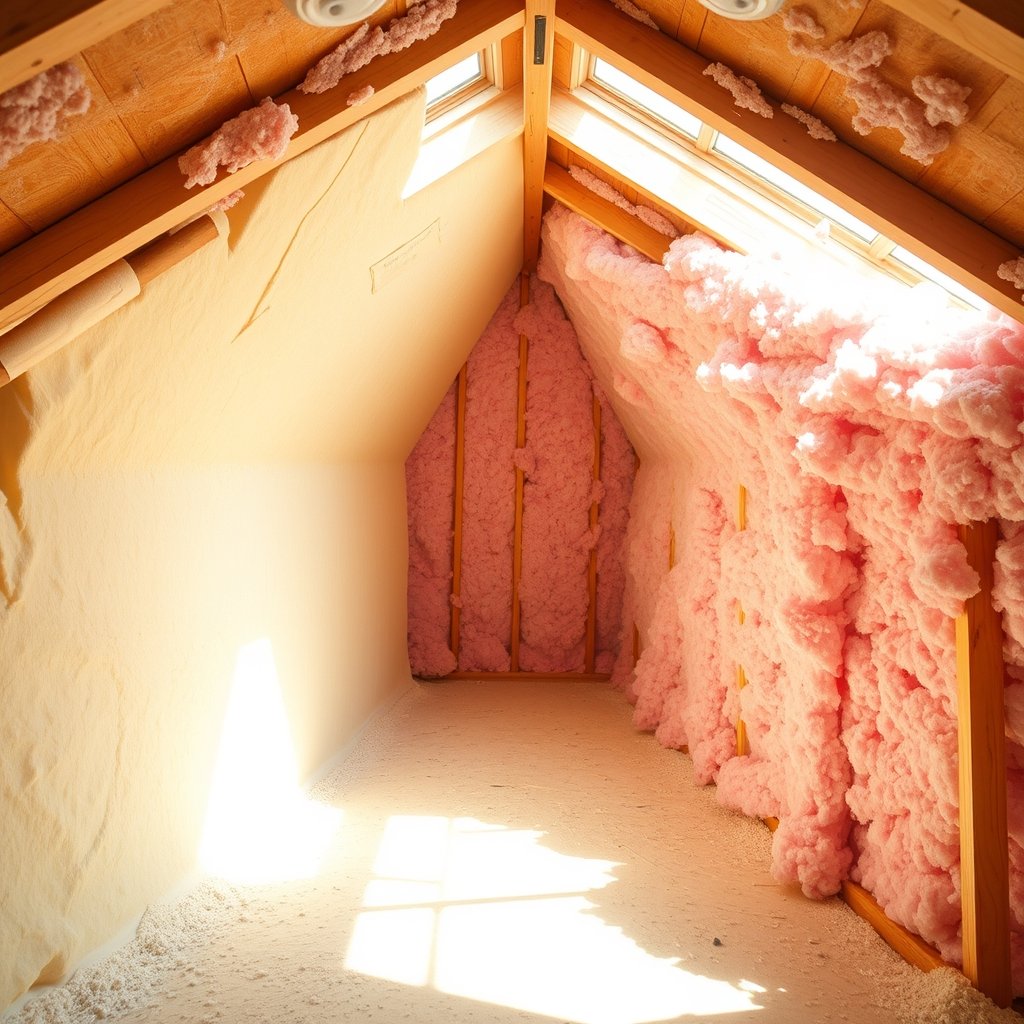
Both spray foam and fiberglass are well-established attic insulation methods, but they serve very different needs. Spray foam—especially closed-cell spray foam—offers the best air-sealing, highest insulation R-value per inch (R-5.5 to R-7.0), and best moisture defense but at a much higher price ($1.50–$3.50/sq ft for open-cell, $2.50–$6.00 for closed-cell installed). Fiberglass batts or blow-in insulation costs significantly less ($0.30–$1.00/sq ft) and is suited for large, accessible attic areas if you’re budget-conscious, but it’s more vulnerable to leaks, moisture, and settling. For new construction, deep retrofits, or moisture-prone attics, closed-cell spray foam wins for long-term performance. For most budget attic upgrades, a well-installed fiberglass or a hybrid approach delivers fair value with some airflow tradeoffs [Research].
Step-by-Step Homeowner Decision Guide
Follow these steps to make a confident choice and ensure your attic insulation gives you the performance and value you expect.
- Assess your attic: Check if your attic is vented or unvented, the current insulation condition, and whether you’ve seen any water stains, drafts, odors, or signs of mold.
- Get real estimates: Gather quotes for fiberglass, open-cell spray foam, closed-cell spray foam, and hybrid systems. Price your attic area (e.g., 1,000 sq ft): fiberglass likely totals $400–$1,000; open-cell foam $1,500–$3,500; closed-cell foam $2,500–$6,000 installed [Research].
- Factor in regional cost differences: If you live in a high-cost metro (NYC, Bay Area), expect to pay at the higher end. Midwest and Southeast homeowners may pay 15–25% less.
- Balance your goals: If your priority is air-sealing and long-term moisture protection (especially in humid or conditioned attics), closed-cell spray foam is best. Budget-minded, big open attics often do fine with new blown-in fiberglass plus thorough air-sealing prep. Open-cell foam strikes a balance in dry, conditioned attics—but demands a robust moisture strategy.
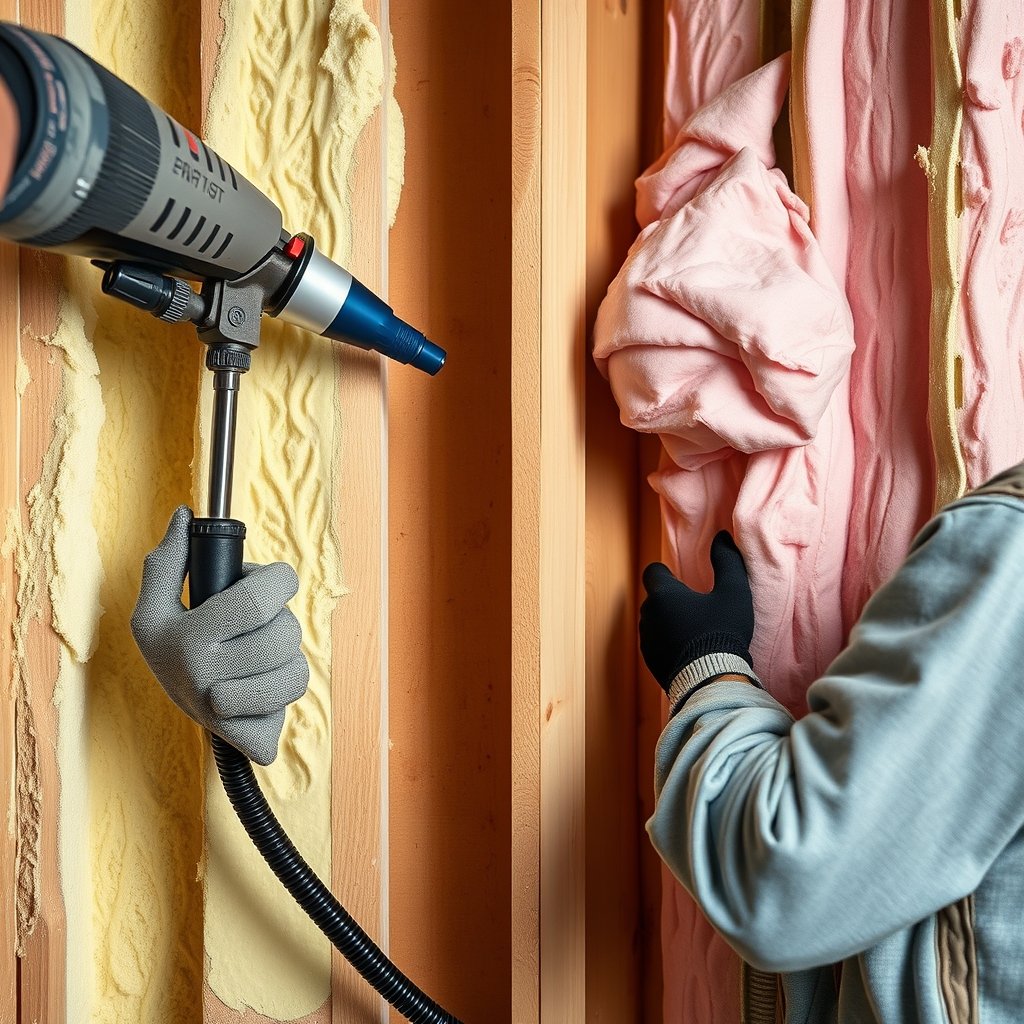
- Decide on DIY involvement: Homeowners can often do much of the prep—sealing attic penetrations, installing baffles, removing debris—but leave spray foam application and large blown-in jobs to the pros for safety and warranty protection. Hybrid approaches (e.g. closed-cell at rim joists, fiberglass elsewhere) can optimize cost and performance, as shown in real-world contractor examples.
- Ask tough contractor questions: Don’t just accept the lowest bid. Ask for past attic mold/odor case histories, proof of insurance, detailed material specs, and safety guarantees. See our contractor checklist in the Analysis section.
- For more tips on whole-house upgrade projects, check out our guide on garage conversion ADUs to optimize space and energy efficiency.
- Explore energy savings further with our detailed smart thermostat payback guide.
Advanced Analysis & Common Pitfalls
Here’s how foam insulation vs fiberglass choices play out in the real world — with stats, tradeoffs, and what can go wrong.
Installed Cost Comparison
Spray foam costs significantly more upfront than fiberglass. According to market studies, open-cell spray foam averages $1.50–$3.50 per square foot installed; closed-cell ranges $2.50–$6.00. Traditional fiberglass batt or blown-in typically falls between $0.30–$1.00 per square foot, sometimes even less in the Midwest or Southeast. On a 1,000 sq ft attic, that’s $400–$1,000 for fiberglass versus $1,500–$6,000 for spray foam [Research].
| Material | Installed Price ($/sq ft) | R-value per Inch | Moisture Handling | Best For |
|---|---|---|---|---|
| Fiberglass Batt / Blown-in | $0.30–$1.00 | ~R-3.2–3.8 | Poor if wet (holds water, can mold) | Big attics, budget jobs |
| Open-cell Spray Foam | $1.50–$3.50 | ~R-3.6 | Permeable; needs vapor barrier in humid areas | Retrofits, climate zones with controlled humidity |
| Closed-cell Spray Foam | $2.50–$6.00 | R-5.5 – 7.0 | Acts as vapor retarder; high moisture resistance | Conditioned attics, small spaces, high-risk areas |
Performance, Air Sealing, and Moisture
Closed-cell foam is unmatched for R-value and air sealing in tight spaces or around penetrations; it’s also dense (2–3 lbs/ft³) and gives some added strength. But, poor install jobs can leave gaps, leading to mold behind the rigid foam if moisture sneaks in. Open-cell foam expands more (fills cavities easily) and offers good air sealing, but is vapor-permeable and will pass attic humidity unless coupled with a proper vapor barrier. Fiberglass is inert and non-combustible but provides little air-tightness and will sag or settle significantly over years. Wet fiberglass can compress, grow mold, and lose its R-value.
Explore attic air quality checks with our air quality monitor for home guide, a smart pairing for any insulation upgrade.
True Homeowner Pain Points
- Open-cell foam: Main risk is moisture infiltration and attic condensation if no vapor barrier is used. Many homeowners in humid climates report persistent humidity issues unless the whole attic strategy is airtight [Research].
- Closed-cell foam: Praised for robust moisture defense, but homeowners cite odor/off-gassing in the first weeks if mix ratios are off. Cracks or hard spots due to poor install can let moisture in — and costly mold can grow unseen behind the rigid foam [Research].
- Fiberglass: Most common complaints are sagging, settling, animal intrusion, fiber irritation during install, and water damage. Once wet, fiberglass can compress, inviting mold and greatly reducing attic energy savings.
Installation & Quality Control Red Flags
- Spray Foam: Lingering odors are usually due to bad on-site chemical mixing or spraying in poor weather. Uncured foam or damp mix can release VOCs for weeks. Insist on material data sheets and mix verification.
- Fiberglass: Crews may under-fill or compress batts to save time, leaving gaps near joists, lights, or soffits; missing air/vapor barriers allows attic moisture leaks and drafts.
- Both: Always ask for a post-install inspection (thermal imaging, smoke test, or blower door). Avoid installers who won’t put materials, R-values, and QA steps in writing.

Cost vs Performance Decision Checklist
- Small-budget, large attic: Fiberglass batt or blown-in—installed for as little as $0.40/sq ft (regions like Midwest).
- Space-constrained, maximum R-value, moisture fears: Closed-cell spray foam is worth the high cost—for unvented attics, improved moisture resilience, or rim joist upgrades.
- Conditioned attic and can manage humidity: Open-cell foam can work, but only with expert vapor barrier and air-sealing strategy.
- Hybrid value: Use closed-cell spray foam for at-risk areas (rim/roofline), blown fiberglass elsewhere. Many contractors promote this approach for balance.
Compare other DIY-friendly house upgrades, like our cost-driven peel and stick backsplash or smart garage storage systems to stretch your renovation dollars further.
Conclusion & Next Steps
Choosing between foam insulation vs fiberglass boils down to your budget, attic size, risk tolerance, and moisture history. Spray foam delivers superior air and moisture control—especially closed-cell—but costs 2–6 times more than fiberglass. For many U.S. homeowners, a hybrid strategy (closed-cell at rim, fiberglass elsewhere) is cost-effective and robust. To protect your investment:
- Get at least three competitive bids—insist on detailed cost breakdowns by insulation type and R-value.
- Request documented installation QA, past mold/odor case references, and explicit warranty terms.
- Schedule a post-install inspection (including thermal imaging or infrared) before paying in full.
Ready for more upgrades? Get the inside scoop on smart home energy savings in our smart thermostat payback guide or explore top trends in solar outdoor lighting.
FAQs
Will spray foam completely stop attic mold?
No insulation can guarantee zero attic mold, but closed-cell spray foam is much less likely to allow moisture buildup when properly installed. Still, bad jobs (gaps, poor mixing) can trap water and hide mold (Research).
Does spray foam insulation off-gas harmful odors?
Some initial off-gassing (smell or chemical odor) is normal in the first 1–3 days. Lingering odors almost always mean improper mixing, curing, or spraying in unsuitable conditions. Insist on a test area and clear ventilation strategy.
How thick should attic insulation be for target R-value?
Closed-cell foam delivers R-5.5–7.0 per inch; open-cell is R-3.6/in. In northern U.S. attics, R-38 to R-49 is typical: that’s 7–8 inches closed-cell, 13–14 inches fiberglass, or 11–14 inches open-cell foam (always check code/city guide).
Can I add fiberglass on top of my old insulation?
If your old insulation is dry and mold-free, you can layer blown-in fiberglass on top—just avoid compressing batts or covering moisture traps. Always address attic air sealing/venting first.
What mistakes should I watch for in spray foam quotes?
Avoid bids that skip verification of chemical mix ratios, ventilation, or air/vapor barrier steps. Watch for vague labor or QA language. Professional references and full insurance are nonnegotiable for any attic spray foam job.
—