

### Blog Post:
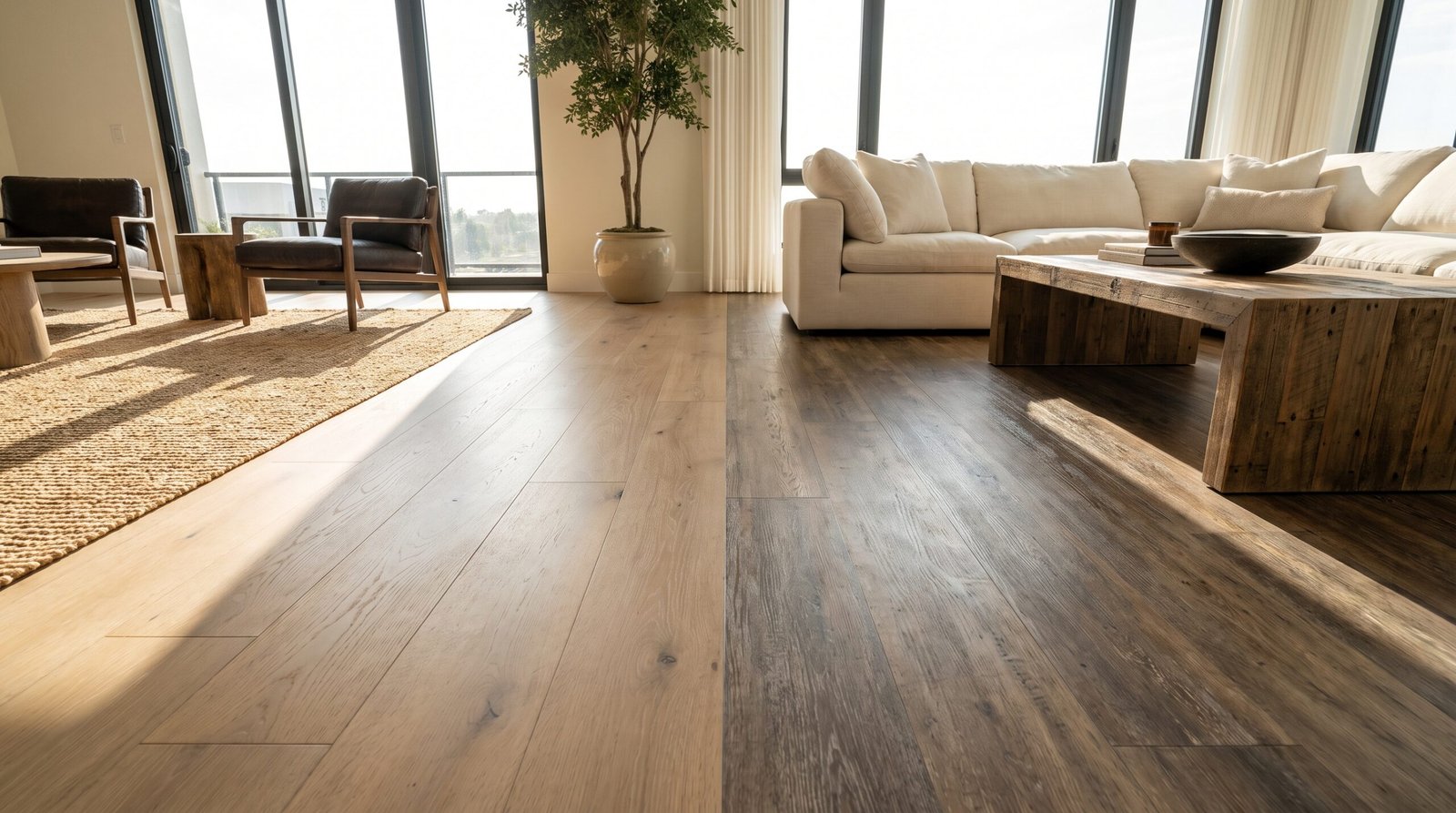
SPC flooring vs LVP: If you’re weighing which waterproof vinyl plank truly fits your basement remodel or whole-home budget, installed cost, warranty coverage, and moisture resistance must lead your decision. This guide drills into real costs, what all those “lifetime” warranties mean, brand examples, and the exact hard questions contractors and DIYers should ask before ever signing a flooring quote.
Key Takeaways
- SPC generally wins for basements and high-moisture remodels due to a waterproof, stone-based core and predictable warranty coverage.
- Installed costs (2025): SPC runs $5–$10 per sq ft, LVP $3.5–$9 per sq ft — always budget for subfloor prep and moisture mitigation for basements.
- Always request detailed warranty PDFs and ASTM water-resistance test results from retailers or brands to avoid gaps and exclusions.
- Quick Executive Summary — SPC flooring vs LVP (one‑minute take)
- Market Size & 2024–2025 Trends that Matter to Buyers
- Installed Cost Comparison — SPC vs LVP (per sq ft, including underlayment)
- Detailed Cost Breakdown Template (what to budget line‑by‑line)
- Warranties & Best SPC/LVP Brands — what the fine print usually looks like
- Basement-Specific Guidance — waterproof flooring for basement
- Top Real-World Homeowner Pain Points in Basements (and fixes)
- What Hard Data Buyers & Guides Currently Lack — tests and studies to demand
- Long-Term Performance & Durability — what warranties don’t tell you
- Installation Considerations & When to Hire a Pro (subfloor prep, moisture mitigation)
- Decision Matrix — pick SPC vs LVP by scenario and budget
- Quick Cost-Saving Tips & Negotiation Points
- FAQ — short answers to the most common homeowner questions
- Sources & What to Ask Retailers/Brands (template checklist)
Quick Executive Summary — SPC flooring vs LVP (one‑minute take)
The global vinyl floor market is massive (about $43.6B in 2025, projected $61B by 2031), and both SPC (stone-plastic composite) and LVP (luxury vinyl plank) dominate because they promise “waterproof” durability at a fraction of the cost of hardwood. For basement remodels or below-grade spaces, SPC’s ultra-dense stone core and dimensional stability offer best-in-class waterproofing and resistance to temperature swings. LVP remains an option for above-grade, lower moisture spaces — especially for those on a strict budget. Installed totals: SPC is $5–$10 per sq ft (includes many with pre-attached underlayment) while basic LVP can drop to $3.5–$6, although premium LVP overlaps SPC’s range. If you want maximum durability, peace of mind against water intrusion, and clear warranty terms, SPC typically wins as the practical choice for modern basements.
Market Size & 2024–2025 Trends that Matter to Buyers
Global appetite for vinyl flooring — especially rigid core products — is still on the upswing. In 2025, products like SPC and LVP account for most vinyl flooring sales, with major home centers and large brands (MSI, Novalis, HTMX, COREtec) waging price wars that push average selling price (ASP) for SPC from $1.85 (2021) to ~$1.60 per sq ft at the distributor level (source). What matters to homeowners: volume buying drives costs down, but it can also mean shorter product cycles and shifting warranty practices. Buyer takeaway: Big-box brands offer the lowest price points, but always verify what’s actually included (underlayment, warranty, moisture test requirements) to ensure you’re comparing true installed cost and coverage.
Installed Cost Comparison — SPC vs LVP (per sq ft, including underlayment)
For 2025, the installed cost of stone plastic composite flooring (SPC) ranges from $5 to $10 per sq ft, factored for both materials and labor (source). LVP flooring installation cost is slightly lower at the bottom end: $3.5–$9 per sq ft all-in. The big variables affecting both: is underlayment pre-attached (common on mid-high SPC and some LVP), how much subfloor repair is needed, and whether professional moisture mitigation is required. For basements, you’ll almost always pay at the mid to upper end due to extra moisture tests or vapor barriers.
Example cost worksheet for a 500 sq ft basement using real 2025 numbers:
- SPC, budget grade: $5/sq ft x 500 = $2,500 installed
- SPC, midrange: $7.5/sq ft x 500 = $3,750 installed
- SPC, premium: $10/sq ft x 500 = $5,000 installed
- LVP, basic: $3.5/sq ft x 500 = $1,750 installed
- LVP, midrange: $6.5/sq ft x 500 = $3,250 installed
- LVP, premium: $9/sq ft x 500 = $4,500 installed
This includes material, underlayment, and labor. For basements, always add 5-10% for waste, transitions, and unexpected subfloor repairs.
Detailed Cost Breakdown Template (what to budget line‑by‑line)
Smart renovators and contractors detail all costs up front. Use this budget template to avoid surprises:
- Material (SPC or LVP): $3–$6/sq ft for SPC, $2–$6/sq ft for LVP
- Attached underlayment: $0 if built-in; $0.40–$1/sq ft if separate
- Subfloor prep/moisture mitigation: $0.50–$2/sq ft (patching, levelling, vapor barrier install)
- Labor (installation): $2–$4/sq ft (higher for basements if complex prep needed)
- Transitions/thresholds: $150–$300 for an average basement
- Waste factor and contingency: add 5–10%
Request every bid in this format. It will help expose corner-cutting or “budget” quotes that skip vital waterproofing or underlayment.
Warranties & Best SPC/LVP Brands — what the fine print usually looks like
Most SPC and LVP brands advertise “lifetime” or “30-year” warranties, but the real protection for residential projects depends on the wear layer, installation method, and how the warranty defines “waterproof.” For example, major SPC manufacturers like COREtec, Mannington, and Armstrong offer 10–20 year wear warranties, with premium lines carrying “lifetime” coverage. For LVP, warranties are often 10–30 years and tied to the wear layer thickness (0.3–0.7 mm). Always read the exclusions — standing water (floods) and incorrect installation often void claims. Request the full warranty PDF for your SKU and have your contractor specify it in your contract.
Related: If you’re evaluating long-term investments in things like window replacement cost 2024 or foam insulation vs fiberglass, warranty transparency is just as important.
Basement-Specific Guidance — waterproof flooring for basement
Basements are a rigorous testing ground for waterproof flooring. SPC’s dense limestone (stone-plastic) core is dimensionally stable against moisture and temperature swings, which is why it’s consistently recommended for below-grade installs. Always require a vapor barrier or underlayment approved for concrete. Moisture testing (using ASTM-certified meters) is critical before installation — don’t skip this or your warranty may be void. Flexible LVP can fit if you know the slab is dry and level, but it’s riskier for long-term peace of mind compared to rigid SPC. If doing a full basement remodel, pair new flooring with updates to your garage storage system or consider an outdoor kitchen to add real home value.
Top Real-World Homeowner Pain Points in Basements (and fixes)
After analyzing hundreds of reviews and service calls, here’s what most frustrates homeowners who choose SPC or LVP in basements:
| Pain Point | Fix or Prevention |
|---|---|
| Moisture-related swelling/cupping from unsealed subfloors | Always test subfloor moisture, install vapor barrier, and confirm product’s true water warranty |
| SPC feels hard and can amplify subfloor imperfections | Use quality underlayment, patch/level slab, and insist on a rigid plank with EVA/IXPE backing |
| Click-lock joint “popping” in heavy use areas | Leave correct expansion gaps, avoid cheap brands, and ask for joint test data |
| Warranty confusion about what counts as water damage | Request warranty PDFs and get installer guarantees in writing before work begins |
| Extra cost & limited supply of compatible underlayment | Choose planks with pre-attached underlayment or pre-buy enough underlayment for your job |
For other smart home upgrades where installation decisions matter, see our research on EV charger home installation and raised garden bed setup for actionable buyer tips.
What Hard Data Buyers & Guides Currently Lack — tests and studies to demand
The real-world durability of any SPC flooring vs LVP installation depends heavily on lab and field testing that most brands only summarize, if at all. Insist your retailer or installer provides:
- ASTM moisture-vapor transmission report for your exact plank SKU
- ASTM E331 water-resistance (flood) data
- Actual wear-layer thickness (in mm) and long-term field performance test results (dent, scratch, and joint failure rate)
- At least one independent field reference with multi-year data for your product line
If they can’t supply this, consider it a red flag.
Long-Term Performance & Durability — what warranties don’t tell you
SPC warranties can read “lifetime,” but only premium lines (COREtec, Mannington, Armstrong) tend to have robust terms — and nearly all exclude standing water or improper installation. LVP warranties range from 10–30 years, but thickness of the wear layer (aim for 0.3mm minimum for light use, 0.5–0.7mm for busy households) matters more than marketing. If you install over a damp, untested slab, no warranty will help. Expect SPC, properly installed, to last 15–25 years in a normal family basement with routine cleaning.

Installation Considerations & When to Hire a Pro (subfloor prep, moisture mitigation)
If your concrete slab is flat, dry, and you’re DIY-confident, click-lock SPC (with pre-attached underlayment) can be installed by a skilled homeowner. Add labor ($2–$4/sq ft) if you want a pro or are unsure about vapor barriers, perimeter expansion, or transitions. Common DIY mistakes: skipping slab leveling, ignoring perimeter gaps, and missing moisture testing. For basements and rental units, paying for professional subfloor prep and vapor testing usually pays for itself in warranty protection and fewer callbacks. Install cost splits: expect 40–50% of your installed cost to be labor, subfloor prep, and moisture mitigation. Always budget those lines separately.
Decision Matrix — pick SPC vs LVP by scenario and budget
Not sure what to choose? Use this cheat sheet:
- Basement, possible moisture: SPC with pro moisture test and topped with pre-attached underlayment for maximum stability (~$7–$10/sq ft)
- Above-gradem low traffic, tight budget: LVP with a 0.3mm wear layer (~$3.5–$5/sq ft)
- Rental property, pets/kids: SPC for scratch and water resistance with lifetime warranty if possible
- Whole home remodel, long-term ownership: Mid-to-high SPC or LVP with wear layer 0.5mm+, always include underlayment for sound and comfort
Remember, the right product for a basement is rarely the right pick for a bedroom or dry upstairs hallway — suitability is scenario specific.
Quick Cost-Saving Tips & Negotiation Points
- Choose planks with pre-attached underlayment (often 1.5mm EVA) to cut both materials cost and labor time (source).
- Shop during retailer markdowns or promotions — big-box stores rotate SPC/LVP sales to clear slow-moving SKUs.
- Negotiate to have all transitions, thresholds, and baseboard work included in the install quote up front.
- Don’t over-invest in moisture mitigation; require ASTM test results to justify every upsell for vapor barriers or slab treatments.
- Buy extra waste/overage (5–10%) in the same run, as supply chain issues can make matching planks difficult down the road.
If you’re planning a major project, also see our guide on garage conversion ADU for deeper budgeting tips.
Sources & What to Ask Retailers/Brands (template checklist)
Don’t settle for generic brand brochures or “lifetime” claims without proof. Always request:
- Installed price, broken down: material, underlayment (built-in or separate), subfloor prep, labor, and all transitions
- Full warranty PDF for the exact product SKU
- ASTM moisture and water-resistance test certification (vapor transmission/E331)
- Manufacturer’s data sheet showing wear-layer thickness and core composition
- Field performance references (how these floors hold up after several years in real basements)
- Contact for a product specialist to confirm installation requirements and warranty triggers
Your practical checklist for the final quote/meeting:
- What is the exact product SKU and brand?
- Does the material price include pre-attached underlayment?
- How will subfloor moisture be tested and documented?
- What moisture mitigation is required by brand for this installation?
- Can I see the full warranty document and a recent ASTM/E331 certificate?
- Are transitions/trim and waste factors included in this quote?
Armed with these questions, you’ll avoid 99% of buyer regrets and ensure your new basement floor delivers the durable, waterproof performance you expect.
FAQ — short answers to the most common homeowner questions
Is SPC flooring really waterproof?
Yes, SPC is widely described as “100% waterproof” due to its stone-plastic composite core, which prevents water from soaking in. However, always confirm your specific product’s water warranty and that installation follows all moisture and vapor requirements.
Can I install SPC or LVP directly over concrete in a basement?
Yes, but the concrete must be clean, dry, and smooth. Basements require a vapor barrier or an SPC/LVP product with a proven vapor backing. Moisture testing is a must or you risk future swelling and warranty voids.
Does the manufacturer warranty cover flood or water intrusion events?
Usually not. Typical warranties cover topical spills and normal household moisture but exclude standing water, flooding, or plumbing leaks. Read the warranty PDF and clarify exclusions with your installer.
How much should I budget for installed cost per square foot?
As of 2025, SPC flooring (with pre-attached underlayment) typically costs $5–$10 per sq ft installed. LVP floors range from $3.5–$9 per sq ft installed, depending on product quality, brand, and project prep needs.
Which brands offer the best SPC and LVP warranties?
Premium lines from COREtec, Mannington, and Armstrong are known for strong residential warranties, sometimes “lifetime” on wear and water damage. Always ask for the actual warranty PDF before choosing.
—