

### Blog Post:
Smart thermostat installation cost is a top concern for retrofit homeowners who want lower energy bills but need the ROI to justify the upgrade. If you’re trying to decide whether to buy, DIY, or hire a pro for your home’s thermostat, use this clear, dollars-first breakdown: Here’s exactly what installation will cost, expected savings, compatibility rules, and the fastest way to compute your payback period—real math, real decisions.
Key Takeaways
- Most Energy Star smart thermostats pay for themselves in 1–1.5 years, with a 1–3 year ROI window for typical retrofit homes.
- DIY installation usually costs $120–$180 for single-zone, $200–$350 for advanced models, and takes 30–60 minutes; pro install adds $200–$500.
- Real savings and compatibility depend on your HVAC system. Homeowners without a C-wire or with multi-stage/heat-pump systems should plan for higher install costs or hire a pro.
- Is a smart thermostat worth the investment?
- How to install and maximize your ROI: step-by-step guide
- Advanced analysis and common pitfalls for homeowners
- Conclusion: how to make a confident, money-smart install decision
- FAQs: smart thermostat installation cost
Is a smart thermostat worth the investment?
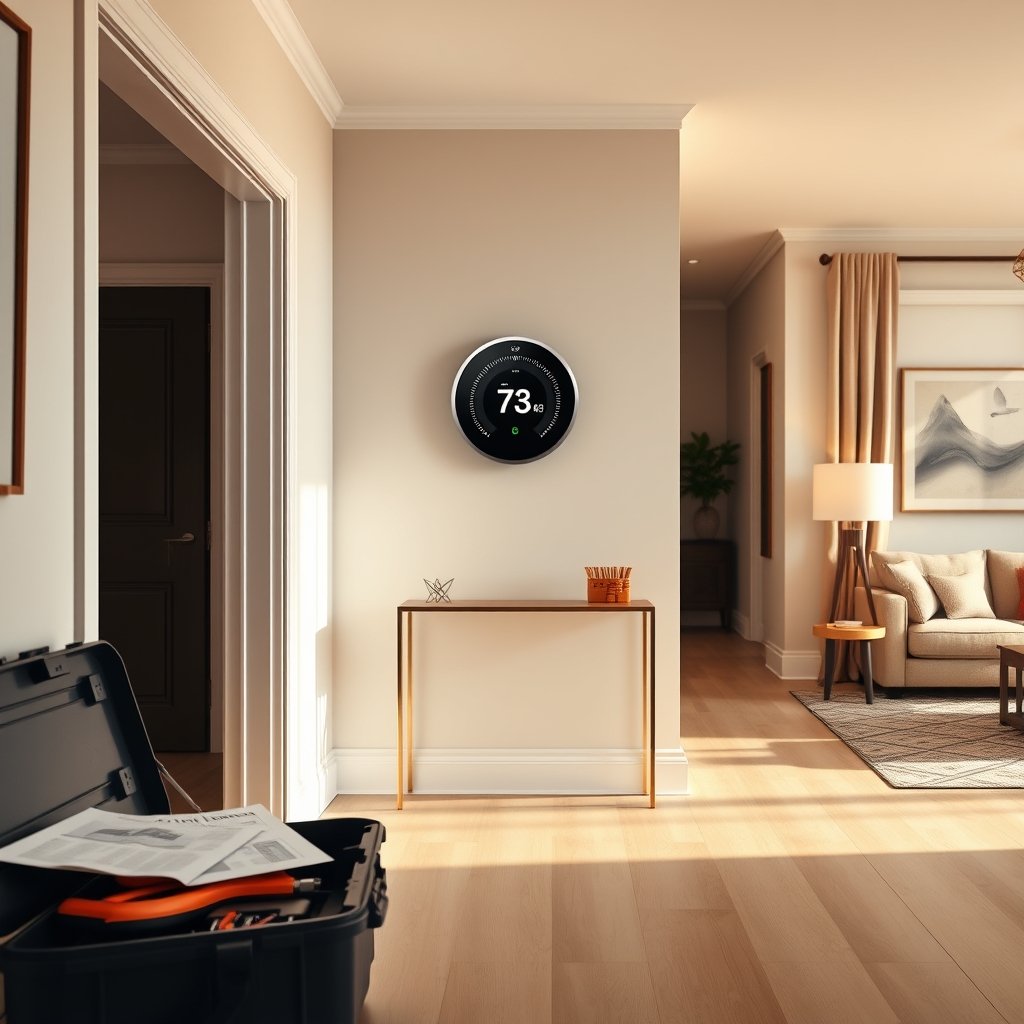
A modern smart thermostat delivers an average 8 percent reduction in heating and cooling bills—manufacturer data shows 10–23 percent. For homeowners spending $2,000 per year on HVAC, that equals $160–$460 in savings annually (Consumer Reports | Strategic Market Research). Most Energy Star certified models pay for themselves in 1–1.5 years—and hit 1–3 year ROI even with a pro installation. The numbers are clear: it’s a solid investment in nearly every retrofit home, as long as your HVAC system is compatible.
How to install and maximize your ROI: step-by-step guide
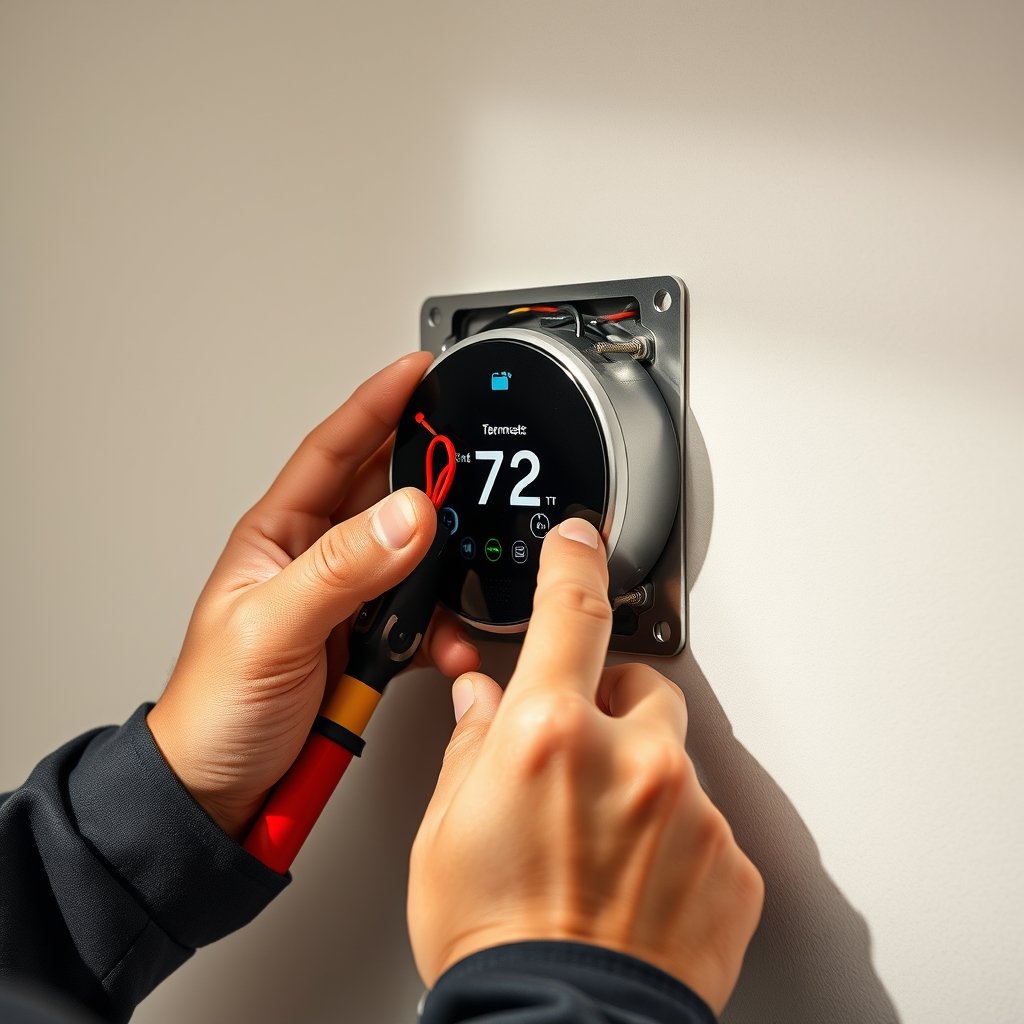
Comparing DIY and pro install boils down to cost, skill, and your system’s wiring. Here’s how to check compatibility, line up your install tools, and get the best return on your investment step by step:
- Check system compatibility. Look behind your old thermostat for a C-wire (common wire). Most systems with a C-wire are ready for a DIY upgrade (detailed walkthrough). If you’re missing one, see the advanced section for fixes.
- Calculate your savings and payback. Use this formula: (Annual HVAC spend) x (expected savings %) – (install cost) = First-year net savings. For example, with a $2,000 annual HVAC bill and 10 percent savings: $2,000 x 0.10 = $200. If you spend $200 on the thermostat and self-install, year-one payback is complete.
- Choose the right device and install path. Single-zone central systems allow for easy DIY with basic models ($120–$180); multi-zone or advanced heat-pump models cost more ($200–$350) and are still DIY-ready for many setups. Pro install for complex systems adds $200–$500 but may be mandatory if you lack experience or run a multi-stage/heat-pump system (top brand comparisons).
- Install with care. Turn off the breaker, photograph wiring, label wires, and follow the manual—most take 30–60 minutes, needing only a screwdriver and voltage tester.
- Test and configure. After mounting the new thermostat, follow the app setup, connect to WiFi, and test all HVAC modes. Review energy reports monthly for savings validation.
If you want even more actionable tips for smart energy savings, see our in-depth guide to the best smart thermostat for winter or combine this project with attic insulation upgrades for compounding payback.
Advanced analysis and common pitfalls for homeowners
Here’s what real-world data reveals—and what top guides often leave out:
| Scenario | Upfront Device Cost | Install Cost (DIY/Pro) | Expected Annual Savings | Payback Period |
|---|---|---|---|---|
| Single-zone, basic system (DIY) | $120–$180 | $0 | $160–$460 | 1–1.5 years |
| Multi-zone or heat-pump native (DIY) | $200–$350 | $0 | $160–$460 | 1.5–2 years |
| Any system (pro install) | $120–$350 | $200–$500 | $160–$460 | 1.5–3 years |
Common Pitfalls:
- Missing or weak C-wire. Most DIY failures link back to no C-wire or using a workaround improperly—causing short cycling or total loss of power to the thermostat.
- HVAC compatibility confusion. If you have a heat pump, dual-fuel, or multi-stage system, the wiring is more complex. Wrong connections may damage your system. Ask: Do you know your system type and stage count?
- Incorrect or incomplete photos of wiring. Missing this step makes troubleshooting twice as difficult.
- Lack of tools: You need a voltage tester, screwdriver, and wire labels—don’t guess on live wires.
- Warranty voids: DIY errors are responsible for 40 percent of warranty issues in consumer surveys (see report).
- Underestimating install time. If you run into wiring surprises or need a C-wire kit, the project can balloon from 1 hour to a half-day effort.
- Ongoing maintenance required. Non-C-wire installs mean you’ll need to check/replace batteries annually and update firmware to keep security and savings features working long-term.
Dig deeper into advanced retrofit and wiring projects with our exhaustive EV charger install guide if you’re tackling multiple smart upgrades.
Don’t skip rebates and incentives: Many utility programs, especially in California and the Northeast, offer $50–$150 back on qualifying models—sometimes rolled right into the point of sale. Amazon, Home Depot, and direct brands (like ecobee and Google Nest) often list local rebates and utility demand-response offers that help offset the net smart thermostat installation cost (market data). Stack this with peak-hour savings and you can accelerate ROI further.

Need a comprehensive energy savings strategy? Combine a window energy upgrade, solar outdoor lighting, and garage efficiency organization to further lower bills.
Conclusion: how to make a confident, money-smart install decision
For most retrofit homeowners, the smart thermostat installation cost delivers a reliable 1–1.5 year payback (sometimes up to 3 years for multisystem upgrades or pro jobs). Calculate your annual HVAC spend, check the savings range (8–23 percent), confirm a C-wire is present, and use rebates to offset costs. Prioritize compatibility and ROI, not just “latest features.”
Ready to move forward? Here’s your fast install decision plan:
- Check for a C-wire and basic wiring photos behind your current thermostat.
- Estimate your annual HVAC bill from old utility records and use the ROI formula shared above.
- Run a model compatibility checker from brands like ecobee, Google Nest, or Honeywell T9.
- Search for utility rebates in your zip code via manufacturers or retailers.
- If you hit wiring, heat-pump, or multi-stage red flags—hire a vetted pro and save your warranty.
For deeper guides, see our expert piece on whole home generator installation costs or how the heat pump water heater rebate stacks up for energy-minded homeowners.
FAQs: smart thermostat installation cost
How much does professional smart thermostat installation cost in 2026?
Professional installation typically adds $200 to $500 on top of device cost, depending on system complexity and region. Simple central systems may be at the low end; heat pumps or multi-zone setups are higher.
Can I install a smart thermostat myself if I don’t have a C-wire?
If your system lacks a C-wire, some smart thermostats provide power-extender kits or adapters for DIY. If you’re not confident in electrical work, or have a heat-pump/multi-stage system, hiring a pro is safer.
What is the average payback period for a smart thermostat upgrade?
Most homeowners recoup the smart thermostat installation cost in 1–1.5 years, assuming $2,000 annual HVAC spend and 8–23 percent energy savings.
Is smart thermostat compatibility the same for all HVAC systems?
No—the easiest installs are single-zone, central AC or furnace systems with a C-wire. If you have a heat pump, dual-fuel, or multi-stage system, check compatibility first and consider pro help.
Do utility rebates really lower net install cost?
Yes. Utility and manufacturer rebates can take $50–$150 (sometimes more) off net cost for eligible Energy Star models or demand-response programs, speeding up your investment payback.
—