

### Blog Post:
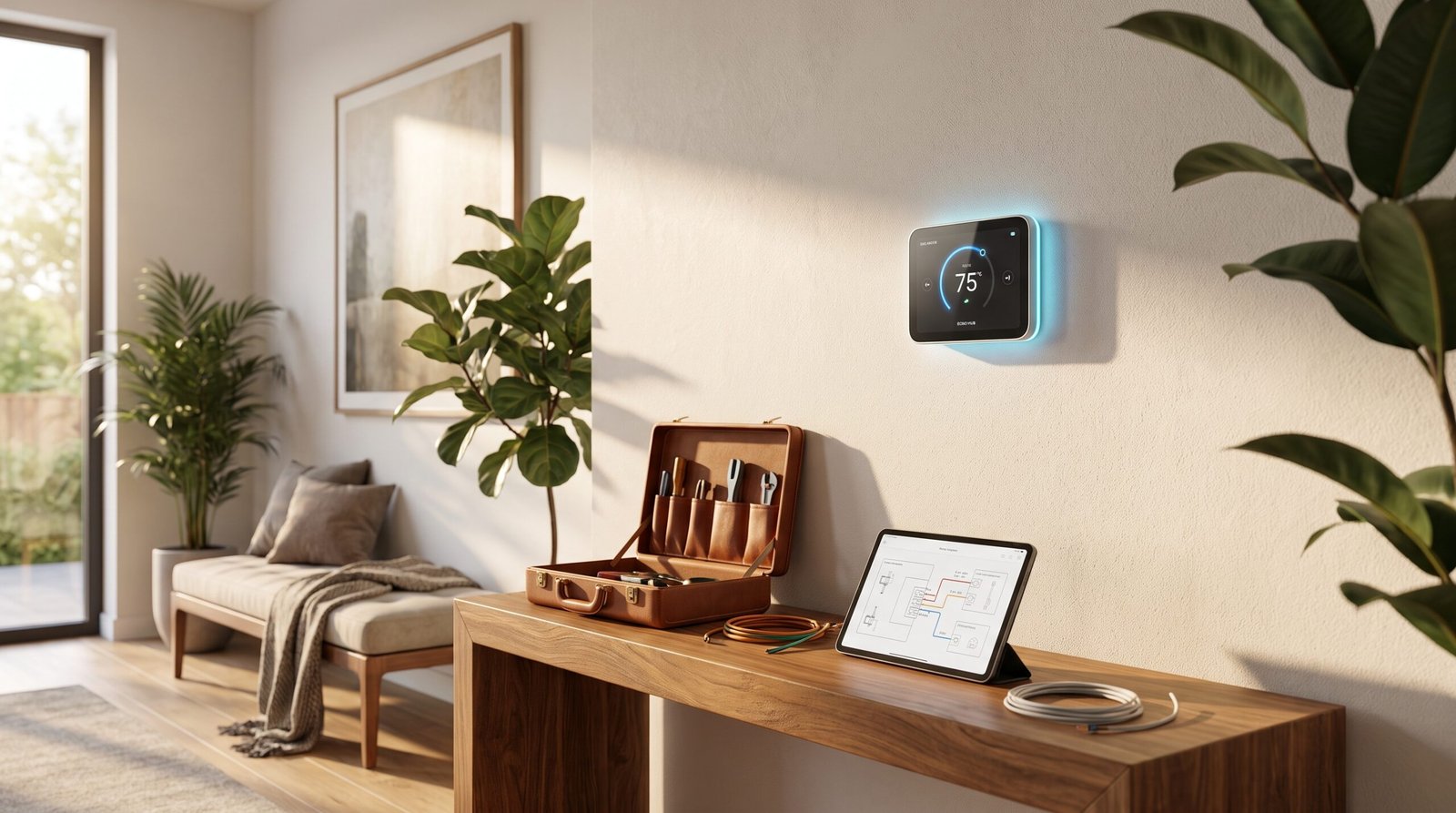
Smart thermostat installation cost is on every homeowner’s mind this year, especially if you’re watching energy bills and debating whether a smart device will really pay off in your home. Here’s the clear, no-jargon breakdown, with hard numbers, ROI math, compatibility checks, and a step-by-step guide so you can make the smartest call for your house and your wallet.
Key Takeaways
- Average smart thermostat installation cost ranges from $150 to $350 for Wi-Fi models in 2026, with DIY options on the lower end and pro installs on the higher end.
- Expected annual energy savings are 8–10 percent, usually saving $180–$312 per year—most homeowners recoup the initial cost in 8–12 months, especially if rebates apply.
- Compatibility checks like C-wire and HVAC type are critical; skipping them is the number one reason upgrades fail or require unexpected expenses.
- Quick verdict — is a smart thermostat worth buying in 2026?
- Market snapshot — adoption, Wi-Fi dominance, and why it matters
- Installation cost breakdown — Wi-Fi vs. non-Wi-Fi & who pays what
- Annual savings and ROI — sample calculations for realistic homes
- Compatibility checklist — will your HVAC work with a smart thermostat?
- DIY install realities — top pains, common mistakes, and when to call a pro
- App reliability, sensors, and privacy — real user complaints to weigh
- Best smart thermostat 2026 — how to pick one that maximizes ROI
- Rebates, utility programs, and regional variance — how incentives change the math
- Long-term costs & durability — a commonly missing angle
- Environmental lifecycle — manufacturing, use, disposal (missing from most guides)
- Final recommendation & buyer checklist — 8 quick checks before you buy
- FAQ
Quick verdict — is a smart thermostat worth buying in 2026?
Yes, for most homeowners in 2026, the math overwhelmingly favors installing a smart thermostat if you have a compatible HVAC. With average install costs between $150 and $350 for popular Wi-Fi models, homeowners typically see energy savings of around 8 to 10 percent per year—about $180 to $312 on a standard $2,000 to $2,400 annual HVAC bill. This means you’ll reach payback in 8 to 12 months, even faster if your state or utility offers extra rebates. The only serious warning: double-check your system’s wiring before buying. If you’ve already upgraded other smart energy devices (like solar outdoor lights), smart thermostats round out energy efficiency gains.
Market snapshot — adoption, Wi-Fi dominance, and why it matters
Smart thermostat adoption hit 16 to 17 percent of U.S. internet households by 2024, and nearly 7 out of 10 new models sold are Wi-Fi-enabled. According to a recent industry report, DIY installation now leads the way as more homeowners want lower upfront costs and seamless integration with smart home setups. Wi-Fi connectivity isn’t just about mobile control—it enables features like remote scheduling, energy tracking, and utility demand-response programs that old programmable thermostats lack. This shift mirrors homeowners’ attitudes toward other tech upgrades, such as investing in a portable power station or air quality monitor for the home—convenience and measurable savings are now baseline expectations.
Installation cost breakdown — Wi-Fi vs. non-Wi-Fi & who pays what
Here’s what real homeowners are seeing in 2026:
- Wi-Fi Smart Thermostat: $150–$350 (hardware plus DIY or basic pro help)
- Non-Wi-Fi/Programmable: $100–$200 (simpler wiring and no network setup)
- Extras: C-wire adapters, trim kits, or power extenders ($20–$60 typical)
- Pro install by an electrician or HVAC tech: $90–$200 (in addition to hardware)
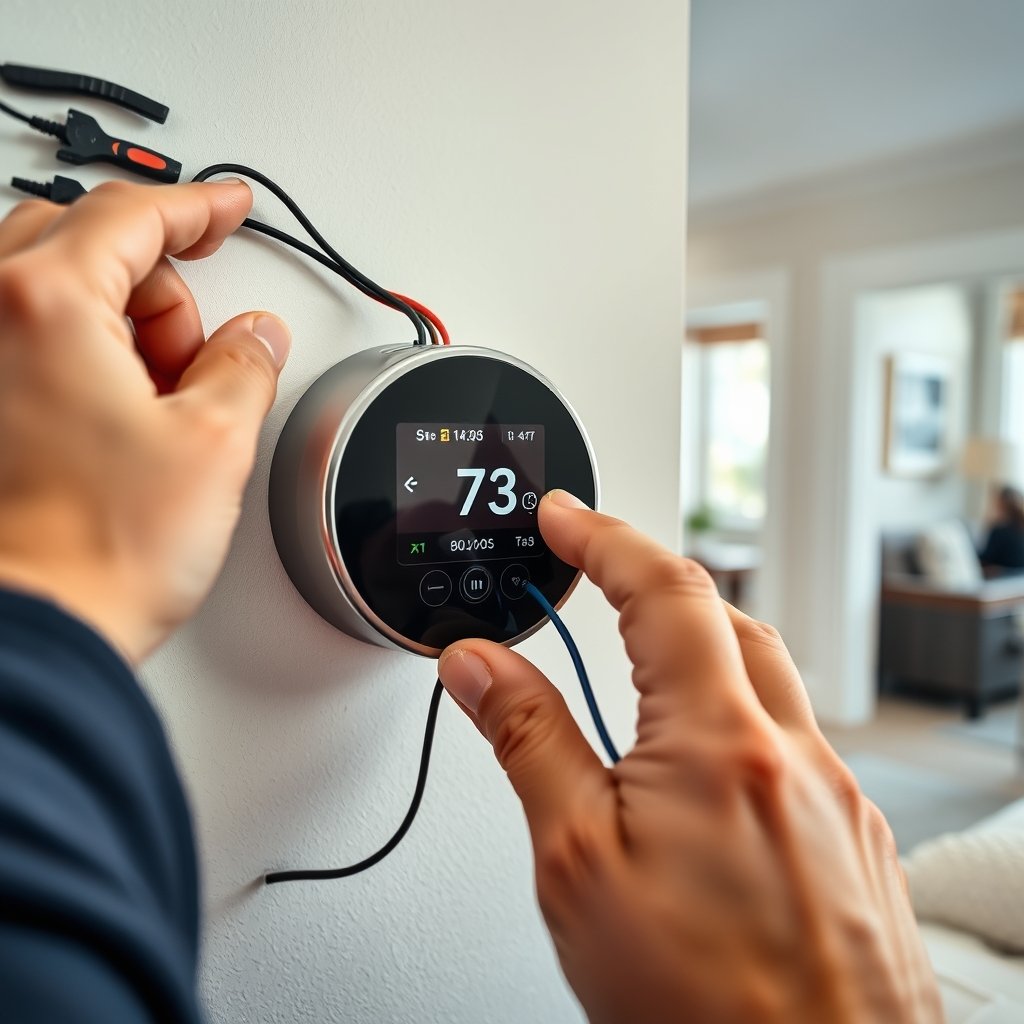
DIY install is possible for those with some wiring confidence. However, older homes often lack a C-wire, which can drive up costs for adapters or pro rewiring. If your system was already upgraded (for example, as part of a heat pump water heater rebate) you’re more likely to be compatible out of the box.
Annual savings and ROI — sample calculations for realistic homes
Let’s see how payback actually works:
| Annual HVAC Spend | Estimated Annual Savings (8%) | Savings at 10% | Typical Payback (at $250 installed) |
|---|---|---|---|
| $1,800 | $144 | $180 | 16–21 months |
| $2,200 | $176 | $220 | 11–15 months |
| $2,600 | $208 | $260 | 9–13 months |
| $3,100 | $248 | $310 | 8–12 months |
Your actual savings will depend on your heating/cooling habits, climate zone, and whether you use advanced features—some systems (with local sensors) claim even better results. But beware: real-world studies often find homeowners get closer to 8 percent unless they really use the scheduling, eco, and smart features every day. If you tie your thermostat into a larger energy savings strategy (like upgrading insulation—see our foam insulation vs fiberglass guide), ROI grows faster.
Compatibility checklist — will your HVAC work with a smart thermostat?
The biggest reason installs fail or drive up cost? Compatibility. Here’s what to check before buying:
- C-wire present? Most Wi-Fi thermostats need a C-wire for power. Older houses/HVAC are less likely to have one.
- System type? Nearly all forced air, gas, and electric systems are supported, but older “line voltage” or millivolt (often found with old baseboard or radiant heat) aren’t.
- Multiple zones? Some homes with more than one thermostat or zone may face more complex wiring or require multiple devices.
- Control board limitations? Very old systems may need pro upgrades or may not support advanced features.
Snap a photo of your wires and use the manufacturer’s online checker. Some brands supply a free C-wire adapter if you lack one. For more pro-guided projects or if you are already considering a whole home generator installation, you may want to bundle HVAC and smart controls in one labor call to save cost.
DIY install realities — top pains, common mistakes, and when to call a pro
Most installs go smoothly, but these issues show up most often:
- Missing or incompatible C-wire (blocks power to Wi-Fi models)
- Miswired terminals or skipped labeling during swap
- Older HVAC may need pro-level rewiring or fuse upgrades
- Initial pairing/app setup can fail if Wi-Fi signal is weak at the thermostat location
- Software/app glitches: missed schedule changes, device not responding
How to fix: Use quick-disconnect wire stickers before removing old thermostat. Reset circuit breaker if new thermostat doesn’t power up. Read the error messages in the app—most now have guided troubleshooting. For non-standard wires or stubborn HVAC panels, do not force—call in a pro. If you prefer to go the simple upgrade route, check out DIY peel and stick backsplash guides for other fast, low-hassle upgrades.
App reliability, sensors, and privacy — real user complaints to weigh
Smart does not always mean hassle-free. In online reviews and third-party tests:
- App issues: occasional crashes, schedule glitches, or total loss of device control during Wi-Fi outages (some models support offline fallback, others do not)
- Sensor errors: motion detection misfires, “eco” mode triggered by pets, false positives/negatives
- Privacy: cloud-based platforms collect usage data; read privacy disclosures or pick models with minimal data sharing policies
- Batteries: some backup batteries need annual replacement (check model details for maintenance expectations)
Favor thermostats with a proven app reliability record, support for offline programming, and clear privacy policies. For those most concerned with room-by-room comfort or working long hours away from home, look for models with multiple sensors, as covered in third-party reviews.
Best smart thermostat 2026 — how to pick one that maximizes ROI
Don’t go by marketing hype alone. Sort by:
- Compatibility (wiring, system, zones—check all specs prior to purchase)
- Offline scheduling (continued control if Wi-Fi drops)
- Local sensors (for rooms that get too hot/cold; boosts actual savings)
- Energy reporting (you want to see if you’re truly saving money)
- Integration (works with voice assistants or other smart home devices?)
- Clear subscription policy (as some brands now charge for “premium” reports or remote access)
- Reliability history (check large review sites, not just brand testimonials)
Three recommended approaches:
- Budget DIY: Mainstream Wi-Fi models from proven brands, no extras. Best for newer homes with existing C-wire.
- Premium with sensors: Ecobee or similar, comes with remote room sensors; reported savings up to 26 percent if used right (CNET and manufacturer claims).
- Best for renters/landlords: Simpler programmable or Wi-Fi models without subscription fees or ones that retain settings through tenant turnover.
Want to see a real-world payback breakdown? Check our full smart thermostat payback guide with additional scenarios.
Rebates, utility programs, and regional variance — how incentives change the math
Rebates play a major role. For example, California represents more than 31 percent of market share and offers some of the nation’s most aggressive utility bill credits and $200 device rebates. Utility-run demand response programs (where the power company adjusts your thermostat on peak days) can offer annual bill credits worth an extra $40–$100 per year, rapidly accelerating payback. These deals vary by state, so always search your ZIP code or call your utility before shopping. For more energy upgrade incentives, check out our guide to window replacement costs and local rebate programs.
Long-term costs & durability — a commonly missing angle
Most buyers ignore lifetime costs. Reality check: Smart thermostats usually last 7–12 years, but batteries (if any), touchscreen components, and wireless modules might fail sooner. Track firmware update support and warranty terms. Subscription creep (where new features land behind a paywall) is increasingly common. Include likely replacement and maintenance in your total cost of ownership—just as you would for a garage storage system or other major home device.
Environmental lifecycle — manufacturing, use, disposal (missing from most guides)
Smart thermostat energy savings lower your home’s operational emissions year after year, but device manufacturing and eventual disposal (circuit boards, plastics) add their own footprint. If environmental impact matters to you, pick brands with recycling programs or certified low-impact manufacturing. The overall emissions reduction is still positive, but the initial “hardware footprint” is rarely included in ROI calculators.
Final recommendation & buyer checklist — 8 quick checks before you buy
- Check for a C-wire in your current thermostat wiring—if missing, confirm adapter availability
- Confirm model compatibility with your HVAC type (heat/cool, voltage, zoning)
- Look up local rebates and utility incentives before you buy
- Compare DIY install vs. pro installation costs based on your wiring comfort level
- Choose a model based on features you’ll actually use (sensors, offline scheduling, app reliability, privacy)
- Estimate true payback using your exact HVAC costs, not just average marketing claims
- Read recent customer reviews for app reliability and support quality
- Plan for firmware updates, battery replacement, and potential subscription costs
For most homeowners with a compatible system, the smart thermostat installation cost pays for itself within a year—just be sure to verify wiring, tap every available rebate, and pick a model with a solid reliability record before clicking buy. Ready to start? Check out our full buying guide here or compare more energy-saving upgrades across our home improvement guides.
FAQ
How much does it really cost to install a smart thermostat in 2026?
Typical all-in cost for a Wi-Fi smart thermostat is $150 to $350, depending on model, wiring needs, and whether you DIY or pay a pro.
Do I need a C-wire for every smart thermostat?
Most Wi-Fi models require a C-wire for consistent power. Some include adapters for homes without one; always verify before purchase.
Do smart thermostats really save money?
If used with scheduling and eco-features, expect 8–10 percent annual energy savings—usually $180 to $312 per year for the average U.S. home. Savings vary based on your energy habits and climate.
What’s the main risk of DIY thermostat install?
The biggest risks are miswiring, damaging your HVAC, or finding out too late that your system isn’t compatible (especially missing C-wire or old control board).
Can I get a rebate on smart thermostat installation?
Yes—many utilities and states (like California) offer rebates up to $200 for qualifying smart thermostats. Always check local programs before you buy.
—