

### Blog Post:
Metal roof cost vs shingles is one of the most important decisions you’ll make in a full roof replacement. The real differences go far beyond style. In 2025–2026, upfront price per square foot, insurance discounts, noise reduction strategies, and long-term lifecycle costs can swing your budget by tens of thousands of dollars. This is the data-driven guide for homeowners who want bottom-line answers and practical guidance, not marketing fluff.
Key Takeaways
- Standing seam metal roofs cost $12–$16 per sq ft installed nationwide (asphalt shingles: $4–$6 per sq ft) but last 2–3 times longer.
- Major insurers reward metal roofs with 5%–15% discounts; in storm-prone areas, discounts can be as high as 30%.
- Proper standing seam metal roof installation with acoustic underlayment and solid decking can dramatically reduce noise and qualify the roof for insurance discounts.
- Executive summary — the bottom-line comparison
- National average installed cost — standing seam vs asphalt (detailed)
- Regional / city examples and why prices vary
- Cost drivers — what raises or lowers your installed per-sf price
- Insurance discounts — what major insurers typically offer and required conditions
- Lifespan and lifecycle cost — long-term math (replacement intervals, ROI)
- Most cited user complaints about noise (rain/hail) — what homeowners report
- Installation and product options that reduce noise — what works best
- Practical checklist to qualify for insurance discounts and minimize noise (for homeowners & contractors)
- Decision guide — quick scenarios: choose metal when… choose shingles when…
- Sources and editorial notes for the writer
Executive summary — the bottom-line comparison
If you want an at-a-glance cost and value comparison, here it is: a standing seam metal roof costs $12–$16 per square foot installed in 2025–2026, while entry-level (3-tab) asphalt shingles run about $4 per square foot and architectural shingles about $5–$6 per square foot. Metal outlasts shingles by decades, often pays back in insurance savings, and requires less frequent replacement—making the higher up-front investment make sense for many homeowners.

Most homeowners pay $24,000–$32,000 for standing seam on a typical 2,000 square foot home. The same roof in architectural shingles likely falls in the $10,000–$14,000 range. However, metal’s 40–70 year service life versus 20–30 years for shingles, plus a 5%–15% metal roof insurance discount, dramatically shifts the true long-term cost calculation.
National average installed cost — standing seam vs asphalt (detailed)
Let’s break down average installed costs for both materials in 2025–2026:
| Roof Type | Installed Cost per Sq Ft | Total for 2,000 Sq Ft Roof | Common Lifespan (Years) | Insurance Discount |
|---|---|---|---|---|
| Standing seam metal | $12–$16 | $24,000–$32,000 | 40–70 | 5–15% (higher in storm states) |
| Architectural shingles | $5–$6 | $10,000–$12,000 | 20–30 | 5–10% (if Class 4 impact-rated) |
| 3-tab asphalt shingles | $4 | $8,000 | 15–22 (shorter in hot climates) | None |
| Exposed-fastener metal | $4.50–$6.50 | $9,000–$13,000 | 15–30 | Lower |
Notice that standing seam metal roof installation is much pricier than a shingle roof, but this comes with major upside on lifespan and low-maintenance value. Cheaper exposed fastener (corrugated) panels can rival shingle pricing, but offer half the durability and require more upkeep.
Regional / city examples and why prices vary
Metal roof and shingle pricing vary widely by state and city, due to labor costs, material shipping, and climate effects. Here are real 2025–2026 installed price examples:
- Central Pennsylvania: Standing seam metal $9–$10 per sq ft, architectural shingles $4–$5 per sq ft.
- South Carolina (Columbia): Standing seam metal $10–$18 per sq ft (wide range due to hurricane code/supply), asphalt shingles $4–$7 per sq ft.
- California and coastal markets: Both metal and shingles trend higher due to roofing demand and insurance challenges.
Hot, humid regions often see asphalt shingle lifespans reduced by 5–8 years, making metal comparatively more cost-effective long term. Demand after storms, local labor rates, and roof shape (complex valleys, dormers) can all drive prices further up. Always request market-specific quotes from multiple contractors.
Cost drivers — what raises or lowers your installed per-sf price
Every roof is unique. These are the factors most likely to push your installed price up or down:
- Metal Type: Standard steel or aluminum is cheapest; premium copper and zinc cost 2–3x more than steel.
- Panel Profile: Exposed fastener panels are much cheaper ($4.50–$6.50/sq ft) but less durable. Standing seam (concealed fastener) is $12–$16/sq ft and the gold standard for longevity and insurance savings.
- Roof Complexity: More hips, valleys, penetrations, and odd shapes drive up labor and waste.
- Condition of Decking: Old or soft roof decking may require full replacement for insurance or warranty eligibility.
- Underlayment and Fastening Choices: High-quality synthetic or acoustic underlayment adds cost, but reduces metal roof noise and boosts eligibility for insurance discounts.
- Local Labor Rates: Markets with roofer shortages can see 15%–40% pricer installs in busy seasons.
To save, some homeowners choose exposed fastener metal panels on barns or sheds (often $4.50–$6.50/sq ft), but standing seam is recommended for any home seeking low-maintenance and long lifespan.
Insurance discounts — what major insurers typically offer and required conditions
Installing a metal roof may earn you significant annual discounts on homeowners insurance, especially in storm-prone or wildfire-prone states. Typical discounts in 2025–2026:
- Most major insurers offer 5%–15% off premiums for standing seam metal roofs.
- Discounts are often higher in high-wind, hail, and wildfire zones—sometimes up to 30% (see source).
- You must provide documented proof of installation, Class 4 impact resistance (if available), and use of qualifying underlayment and decking. Some policies require roof permit/inspection paperwork.
- Note: Many insurers exclude cosmetic hail dents on metal roofs from coverage—read policy exclusions carefully.
- “Class 4” or impact-rated architectural shingles may offer you a smaller (5–10%) insurance discount, but only if installed to spec.
Proactively ask for eligibility requirements and documentation checklists from your insurance agent before you sign the roofing contract. Insurer approval often hinges on product spec sheets and clear sign-off by your installer.
Lifespan and lifecycle cost — long-term math (replacement intervals, ROI)
The biggest reason to consider metal: once is (usually) enough. Here’s what the math says about metal roof lifespan and long-run cost:
- Standing seam metal: 40–70 year service life, minimal maintenance.
- Architectural shingles: 20–30 years in most climates (less in hot/humid, more in cool or shaded areas).
- 3-tab asphalt shingles: 15–22 years, with fastest decline in southern or storm-prone states.
A typical lifecycle scenario from a Lancaster, PA farmhouse found new shingle lifetime cost at $46,000 (initial + eventual re-roof) versus new metal roof cost at $32,000 (see details). Even factoring investment returns and time value of money, metal’s higher up-front price is typically offset if you plan to stay 15+ years or live in a high-risk roof market.
Many homeowners also see energy efficiency gains and increased resale value with metal, adding to ROI.
Most cited user complaints about noise (rain/hail) — what homeowners report
With metal, the most common homeowner concern is metal roof noise reduction—specifically, the sound of rain and hail. Key findings from homeowner reports and studies:
- Rain and hail can sound far louder on metal than shingles, especially with open attic framing or over skipped/degraded decking.
- Without quality underlayment (synthetic or acoustic underlayment), both the volume and the “rattling” sensation are notably higher than with asphalt roofs.
- Perceived noise is usually much worse than measured sound (dB readings), but highly dependent on roof structure and insulation levels.
- Noise does not mean reduced safety or roof performance, but can affect comfort.
Looking for other noise-mitigation options for your home? Explore fluted wall panels for interior sound control.
Installation and product options that reduce noise — what works best
The best way to reduce metal roof noise is by using the right installation approach from day one. Here’s what works best:
- Solid roof decking (not battens or spaced sheathing): Essential for sound and insurance specs.
- Synthetic or acoustic underlayment: Standard synthetic felt helps, but high-density acoustic options perform even better in muting rain/hail noise.
- Insulated sheathing or rigid foam: Especially good for bonus rooms or noisy attic conversions.
- Concealed-fastener standing seam systems: Create a tighter seal, with far less vibration transfer than exposed fastener/overlap panels.
- Well-installed attic or ceiling insulation: R38 or better, properly coverage, further drops noise transfer.
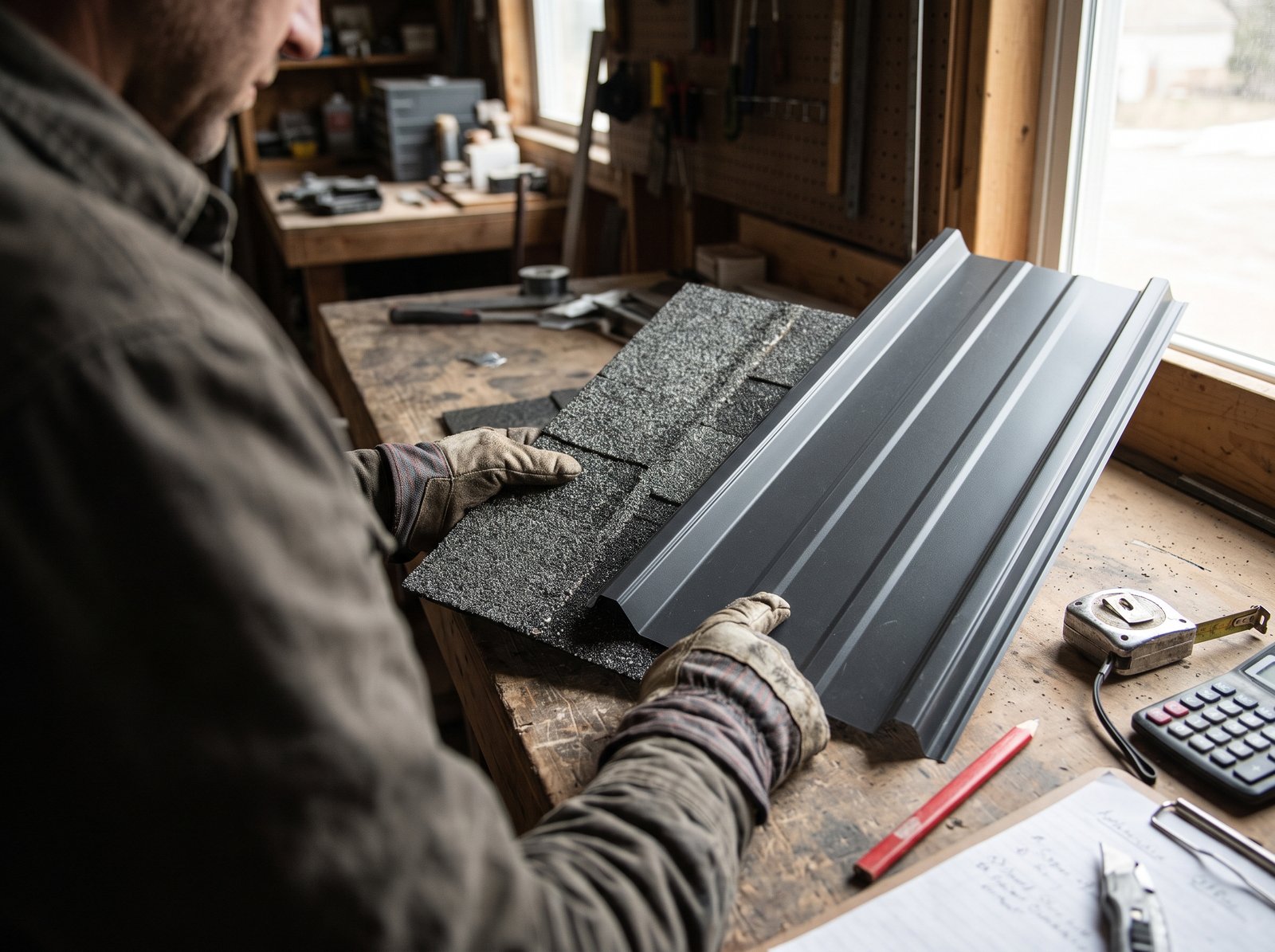
Mixing all these with a professional installation ensures performance. Don’t skimp: confirm your roofer addresses every sound-mitigation layer for optimal standing seam metal roof installation.
Practical checklist to qualify for insurance discounts and minimize noise (for homeowners & contractors)
Most missed insurance discounts and excess noise come from skipped details in documentation and installation. Here’s a checklist you and your contractor should follow for best results:
- Obtain product specification sheets for all roofing materials and underlayment (needed for most metal roof insurance discount programs).
- Confirm use of Class 4 impact-rated materials where possible; ask for proof of rating and warranty.
- Require written documentation and photos of roof decking condition before install—solid, continuous sheathing is an insurer requirement for many discounts.
- Specify synthetic or acoustic underlayment in your contract.
- Request photos of the concealed fastener system and post-install inspection checklist.
- Keep building permit and approved inspection documents in your records.
- Ask your agent about exclusions for cosmetic hail damage and about additional wind/hail endorsements.
Contractor transparency and clear records are your ticket to annual savings and maximum quiet. For more on high-performance envelope upgrades, check out our Home Insulation Upgrade Guide or our summary of return on investment for major home conversions.
Decision guide — quick scenarios: choose metal when… choose shingles when…
Still unsure if your situation fits metal or shingles? Here’s a logic-based shortcut:
- Choose standing seam metal if:
- You plan to stay 15+ years
- You live in a high-storm, high-wind, or wildfire-prone area
- You want insurance discounts or have had trouble getting coverage with asphalt roofs
- You value long-term ROI and dislike repeat costly projects
- Choose architectural shingles if:
- You’re prioritizing lowest possible up-front cost
- You’ll sell within the next 5–7 years
- Your insurance offers poor metal discounts in your state
- Your roof is simple, flat, and you’re not in an extreme climate
Keep in mind: standing seam metal costs ~$12–$16/sq ft but lasts 2–3 times longer and may unlock 5%–15% insurer discounts. Asphalt costs $4–$6/sq ft, lasts just 20–30 years, and typically doesn’t qualify for the biggest insurance breaks (details here).
Still on the fence? Some projects (like ADUs or garage conversions) can tolerate a mix of roofing strategies—see our guide to ADU/garage conversion costs and timing.

Sources and editorial notes for the writer
All costs, insurance data, and lifespan figures above are sourced from the 2024 Research Report summary, with regional examples pulled from the following public sources: [1], [2], [7], and [10]. Always treat regional pricing as “examples”—your local results may vary 10–30% based on market supply, labor, and code changes.
If comparing beyond the metal roof cost vs shingles debate, start with our Solar Energy Home Installation Guide and our review of window replacement costs for a true whole-home envelope ROI.
Conclusion
When you cut through the hype, the metal roof cost vs shingles decision is dollar-driven: metal roofs cost more up front but nearly always win if you’re staying at least one full roof cycle and want insurance discounts, reduced maintenance, and maximum durability. Choose your path with your documented local pricing, and always require written proof of all materials and underlayment to unlock the best insurer discounts.
Ready to get quotes or deepen your research? Explore our guides or contact a reputable local installer—and always ask the tough questions.
Frequently Asked Questions
How much does a standing seam metal roof cost in 2024?
Nationally, expect $12–$16 per square foot installed. On a 2,000 square foot home, that’s typically $24,000–$32,000 depending on your local market, roof shape, and materials. Regional variations can be substantial, especially in storm-prone or high-labor-cost areas.
Do metal roofs really lower homeowners insurance?
Yes. Most major insurers offer a 5%–15% annual discount for qualifying standing seam metal roofs, especially in high-wind/hail areas. You’ll need installation documentation and may need to meet specific underlayment or impact-resistance standards. Some carriers offer even higher savings in states with frequent storms.
Which lasts longer—metal roof or asphalt shingles?
Metal roofs (especially standing seam) routinely last 40–70 years, while architectural asphalt shingles have a typical lifespan of 20–30 years. Metal is often a “one and done” solution over the life of a home.
How do you reduce the noise from a metal roof?
Noise from rain and hail can be reduced by installing solid decking under the roof, using high-quality synthetic or acoustic underlayment, choosing a concealed-fastener standing seam metal roof installation, and ensuring your attic insulation is above code minimums. Ask for a sound-mitigation contract addendum from your contractor.
Can you mix roof types on one property?
It’s possible, especially for outbuildings, garages, or ADUs. Use standing seam on the main home for longevity and value, and consider less expensive shingles or exposed-fastener panels on secondary structures (with note of reduced lifespan and insurance eligibility).
—