

### Blog Post:
Heat pump water heater cost is the first question most homeowners ask when weighing a major upgrade or replacement. If you want cold, hard numbers and a real-world cost breakdown for both heat pump and tankless water heaters—including all the hidden install requirements and tax rules—this guide is exactly what you need.
Key Takeaways
- As of 2026, installed heat pump water heater cost typically ranges from $1,200 to $3,500; tankless heaters cost $1,400 to $3,900, with gas models reaching $6,500.
- Heat pumps cost less to run yearly ($100–$160 electricity), but installation can require upgrades such as 240V circuits or extra space, potentially raising soft costs.
- Both options may qualify for a 30% federal tax credit up to $2,000, but only ENERGY STAR “Most Efficient” models (starting 2025) are eligible—always double-check specs before buying.
- Quick take — Which system costs more now, and which saves more later?
- Detailed cost breakdown — Upfront, installation, and annual operating costs (2026)
- Regional costs and data gaps — What we can and cannot tell you by U.S. region
- Installation requirements that change the sticker price
- Common user complaints and how they affect real-world costs and satisfaction
- Tax credits, ENERGY STAR eligibility, and how to claim savings
- Brands and technical specs — how to find models that reliably qualify for tax credits and ENERGY STAR
- Decision scenarios — which system to choose for common home types
- 5-step checklist to prepare for installation (for homeowners)
- Appendix for the writer — sources, numbers to trust, and required on-page elements
- FAQ
Quick take — Which system costs more now, and which saves more later?
If you’re comparing heat pump water heater cost versus tankless water heater vs heat pump options, here’s the no-nonsense answer: In 2026, a heat pump water heater installed costs $1,200 to $3,500 on average (Angi), while tankless water heaters run $1,400 to $3,900 (with gas models often $3,000 to $6,500). Annual energy savings with a heat pump system are substantial—expect to pay $100 to $160 per year to run, about 60–70% less than a conventional electric tank. Tankless heaters save $150 to $200 per year over old tanks but have higher upfront costs. Pick heat pump if long-term energy bills matter most; tankless if you need endless hot water fast, have limited space, and can stomach a bigger up-front bill.

Detailed cost breakdown — Upfront, installation, and annual operating costs (2026)
Here’s a real-world cost matrix to help you budget for a heat pump or tankless water heater in 2026. This breakdown covers: the unit itself, installation, and annual running (energy) costs.
| Cost Element | Heat Pump Water Heater | Tankless Water Heater |
|---|---|---|
| Upfront Unit Cost | $1,200–$3,500 (Angi) ENERGY STAR: $2,500–$6,000 (incl. typical install) |
$1,400–$3,900 (electric/gas) $3,000–$6,500 (gas, high end) |
| Installation / Soft Costs | $800–$3,000 Common add-ons: 240V circuit ($300–$800), space modifications if needed |
$1,000–$3,500 May require gas line or panel upgrades ($500–$2,500) |
| Annual Energy Cost | Annual Energy Cost: $100–$160 (electric) | Saves $150–$200 over tank-based, typical cost $180–$300 (source: Palmetto) |
| Federal Tax Credit | 30% of total, max $2,000/year (if ENERGY STAR “Most Efficient”) | 30% of total, max $2,000/year (if qualifying model) |
What drives costs higher? For heat pumps: needing an electrician for panel/circuit upgrades or building modifications for tank space. For tankless: expensive gas line changes or moving electric panels, particularly older homes.

Want to maximize savings? Make sure your installer itemizes costs for permit, panel work, and disposal—these are sometimes “hidden” until project day. For more cost-saving strategies linked to other electrification systems, see our EV charger installation cost guide and smart thermostat installation tips.
Regional costs and data gaps — What we can and cannot tell you by U.S. region
While national lists give a broad range for heat pump water heater cost, they rarely spell out real regional differences. For instance, labor and permit costs are often higher in the Northeast and West Coast. Climate matters too—cold basements reduce heat pump efficiency and may shift your bottom line.
Unfortunately, as of spring 2024, no published source offers a credible region-by-region breakdown. To estimate, check your local electrician and plumbing rates, then add 10–20% if you’re in a high-cost-of-living area.
Installation requirements that change the sticker price
Beyond the sticker price, installation details can move your project from budget to splurge. Here’s a practical checklist of what might drive your final bill higher:
- Space for tank and airflow: Heat pumps require both a standard water heater footprint and enough space for air circulation. Garages, utility rooms, and basements work, tight closets often don’t.
- Electrical upgrades: If you don’t have an existing 240V circuit, plan for $300–$800 in basic work—or $1,500–$3,000 and significant delay if your main panel is maxed out. Home insulation upgrades can help boost efficiency.
- Gas line or electric panel changes: For tankless, an upsized gas line or electric panel may cost $500–$2,500.
- Venting and location: Poor airflow reduces efficiency and can void warranties. Factor in new venting for tankless units or relocation costs if your current space doesn’t meet the spec.
Time delays also stack up for permit approval, needed especially if rewiring or moving gas lines is required. If you’re planning major upgrades, consider bundling with related home upgrades—a strategy we discuss in our energy-efficient window replacement guide.
Common user complaints and how they affect real-world costs and satisfaction
Most homeowners are caught off guard by these issues after install:
- Reduced efficiency in cold climates: Heat pumps perform best in indoor temps above 50°F. Cold basements mean more energy use and sometimes require backup resistance coils—raising both energy costs and noise.
- Space and airflow needs: If your mechanical closet is tight, expect to pay for relocation or ducting.
- Noise: Heat pumps contain compressors and fans. Some homeowners report disruptive noise, especially if installed near bedrooms. fan/compressor noise
- Lifespan: Heat pump systems last 10–15 years (Angi), tankless heater units can hit 15–20 years but may need more regular maintenance.
Retrofits for either system—especially if surprise code issues pop up—can push costs up fast, so always read install specs with care.
| Issue | Heat Pump Water Heater | Tankless Water Heater |
|---|---|---|
| Efficiency Drops in Cold Spaces | High impact—may require backup heating | Minimal impact (especially for gas models) |
| Noise Complaint Risk | Medium-High (fan/compressor noise) | Low |
| Lifespan | 10–15 years | 15–20 years |
| Install Space Constraints | Needs more room for tank and air movement | Compact, wall-mount options possible |
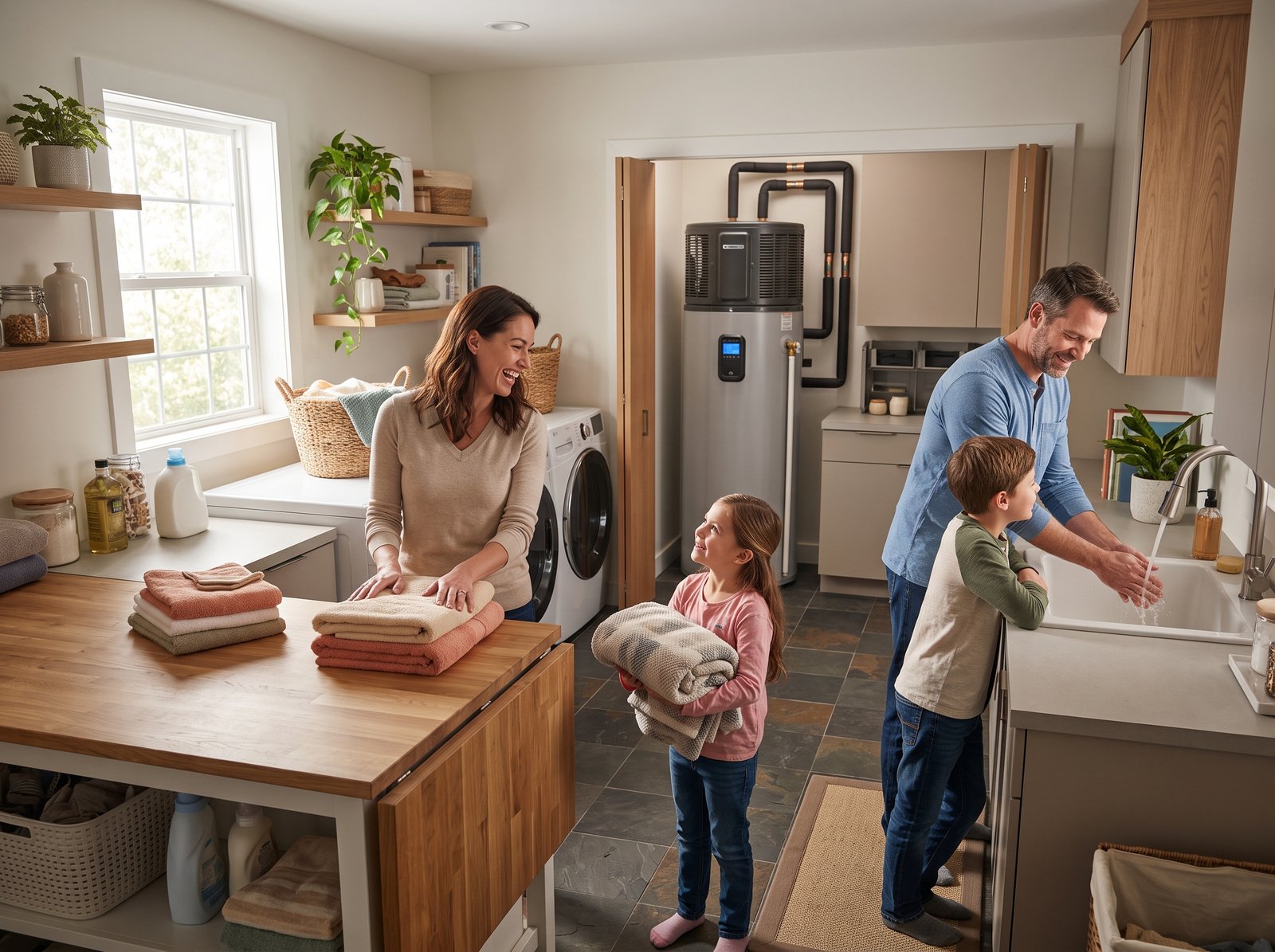
Tax credits, ENERGY STAR eligibility, and how to claim savings
The biggest win for 2026: Both heat pump and tankless heaters are eligible for a federal tax credit—30% of total project cost, including installation, up to $2,000/year (Consumer Reports). But starting in 2026, only ENERGY STAR “Most Efficient” models qualify. Always verify your model at the official ENERGY STAR product finder and keep your receipts, installer invoices, and spec sheets—they’re needed for filing.
For rebates, some local programs stack on another $500–$1,000, but these run out fast. See up-to-date incentive checklists in our dedicated heat pump water heater rebate guide.
Brands and technical specs — how to find models that reliably qualify for tax credits and ENERGY STAR
There’s no official “best heat pump water heater brand” that always qualifies for incentives. Instead, use the ENERGY STAR product list and manufacturer spec sheets to check:
- Uniform Energy Factor (UEF): Typically 3.0–4.0+; higher is better.
- Capacity: Match tank size to your family’s usage.
- Sound level (dBA): For installs near bedrooms, check decibel ratings.
- Compressor/heat pump efficiency (COP): More efficient models cut running costs, especially in warm climates.
- Warranty: Look for 10+ years on tank and parts.
Never trust a general brand claim—always verify tax credit eligibility via the ENERGY STAR’s Most Efficient database or the manufacturer’s official documentation. For a walkthrough on how to compare specs, see our water filter system spec guide.
Decision scenarios — which system to choose for common home types
- Small apartment, warm climate: Go heat pump—lower operating cost, install in a closet or garage (if enough space and airflow). Tax credit reduces real cost below $2,500 for many.
- Suburban home with existing gas line: Tankless system makes sense for endless showering; expect $3,000–$6,500 total install, but savings add up over 15–20 years.
- Basement in cold region: Tankless usually wins—heat pump efficiency drops in unheated rooms, unless you’re willing to invest in a ducted or hybrid solution.
- Tight mechanical closet, older panel: Tankless may be easier (wall-mount), but beware electrical or gas upgrades. Get a cost estimate on both before deciding.
Bottom line: heat pumps score best for lifetime savings and environmental benefit (operating at $100–$160/year), while tankless heaters are simpler if your priority is space or pure hot water volume. Both systems are big upgrades from old tanks—see our home efficiency payback guide for even more ways to reduce long-term costs.
5-step checklist to prepare for installation (for homeowners)
- Measure install space and check for adequate airflow (for heat pump) or wall mount space (for tankless).
- Open your electrical panel—confirm open slots for a 240V circuit, or note gas line size for tankless.
- Request three pre-qualifying quotes from licensed local installers (always include site visit for accuracy).
- Double-check ENERGY STAR “Most Efficient” status for your preferred model; print/download the listing for your tax records.
- Estimate your project timeline—ask installers about permit speed, available rebates, and expected delays from supplier or panel upgrades.
Don’t skip the paperwork. Installation labor is included in the federal credit calculation, so keep all invoices. Labor can add $300–$3,000 based on complexity—budget accordingly.
Appendix for the writer — sources, numbers to trust, and required on-page elements
Pull cost figures directly from Angi’s 2024 range ($1,200–$3,500 for heat pumps, $1,400–$3,900 for tankless), Energy Star ($2,500–$6,000 for heat pump + install), and federal tax counseling (30% up to $2,000). Regional costs and brand-specific claims are gaps; flag if unable to verify ENERGY STAR “Most Efficient” from a manufacturer site. Be sure the focus keyword is present in title, meta, intro, and at least two H2s. FAQ, bold intro keyword, and at least 5 internal/3 external links are required. For more about installation upgrades that affect real cost, check our foam vs fiberglass insulation guide.
Conclusion
Replacing your old tank with either a heat pump or tankless system will cut your energy bills and qualify you for significant financial incentives—but the details matter. heat pump water heater cost is generally lower up front than tankless, but install requirements (space, electrical, and climate factors) can shift the math. Always double-check ENERGY STAR status for incentives, and get several qualified quotes that account for hidden labor and upgrade costs. Ready to slash your hot water bills? Start by checking available ENERGY STAR models and local rebates today.
FAQ
What are the most common installation add-ons that increase cost?
Electrical panel upgrades, adding a 240V circuit (for heat pump), running a new gas line (for tankless), and making space for the unit can all raise the total bill by $300–$3,000.
How do I check if my new water heater qualifies for the federal tax credit?
Check the model number on the ENERGY STAR product database. For 2026 and beyond, it must be labeled “Most Efficient.” Save the spec sheet and receipt for tax season.
Where do I find a list of ENERGY STAR “Most Efficient” water heaters?
Visit the official ENERGY STAR listing. Filter by year and type to ensure the model is eligible.
How does expected lifespan compare: heat pump water heater versus tankless?
Heat pump systems usually last 10–15 years; tankless systems can last 15–20 years, though they may require more maintenance for hard water or high-usage homes.
Do heat pump water heaters work well in cold climates?
Efficiency drops in chilly spaces (under 50°F). Consider a hybrid electric model with backup resistance or place the system in a conditioned space. In very cold regions, tankless or a hybrid approach may be better.
—