

### Blog Post:
Home energy efficiency is no longer just about lower bills—it’s about knowing exactly what your upgrades will save you, where you live, and how fast you’ll get your money back. With energy rebates and insulation myths everywhere, it’s time to cut through the noise and get detailed, climate-specific payback numbers you can actually use before hiring a contractor.
Key Takeaways
- ROI for home energy efficiency upgrades is dramatically different by climate zone—know your payback before you hire anyone.
- Air sealing and attic insulation usually deliver the fastest returns; windows help most where cooling loads or glazing losses are high.
- Verification is critical: always insist on blower-door and thermography tests to avoid hidden installation gaps.
- Why Climate‑Specific Guidance Matters for Home Energy Efficiency
- Climate‑Zone Level Stats (2023–2026): Costs, Typical Upgrades, Savings, and Payback
- Highest‑ROI Upgrades: Air Sealing, Attic Insulation, and When Windows Move the Needle
- Typical Project Costs (2023–2026) and How to Budget
- Top Homeowner Pain Points (and Exact Language to Use in the Copy)
- The 3 Data/Verification Gaps Competitors Miss (Our Content Differentiators)
- How to Calculate Your Personalized Payback (Step‑by‑Step)
- Post‑Install Verification Checklist (What Homeowners Should Insist On)
- Visuals, Sidebars, and Interactive Elements the Writer Must Request from Design/Dev
- FAQs and Objections to Answer (Exact Copy Points)
- Conclusion and Clear Next Step for the Reader
Why Climate‑Specific Guidance Matters for Home Energy Efficiency
Saving money with energy upgrades only works if you target your efforts to your actual climate zone. A one-size-fits-all suggestion—for example, “just add insulation” or “upgrade your windows”—can be grossly misleading. Why? Because the savings, project costs, and payback times are not the same in Houston, Las Vegas, and Minneapolis.
For example, in Las Vegas (hot-dry Zone 3B), adding attic insulation costs roughly $1,500–$3,500 and can cut HVAC electricity use 10–30%, translating to $400–$1,200 a year saved. In Phoenix (desert heat Zone 2), targeted upgrades like closed-cell spray foam or low-E dual-pane windows can slash cooling loads 40–50% but come with higher price tags and different payback timelines.
The rest of this article delivers climate zone-specific numbers, plain-English ROI ranges, and actionable steps to help you verify real-world savings—so you know exactly what you’ll get before you start spending.

Climate‑Zone Level Stats (2023–2026): Costs, Typical Upgrades, Savings, and Payback
Use this quick-reference table to see what energy-saving projects actually cost, how much they typically save, and the usual payback—customized for your zone.
| Climate Zone | Typical Upgrades | Project Cost | Annual Savings | Estimated Payback |
|---|---|---|---|---|
| Zone 3B (Las Vegas) | Attic top-up (R-38–R-49) | $1,500 – $3,500 | $400 – $1,200 | 2–4 years |
| Zone 2 (Phoenix, desert heat) | Closed-cell spray foam ($3–$5/ft², R-6/in) Low-E dual-pane windows ($5,000–$25,000) |
$3,000 – $25,000 | $700 – $2,200 | 3–7 years |
| Zones 5–7 (Midwest/mixed-cold) | Air sealing Attic insulation (R-38–R-60) |
$300 – $3,500 | ~15% heating/cooling savings | 1–8 years |
| Gulf Coast (Houston) | Blown-in insulation + airtight windows | $3,000 – $8,000(*) | 12–18% off total bills | 3–6 years |
| Northern Cold (Zones 6–7 Canada) | Upgrade attic: R-20 → R-60 | $2,500 – $4,500 | 15–25% heating cost cut | 3–5 years |
All data: research synthesis (2023–2026). Gulf Coast projects may qualify for up to a 30% federal tax credit (source).
For a downloadable PDF version of this table, click here.
Want more background? See our deep-dive on foam insulation vs fiberglass for a full R-value comparison by region.
Highest‑ROI Upgrades: Air Sealing, Attic Insulation, and When Windows Move the Needle
If you’re aiming for the biggest bang for your buck, the evidence is clear: air sealing, not windows, usually wins on ROI—even though windows get the marketing spotlight. Here’s what the research shows:
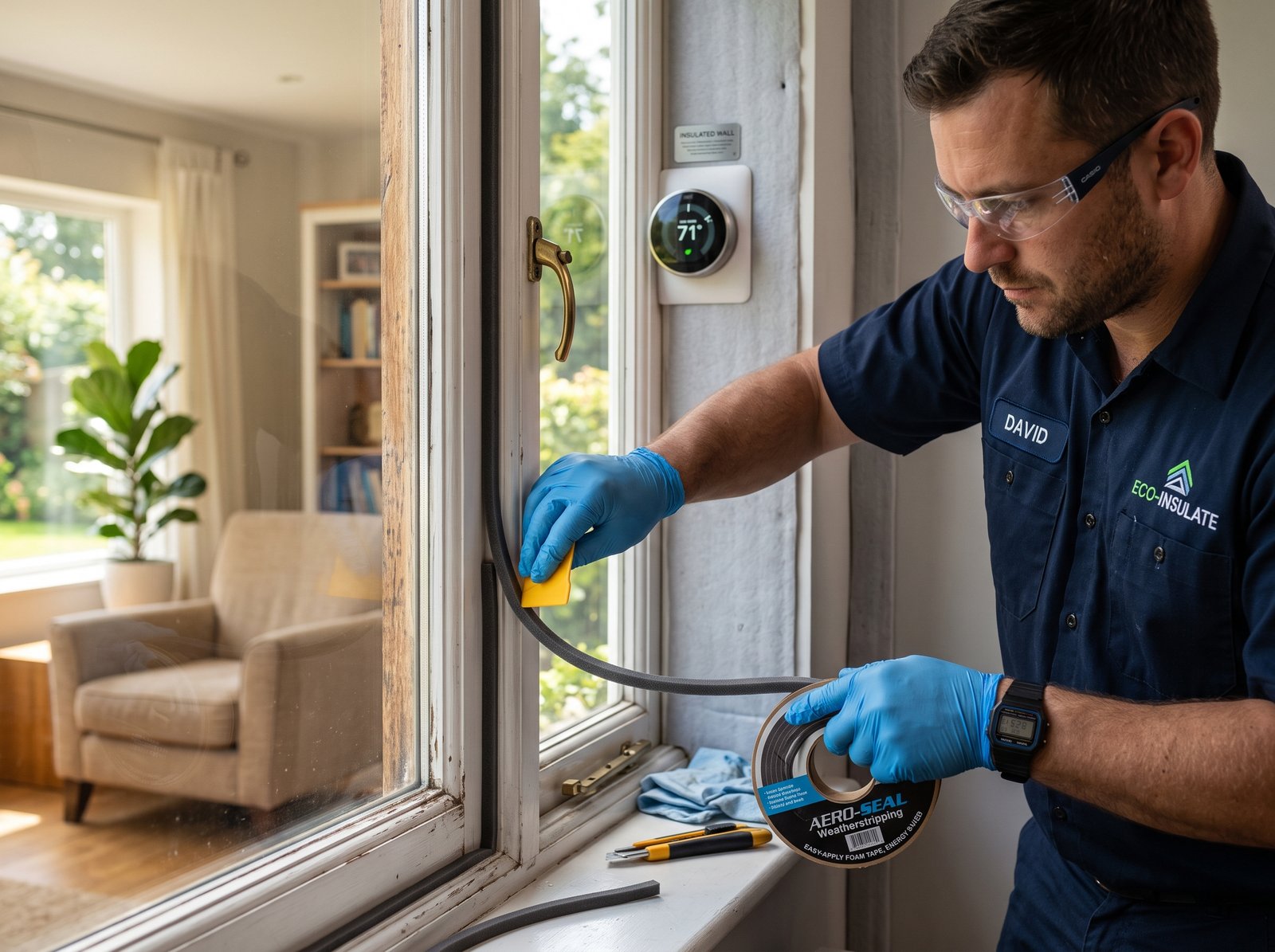
- Air sealing is almost always the fastest payback: At $300–$1,500 professionally (less for a capable DIYer), this can cut heating and cooling costs by about 15%, with payback in under 1–5 years (source).
- Attic insulation delivers major impact in older homes, especially if under-insulated (less than R-30): Adding to R-38–R-60 can produce savings of 15–25% and often pays back within 3–8 years.
- Energy efficient windows are highest impact when: your climate is extremely hot/cold, you have extensive single-pane glazing, or condensation is an ongoing problem. However, replacement windows run $5,000–$25,000 and usually only pay back in 3–7 years—unless your losses through glass are huge.
If windows are fogging or frames are deteriorating, address window problems first (window replacement guide). Otherwise, air sealing and attic top-up are your core “money moves.” For more on window efficiency, see our primer on thermal blackout curtains as a cheap interim step.
Typical Project Costs (2023–2026) and How to Budget
Budget surprises are a major reason projects stall. Here’s what to expect in 2024–2026 (ranges based on research synthesis):
- Air sealing: $100–$300 (DIY) or $300–$1,500 (pro)
- Attic insulation top-up: $1,500–$3,500 (pro, 1,000–1,800 sq ft typical)
- Closed-cell spray foam: Roughly $3–$5 per sq ft applied depth (R-6/inch)
- Window replacement: Total $5,000–$25,000 (depends on window count, sizes, glazing type, and labor)
Biggest cost drivers (and how to control them):
- Accessibility (tight attics or crawlspaces increase labor)
- Existing R-value (the less you have, the more you save per dollar spent)
- Remediation (moisture, mold, or previous insulation removal add cost)
- Window count, sizing, and specs (triple-pane, low-E, specialty shapes all spike project cost)
Before committing, compare quotes for both insulation and air sealing—larger insulation companies commonly try to upsell you beyond what your climate needs. For a deep dive on why some insulation systems have better cost savings than others (and why, for example, not all foam is worth the extra), check out our insulation comparison guide.
Top Homeowner Pain Points (and Exact Language to Use in the Copy)
Here’s what suburban and urban homeowners say over and over:
- “The upfront cost is high, and the rebates are confusing.” Rebates often require specific contractors or paperwork, and eligibility can change mid-project. Cross-check every incentive at the utility and federal level (Phoenix research).
- “I’ve paid for insulation but my bills didn’t drop much.” Installation gaps—unsealed top plates, missed attic corners, and poor air barrier integration—are the silent killer. These issues are usually only discovered by post-install blower-door or thermography tests.
- “Will this cause mold or condensation on my windows?” High-performance insulation and energy efficient windows can sometimes trap moisture, especially if attic or wall air barriers are incomplete. Moisture risk increases in humid Gulf Coast regions and older homes with limited venting.
Want bigger impact at lower cost? Start with air sealing and insulation before window swaps. See our eco-friendly home ideas for “low-fuss” upgrades with fast impact.
The 3 Data/Verification Gaps Competitors Miss (Our Content Differentiators)
- Zone-adjusted verification dashboard: Combine blower-door test, infrared thermography, and continuous indoor humidity tracking after any energy upgrade. Most sources only mention one method—or none at all. A zone-adjusted dashboard flags both leaks and hidden moisture before and after work is done.
- Longitudinal performance tracking: Log actual utility bills, comfort levels, and condensation/mold events for at least five years after install. Few homeowners or even pros do this—yet it’s the only way to confirm your real-world insulation upgrade cost savings.
- Automated, location-specific ROI calculator: Input your utility rates, local weather, climate zone, upgrade cost, and snap in rebate/tax credit. Get a truly personalized, transparent payback estimate before spending a dollar. Coming soon: ROI calculator spec sheet.
If a contractor doesn’t offer at least the first and last, ask why. Most skip these steps—don’t leave your savings to chance.
How to Calculate Your Personalized Payback (Step‑by‑Step)
Here’s how to make sure you know what you’ll save—no guesswork:
- Gather your inputs: Locate your most recent annual gas and electric bills, your climate zone (see above), specs/quotes for your proposed upgrade, and check local rebates and tax credits.
- Apply your zone’s energy savings multiplier: For example, in Las Vegas, attic top-up yields 10–30% HVAC savings; in Phoenix, targeted cooling upgrades can save 40–50%. Use the most conservative number as your baseline.
- Estimate insulation upgrade cost savings per year: Multiply annual utility bill (heating/cooling portion) by the percent savings predicted for your zone and upgrade.
- Calculate simple payback: Divide total upgrade cost (minus rebates and tax credits—up to 30% in some zones) by your annual estimated bills savings.
Example calculation: $2,500 attic insulation, zone multiplier 20% (Las Vegas, HVAC portion $1,800/year), 20% savings = $360/year. Apply $500 rebate: net cost $2,000. Simple payback: $2,000 / $360 = ~5.5 years.
Need help? Our interactive ROI calculator does this math with local rates and zone data, so you don’t have to guess—or risk relying on contractor sales scripts.
Post‑Install Verification Checklist (What Homeowners Should Insist On)
To be sure your improvements deliver as promised, use this checklist after any insulation, air sealing, or window upgrade:
- Blower-door test—before and after project
- Infrared thermography walkthrough (document coverage and look for missed leaks)
- Humidity and condensation monitoring (track for a heating and cooling season)
- Photo documentation of insulation coverage (especially attics, walls, rim joists)
- Detailed contractor invoice with R-value, coverage, and warranty
Want it in your pocket? Download the full PDF checklist here.
Visuals, Sidebars, and Interactive Elements the Writer Must Request from Design/Dev
To make this information actionable for every reader, the following assets need to be developed:
- Zone quick-reference table: (see above, downloadable PDF too)
- Three worked examples: Las Vegas, Phoenix, and Midwest/Houston showing actual numbers (embed in upgrades and payback sections)
- Downloadable Post-Install Verification Checklist (PDF): Embed link near verification checklist above
- Explainer graphic for the 3 data gaps: Visually break down why dashboard, tracking, and calculators matter—request infographic
- Interactive ROI calculator widget: For dynamic, location-specific savings
Design/dev: embed these so readers can get ROI answers—fast. For more smart tools that boost energy savings, view our smart thermostat payback guide
FAQs and Objections to Answer (Exact Copy Points)
Will energy efficient windows alone pay back?
Usually only in extreme climates or older homes with lots of glass. Windows can cost $5,000–$25,000 and typically pay back in 3–7 years—sometimes longer. If you don’t have high cooling or heating bills from glass losses, start with insulation and air sealing instead (research synthesis).
Does adding insulation or new windows create moisture problems?
It can, but not if installed correctly with air and vapor control. Moisture risks (like condensation or even trapped mold) occur if insulation blocks inward drying or air sealing misses key gaps. Always insist on a post-install blower-door and humidity monitoring. See more in our mold-resistant paint guide.
How do rebates and tax credits affect my insulation upgrade cost savings?
Rebates and tax credits can cut 10–30% off your net cost—but only if you file on time and use eligible contractors/materials. Factor rebates/tax credits into your ROI calculation from the start using our ROI calculator. Check federal guidelines here.
What if my bill doesn’t drop after an upgrade?
This is usually due to missed leaks, installation gaps, or over-promised savings for your zone. Run a blower-door/IR re-test and compare your actual utility bills to pre-project levels over at least a year before calling it a loss. For billing tips, see our advice on using smart controls to track savings.
Are DIY insulation upgrades worth it?
DIY attic insulation or air sealing can save money if you have accessible spaces and are thorough. However, pro installs usually provide better coverage, warranty, and peace of mind—plus eligibility for more rebates. Compare options before you commit.

Conclusion and Clear Next Step for the Reader
Getting the best home energy efficiency upgrade is all about knowing your climate, your home’s leaks, and your local incentives—before you spend a single dollar. Paybacks now range from 2 to 7 years, depending on zone and scope, with air sealing and insulation leading the pack in most homes. Don’t leave savings on the table: check your zone numbers, demand real verification, and use our interactive ROI calculator to see your personalized payback timeline.
Ready to act? Use our home ROI calculator, download the post-install checklist, or book a pre-audit blower-door test to start making your home more efficient today.
—