

Home air purifier for mold spores reviews often make bold promises, but unless you understand what these devices actually do (and what they don’t), you risk overspending and still breathing in mold. This guide gives you the evidence-backed facts, complete costs, and real-in-home strategies so your investment makes a difference—month after month.
Key Takeaways
- Air purifiers with True HEPA filters capture airborne mold spores but don’t kill mold growing on surfaces—humidity control and cleaning are equally essential.
- Long-term costs (filters, electricity, possible dehumidifier pairing) can add up to hundreds or even thousands over 3–5 years—plan ahead for a total solution, not just a device.
- Most buying advice skips real-world effectiveness and safety—using an air quality monitor for home is your best verification.
- Why mold spores matter — what an air purifier will and won’t do
- Step-by-step guide: How to reduce mold spore exposure at home
- Advanced analysis & common pitfalls when choosing a home air purifier for mold spores
- Conclusion: Setting expectations & getting results
- Frequently Asked Questions
Why mold spores matter — what an air purifier will and won’t do
Mold spores are tiny—usually 2 to 10 microns—and float invisibly through indoor air. When inhaled, these spores can trigger allergies, worsen asthma, and, in rare cases, cause serious lung infections. If your home is humid or has had leaks, colonies may grow and keep pumping new spores into the air. Here’s the catch: air purifiers with True HEPA filters can capture these airborne spores, but they don’t kill mold on surfaces and, by themselves, will not prevent mold regrowth.
If humidity stays high (consistently above 55–60% RH), even the best air filter for allergies will be constantly fighting an uphill battle, as moist conditions cause colonies to double their spore output. The bottom line: a home air purifier for mold spores should be paired with source and humidity control—think of it as part of a multi-tool, not a silver bullet.
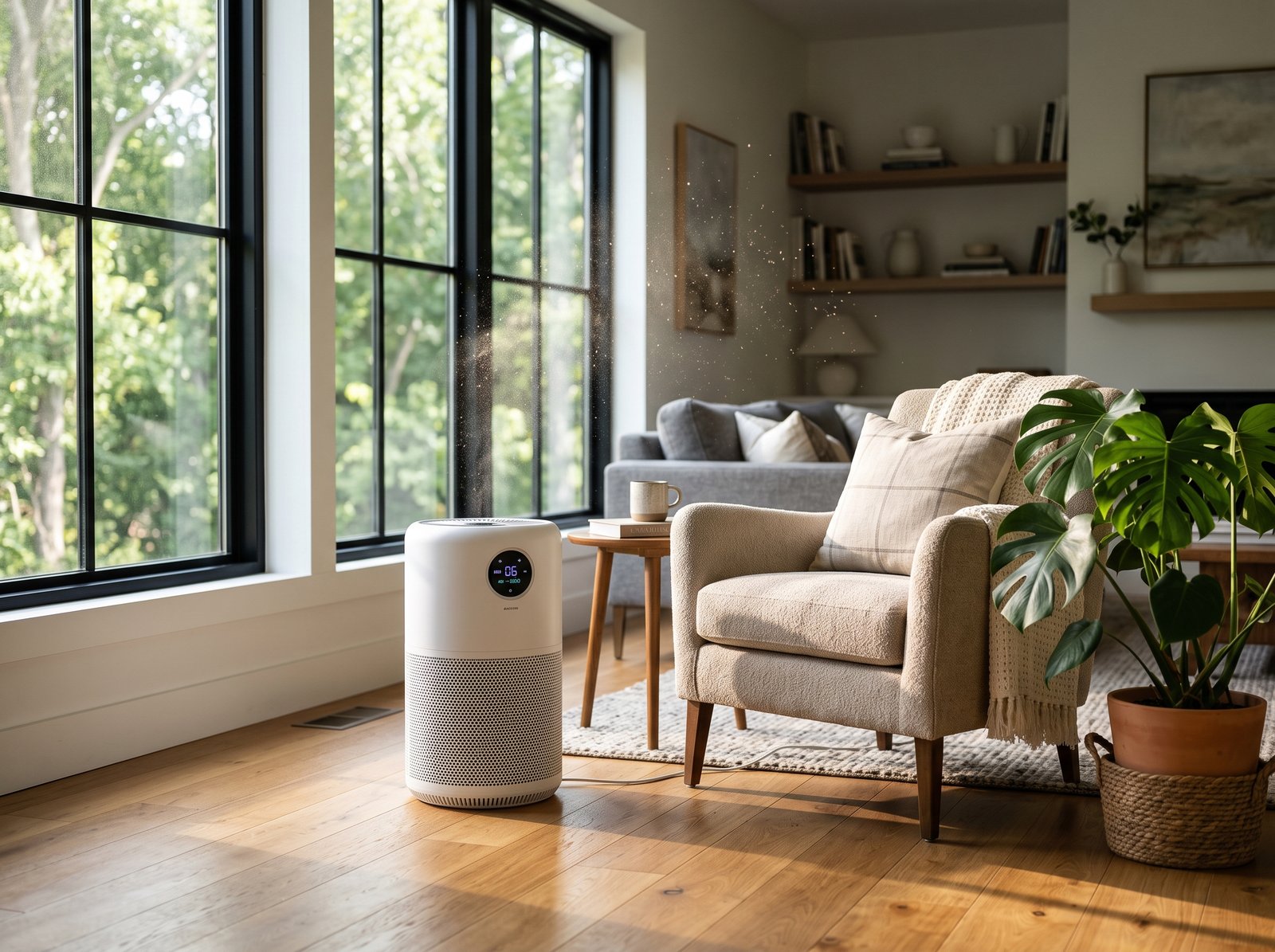
For a full indoor air defense, you also need to monitor for hidden leaks (see mold resistant paint) and consider source removal if you see visible mold, not just filter the air.
Step-by-step guide: How to reduce mold spore exposure at home
Follow these steps for an effective, lasting home mold strategy—not just a quick-fix:
- Assess your home: Check for visible mold, musty odor, history of leaks, and use an air quality monitor for home to record baseline PM2.5 and relative humidity. If RH is above 55%, a smart air quality sensor helps track this easily.
- Calculate room size and required CADR: Match your square footage to the purifier’s Clean Air Delivery Rate (CADR). For effective mold reduction, you want a device that supplies at least 4 air changes per hour (ACH)—for example, a Blueair 211+ (≈350 cfm) covers most bedrooms, while a Dyson Big Quiet (≈553 cfm) handles large open plans (source).
- Choose filter type: For most, a certified True HEPA filter (99.97% at 0.3 μm) is sufficient. For allergy and health-sensitive households, consider an H13 or HyperHEPA unit with activated carbon if you also want to tackle odors or VOCs. Compare upfront costs and planned filter replacement intervals—budget $70–$150/year for filters (see next section).
- Run a real-world effectiveness check: Install your purifier and use your air quality monitor for home to log particle and RH readings before and after. Test on high for initial days, then at your target setting for several weeks. Aim for at least a 60–80% drop in particle spikes versus unfiltered days.
- Pair with humidity control if needed: If your air is damp or mold returns, add a dehumidifier to stay under 50–55% RH—more on this in Section 3.
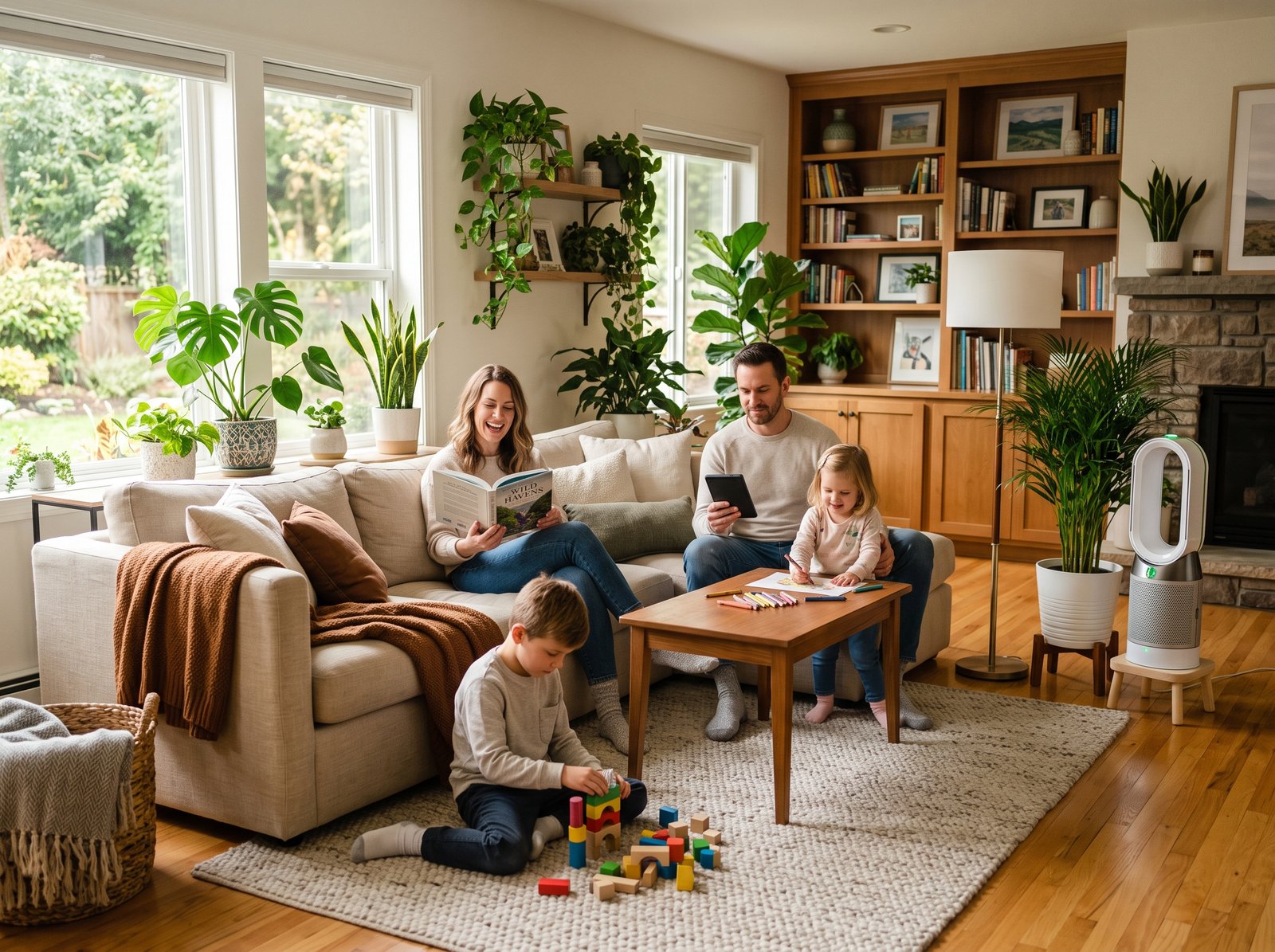
Always locate the purifier near your usual breathing zone—in a bedroom, point it near your bed, and in a living space, use it at couch level. For long-term renters or those worried about landlord restrictions, check out removable solutions like DIY peel-and-stick projects to minimize impact on walls.
Advanced analysis & common pitfalls when choosing a home air purifier for mold spores
Even the best HEPA air purifier bedroom model can under-deliver in real homes. Here’s what most guides don’t tell you (and what people get wrong):
- Lab specs vs. real-home results: CADR and ACH are tested in empty rooms. In actual homes with furniture, doors, and people, air flow may deliver just 60–80% of the lab rating (source).
- Total cost surprises: It’s not just the upfront device cost (which runs from $150 for basic True-HEPA to $1,000+ for high-end H13/HyperHEPA). Over five years, Filter Replacement and electricity are major contributors. See the table below:
| Category | Entry Level True HEPA |
Mid Range Advanced HEPA |
Premium H13/HyperHEPA |
|---|---|---|---|
| Device Cost (one time) | $150–$250 | $350–$600 | $800–$1,200 |
| Filter Replacement (annual) |
$70–$100 | $100–$130 | $120–$200 |
| Filter Lifespan | 6–12 months | 8–12 months | 1–4 years |
| Electricity (yearly) | $20–$40 | $25–$45 | $30–$60 |
| Total 5-Year Cost | $500–$900 | $800–$1,200 | $1,200–$2,000+ |
- Safety issues: Stay away from ozone-generating “air purifiers” and untested UV devices, which may worsen lung health (see IQAir’s medical review and EPA warnings). Always use devices rated for fire safety and AHAM certified CADR. If running in humid rooms, dry or swap filters more frequently to prevent microbial growth.
- Partial strategies: If you only buy a purifier but don’t address chronic leaks, poor ventilation, or high humidity, mold will keep coming back—sometimes making air filters soggy and less effective.
- Field-testing is skipped: Most guides don’t show you how to measure your actual results using an air quality monitor, which is the only way to guarantee the device is doing its job in your unique setting. For full protocol, see our air quality monitor guide.
You can also compare this investment to other home upgrades—like improving insulation or solar panels—to see if your main issue is humidity, leaks, or true airborne contamination.
Conclusion: Setting expectations & getting results
A home air purifier for mold spores can absolutely lower airborne mold risks and improve day-to-day allergy symptoms, but it’s not a cure-all. The biggest payoffs come when you choose a well-sized, certified HEPA unit, maintain your filters and combine this with smart humidity management and air quality monitoring for continuous feedback. By looking beyond the sales pitch and planning for full ownership and real-home conditions, you can breathe easier for years—not just days.
Ready to tackle mold, allergies and improve indoor air? Use the checklist above, set calendar reminders for filter swaps, and always keep an eye on your air quality data. If you’re choosing your first device, start with a well-reviewed HEPA air purifier bedroom model and invest in a basic monitor to track your win. Want more guides? Visit our full air purifier hub or compare environmental upgrades in the eco-friendly home ideas section.
Frequently Asked Questions
Does an air purifier alone stop mold growth on walls or ceilings?
No. Air purifiers for mold spores only trap airborne particles. To stop colonies from spreading or causing health issues, you must control humidity (stay under 50–55% RH) and remove visible mold—otherwise new spores keep forming, and filters may become contaminated. Always pair an air purifier with source control and dehumidification if moisture is high.
How do I know if my home air purifier for mold spores is working?
Use an air quality monitor (measuring PM2.5 or particle counts) and compare readings with the purifier on and off—after vacuuming or during high humidity. You should see noticeably lower readings and fewer spikes. Long-term, allergy symptoms and musty odors should also improve. Consult our monitor buying guide for testing tips.
What’s the difference: air purifier vs dehumidifier for mold?
An air purifier removes airborne spores, while a dehumidifier lowers humidity so mold is less likely to grow or release new spores. In damp or high-risk homes, the most effective approach is a combination of both—especially if spore counts and humidity are above recommended thresholds.
How often should I change HEPA filters, and what if they smell musty?
Replace filters according to manufacturer schedule—usually every 6–12 months for typical units, and up to 4 years for premium HyperHEPA cartridges. If you notice dampness, discoloration, or musty odors, change the filter immediately (even if not scheduled). Damp filters can breed bacteria or mold and reduce overall effectiveness.
Can I use one purifier for the whole house, or do I need one per room?
For open-plan layouts, a high-CADR, large-coverage unit (like Dyson Big Quiet) can clean large spaces. But for best protection in bedrooms (especially for allergy sufferers), use a correctly sized unit for each primary sleeping or living zone to maximize local air changes per hour (ACH). See model examples here.