

### Blog Post:
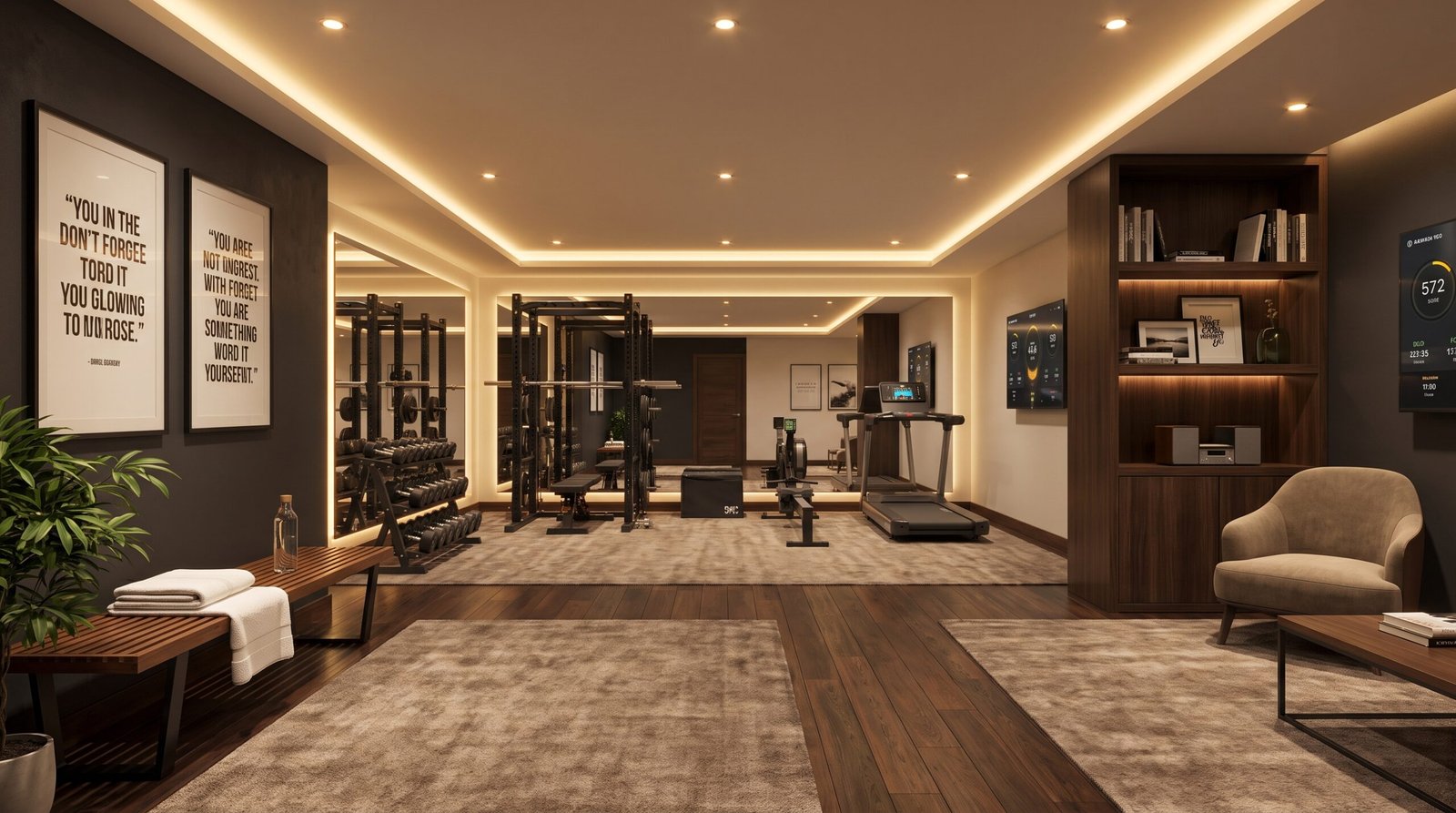
Home gym ideas have evolved fast, with busy adults seeking practical, space-saving setups that can fit even small rooms or a corner of the garage—without draining your wallet. Whether you’re starting from scratch or overhauling a cluttered space, it’s possible to build a personalized gym for $1,000–$5,000 that delivers real fitness results at home. This guide cuts through hype and helps you launch a functional gym using today’s best market data—no wasted budget, no guesswork.
Key Takeaways
- Most small home gym setups today are compact, multi-use, and can be started for $1,000–$2,000; a complete garage gym typically runs $2,000–$5,000+.
- Location matters: 63% of home gyms are built in garages, but basements and small rooms work with careful planning and the right flooring.
- The biggest mistakes are poor layout planning, inadequate flooring, and skipping on ventilation or insurance. Use our checklist to avoid them.
- 2024–2025 Market Snapshot: What Budgets Buy Today
- Location Choice — Garage vs Basement vs Apartment: Pros, Cons and Who Each Suits
- Minimum Space & Layout Rules — Planning Before Buying
- Budget Tiers and Prioritized Shopping Lists (Starter, Mid, Full)
- Equipment Mix That Maximizes Space & Utility
- Top 5 Pain Points for Budget Small Gyms — and Exact Fixes
- Flooring by Location (Garage, Basement, Apartment) — Protect Home and Gear
- Overlooked But Critical: Acoustics, Insurance and Multi-Use Zones
- Safety, Maintenance and Seasonality Checklist
- 8-Week Build Plan + Quick-Start Checklist (Decide → Buy → Install → Train)
- Final Checklist & Next Steps (Budget Worksheet, Layout Template, Insurance Prompts)
- FAQ
2024–2025 Market Snapshot: What Budgets Buy Today
Right now, small home gym setup trends strongly favor compact, multi-use equipment to stretch budgets and save space. According to recent surveys, the average starter spend lands between $1,000 and $2,000. For this, you’ll get the essentials: adjustable dumbbells, a weight bench, resistance bands, maybe a compact rack and basic rubber flooring. Jump to the $2,000–$5,000 range, and you can add: a power rack, Olympic bar, bumper plates, a cardio machine and a functional trainer—transforming a garage or basement into a true fitness zone.
Compact, selectorized gear (like adjustable dumbbells and fold-away benches) are now dominating best-seller lists. This maximizes both workout variety and floor space: perfect for anyone with moderate lifting experience who needs results without clutter.
Location Choice — Garage vs Basement vs Apartment: Pros, Cons and Who Each Suits
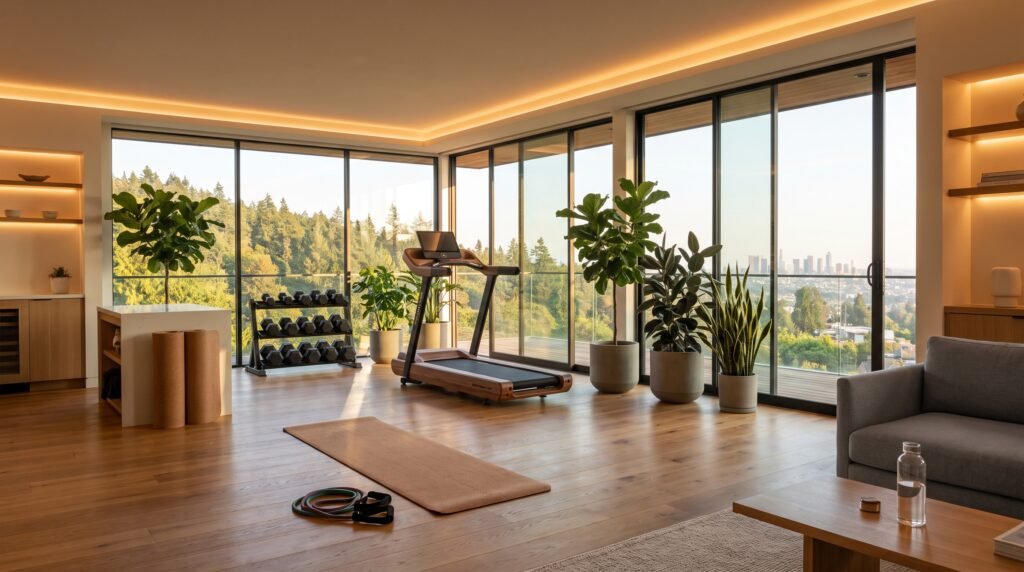
Choosing the right space is half your battle. Here’s a quick reality check on your options for garage storage system transformation, crowded basements, or tiny apartments:
| Location | Pros | Cons | Best For |
|---|---|---|---|
| Garage | High headroom, best for big lifts, easy access and ventilation | Temperature swings, noise can echo, may share with cars | Most lifters, power/oly training, car-free or half-garage |
| Basement | Stable temps, privacy, moist resistance with treatment | Ceiling may be low, moisture risks, less ventilation | Cardio, moderate weights, quiet workouts, resale value |
| Apartment/Room | Convenience, climate controlled, can multi-use for gym/office | Constrained space, limited to bands/bodyweight/light weights, insurance rules | Beginners, quick HIIT workouts, renters, busy pros |
Pro tip: 63% of home gyms are in garages; just under a quarter are in basements. Only a small slice goes into apartments or extra bedrooms [source]. Always check your insurer or landlord before you anchor anything to walls or floors.
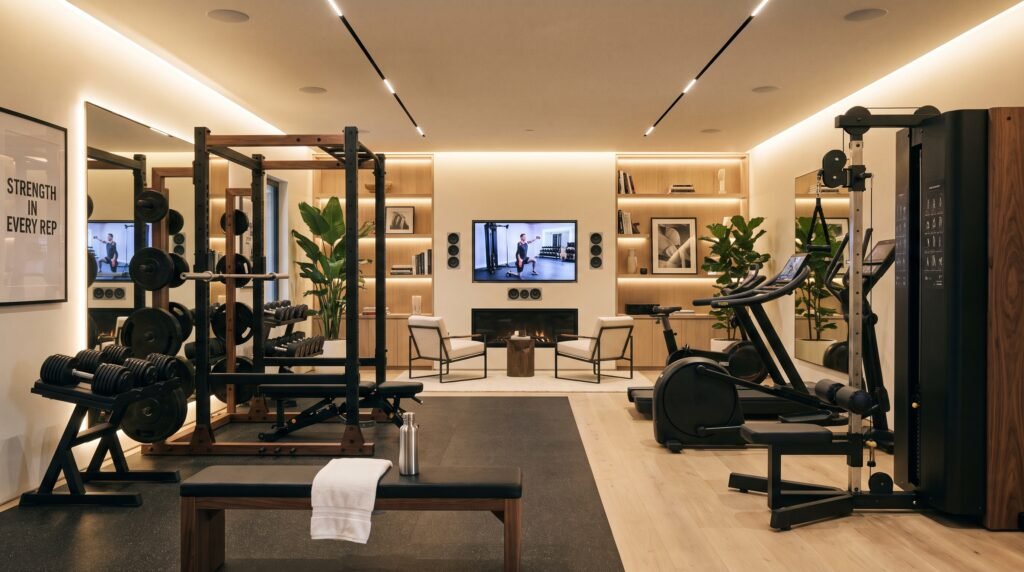
Quick Location Decision Checklist
- Ceiling height? For barbell work, at least 7 feet clearance is ideal.
- Moisture? Basements may need a dehumidifier. Garages need rust-blockers.
- Noise? Shared walls (apartments) = focus on mats and lighter weights.
- Shared use? If you also park or store stuff, keep the main aisle clear.
For more ideas on adapting small areas for big results, explore waterproof flooring for basement and flex-room planning options.
Minimum Space & Layout Rules — Planning Before Buying
Before you shop, use these layout rules for any small home gym setup (10×10 up to 20×20 feet):
- Measure your space’s length, width, ceiling, doors, and windows.
- Sketch a rough plan, setting “movement zones” with tape, chalk, or a floor mat.
- Test-fit your largest gear first (rack, bench, or cardio), then lay out smaller items (bands, dumbbells, mats).
- Leave at least 3 feet clearance around every side of your major equipment (for safe movement and spotters).
- For barbell training, 100 sq ft (a 10×10 area) is practical. About a quarter of gym owners do it in this space; most others use 200–400 sq ft [see data].
If your budget or time is limited, prioritize versatile, foldable equipment—it lets you reclaim floorspace in seconds. Check out our garage storage system tips to avoid cluttering up high-traffic areas.
Budget Tiers and Prioritized Shopping Lists (Starter, Mid, Full)
Budget determines what’s possible—but spend wisely for your true needs, not “aspirational” gear you may never use. Here’s how to break it down:
Starter ($1k–$2k):
- Selectorized adjustable dumbbells (saves multiple sets worth of space/costs)
- weight bench (preferably foldable)
- Resistance bands (variety pack)
- Rubber stall mats or interlocking tiles for flooring
- Wall-mounted rack or vertical stand
Mid ($2k–$3.5k):
- All Starter Tier gear
- Half-rack or compact squat rack + dip attachment
- Olympic barbell (find a 6′ compact bar for small rooms)
- Minimum 200 lbs bumper plates
- Low-profile cardio machine (rower or air bike)
Full ($3.5k–$5k+):
- All Mid Tier gear
- Full power rack or cage with safety arms
- Heavy-duty bench (multi-adjustable)
- Cable station or functional trainer
- Upgrade to premium stall mats, more plates, specialty bars
- Optional: Smart gym mirror, compact hack squat, better organization
Looking for ways to trim costs on assembly and install? Use a portable power tool, DIY compact weight platforms, and check independent reviews before buying thick flooring or racks.
Equipment Mix That Maximizes Space & Utility
The best home gym ideas today center around gear that shrinks or disappears when not in use. Look for:
- Selectorized adjustable dumbbells (less clutter, quick weight changes)
- Foldable or stowable benches
- Compact racks or half-racks that anchor into walls, not floors
- Kettlebells for swing, press, and pull exercises
- Heavy fabric bands for pull-ups, rows, and deadlifts in odd-shaped rooms
- For intermediate users: Compare plate-loaded machines (cheaper, but bulkier) vs. selectorized units (quicker change, more compact)
This approach makes even tight spaces effective for strength, cardio, and flexibility work. Shared-space hack: store bands, yoga mats, and lightweight accessories in a rolling ottoman or combo storage bench—ready for quick room resets.
Top 5 Pain Points for Budget Small Gyms — and Exact Fixes
Too many home gyms fail from poor prep in these five categories—here’s how to avoid the pain and fix issues fast:
- Layout: Not enough clearance for big lifts? Use painter’s tape to mark zones before assembling any gear. Prioritize gear against walls and keep the walkway clear. Never block doorways or emergency egress.
- Flooring: Concrete garages need thick rubber mats or stall mats for shock/impact. For basements, consider raised platforms to resist moisture. Apartments should use modular foam tiles for low-impact work.
- Ventilation: In garages, a simple box fan or portable A/C makes a huge improvement. Basements often need a dehumidifier (source).
- Safety: Use lag bolts for anchoring racks and wall units. Bumper plates help protect both flooring and your equipment (and keep noise down).
- Storage: Vertical racks and wall mounts keep weights off the floor, prevent trip hazards, and double your usable area. DIY shelving works for odd corners—see our garage storage DIY guide.
For basement home gym flooring, explore SPC flooring vs LVP for durability and moisture resistance in below-grade areas.
Flooring by Location (Garage, Basement, Apartment) — Protect Home and Gear
Your floor makes or breaks a home gym. Garages have unmatched stability (concrete is deadlift-approved), but need impact mats to prevent plate damage and noise. Basements? Go with thick interlocking tiles or raised platforms for moisture and sound absorption. Apartments: prioritize foam tiles or low-profile rolling mats you can tuck away after a workout.
Shock absorption and anti-slip protection help prevent both injuries and equipment wear—don’t cheap out here. Details on material options and layering tips for every setting (including insulation and noise) are covered in our SPC vs LVP flooring comparison.
Overlooked But Critical: Acoustics, Insurance and Multi-Use Zones
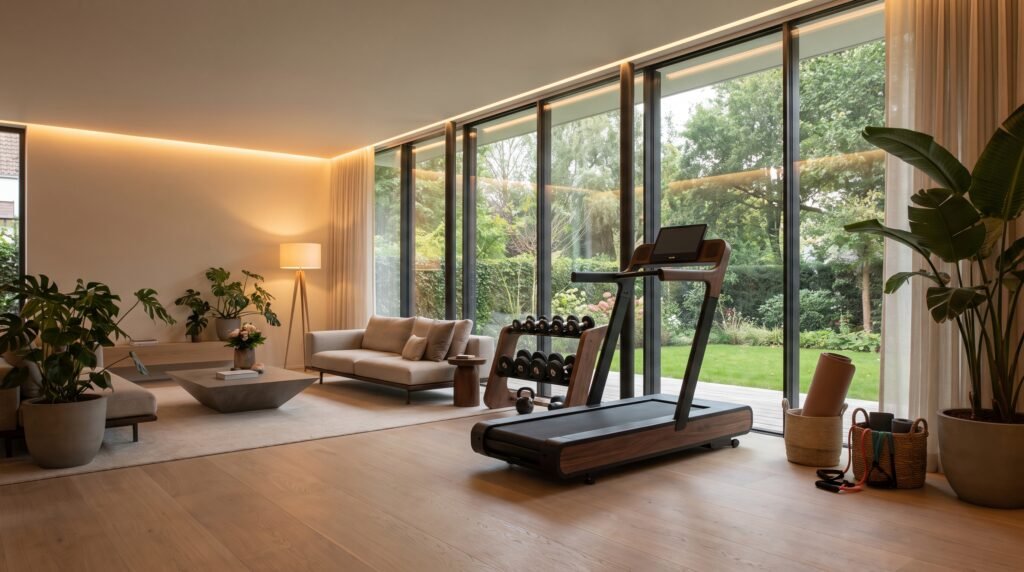
Three huge details most guides skip, but that can cost you headaches—or more—down the line:
- Acoustics: Gyms in garages can echo badly. Hang moving blankets on walls, add area rugs/mats under equipment, and seal gaps to reduce noise transmission.
- Insurance: Always tell your insurer when you install heavy racks, wall attachments, or run small group workouts. Ask about liability, equipment coverage, or specific exclusions—especially if renting or planning to monetize space. Related reading: garage conversion ADU and insurance tips for multi-use spaces.
- Multi-Use: Combine gym gear with home-office setups or hobby zones by using folding screens, mobile storage, and combo furniture. Example: A foldaway squat rack becomes a monitor stand when not in use.
Check our standing desk converter guide for more ideas on blending gym and workspaces.
Safety, Maintenance and Seasonality Checklist
- Check rack anchors, wall mounts, and nuts/bolts every three months.
- In garages, treat bars with light oil or a rust-preventive spray, especially after winter. Store plates/equipment off the floor to prevent moisture damage.
- Basements need a dehumidifier and regular checks for water seepage. Use vapor barriers beneath rubber mats if needed.
- Never overload shelves or racks. Always leave a 3-foot clear aisle as an emergency exit.
- Review homeowner’s insurance annually for coverage, especially if subleasing or sharing the gym.
Climate control isn’t a luxury: temperature swings lead to rust and frozen grips—especially in garages. Insulate and use portable heat/cool units for year-round comfort and equipment longevity.
For more on adapting your garage for all-season use and maximizing return, you can also explore how to build a home gym that pays for itself.
8-Week Build Plan + Quick-Start Checklist (Decide → Buy → Install → Train)
Stay realistic and efficient with this timeline:
- Week 1: Measure & choose location. Mark movement zones. Download our layout template.
- Week 2: Set budget/tier. List needs vs. nice-to-haves.
- Weeks 3–4: Order big items (rack, bench, cardio). Schedule delivery for when you’re available.
- Week 5: Install flooring & climate controls. Lay mats/platforms first.
- Weeks 6–7: Organize storage & install sound dampening. Mount vertical racks, put down area rugs.
- Week 8: Safety check (anchors, bolts, walkways, clear emergency exits) & start your first programmed workout.
Bring in your largest items first—you won’t know real space needs until the rack or cardio machine arrives. Use your starter or full-tier list and compare trusted vendors, like those in this equipment review roundup.
Quick-Start Shopping List by Tier
- Starter: Adjustable DBs, foldable bench, bands, 4–6 mats, wall/vertical rack
- Mid: Add squat rack, compact Oly bar/plates, entry-level cardio
- Full: Add full cage/power rack, cable trainer, pro mats, premium organizer
For extra inspiration, check out how to reclaim garage space for storage or fitness in our organization guide.
Final Checklist & Next Steps (Budget Worksheet, Layout Template, Insurance Prompts)
- Pick your best location: garage, basement or small room (list pros and cons above to match your situation)
- Choose your budget tier: starter, mid or full (see sections above for shopping list)
- Download or sketch a layout template and tape out major zones
- Buy 1–3 core items first—don’t crowd your space trying to “do it all” at once
- Call your insurance provider or landlord, ask about:
- Liability coverage for accidents
- Coverage for stolen or damaged equipment
- Rules on wall or floor attachments
The home gym market is growing fastest in garages and through demand for compact solutions. Garage-friendly, space-saving equipment isn’t just a trend—it’s the best ROI for most busy adults. Review your checklist, act on your garage home gym on a budget options, and start building your own home gym ideas blueprint today.
Conclusion
Building a smart, effective gym at home is possible on any reasonable budget. Stick to the layout and safety rules above, favor gear that fits your space, and handle the details others skip: insurance, sound, and seasonal maintenance. The home gym ideas that work in 2024–2025 are realistic, budget-focused, and always prioritize your long-term goals over quick, flashy purchases. Start today and see how quickly spare space can become lasting motivation. Ready to commit? Download the layout template and take the first measurement now.
FAQ
What is the minimum budget for an effective small home gym setup?
Most people get started with $1,000–$2,000, which covers adjustable dumbbells, a bench, resistance bands, basic flooring, and a simple rack or wall-mount. Aim for quality over quantity—the essentials outlast trendy extras.
Which room is best for a budget home gym: garage, basement, or spare room?
Garages are most common (about 63% of setups) and have the best ceiling height and structural strength. Basements offer climate control and privacy but may require dehumidifying. Small rooms or apartments work if you stick with bands, adjustable weights, and movable mats.
What flooring do I really need for a garage or basement gym?
Use thick rubber mats or stall mats (~3/4 inch) on concrete to protect the floor and reduce noise. For basements, consider raised platforms and moisture barriers. Modular foam works well in apartments or upstairs rooms with light weights.
How do I prevent noise and protect my home from damage?
Add area rugs, rubber mats, and wall-hung blankets to dampen noise. Always anchor heavy equipment and leave space near exits. Inform your insurer of any major installations to keep coverage valid.
Should I buy new or used home gym equipment on a budget?
Mix both: Prioritize new for items that must be safe and sturdy (racks, benches), but look for gently used weights or cardio gear to save hundreds. Always inspect for rust or instability before buying used items.