

Thinking about transforming your grass into a truly drought-friendly showpiece? Xeriscaping front yard ideas are trending hard in 2026, but most homeowners want a straight answer: how much does it really cost, and where do the numbers hide surprises? This is your practical, research-backed playbook for realistic xeriscape budgets, typical pitfalls, and concrete design steps—no wishful thinking, just actionable guidance to save water and boost curb appeal.
Key Takeaways
- Xeriscaping usually costs $5–$20 per square foot in 2024; materials alone average $9–$11 per square foot nationally.
- True costs can be much higher or lower based on climate, plant palette, and DIY versus pro installation—regional data is still lacking (pro tip: always get local quotes).
- Most savings come after year one, so proper planning, plant selection, and real-world maintenance expectations are critical for lasting results.
- Quick snapshot — What xeriscaping costs in 2024 (national overview)
- How to Plan & Budget Your Xeriscape: Step-by-Step Guide
- Common Pitfalls, Advanced Tips & Real-World Problems
- Conclusion: The Smart Path to Water-Saving Curb Appeal
- FAQs: Xeriscaping Front Yard Ideas, Costs & Results
Quick snapshot — What xeriscaping costs in 2026 (national overview)
If you’re searching for xeriscaping front yard ideas and honest cost benchmarks, the latest national figures are clear. Most homeowners spend between $5 and $20 per square foot to convert a grass lawn to xeriscape in 2026. Typical front yard projects (1,000–1,200 sq ft) end up costing $11,000–$18,000 with a national average around $17,000 (source). Materials alone frequently run $9–$11 per square foot. High-end jobs—especially those involving complex grading, featured stonework, or rare native plants—can hit $25 per square foot or more.
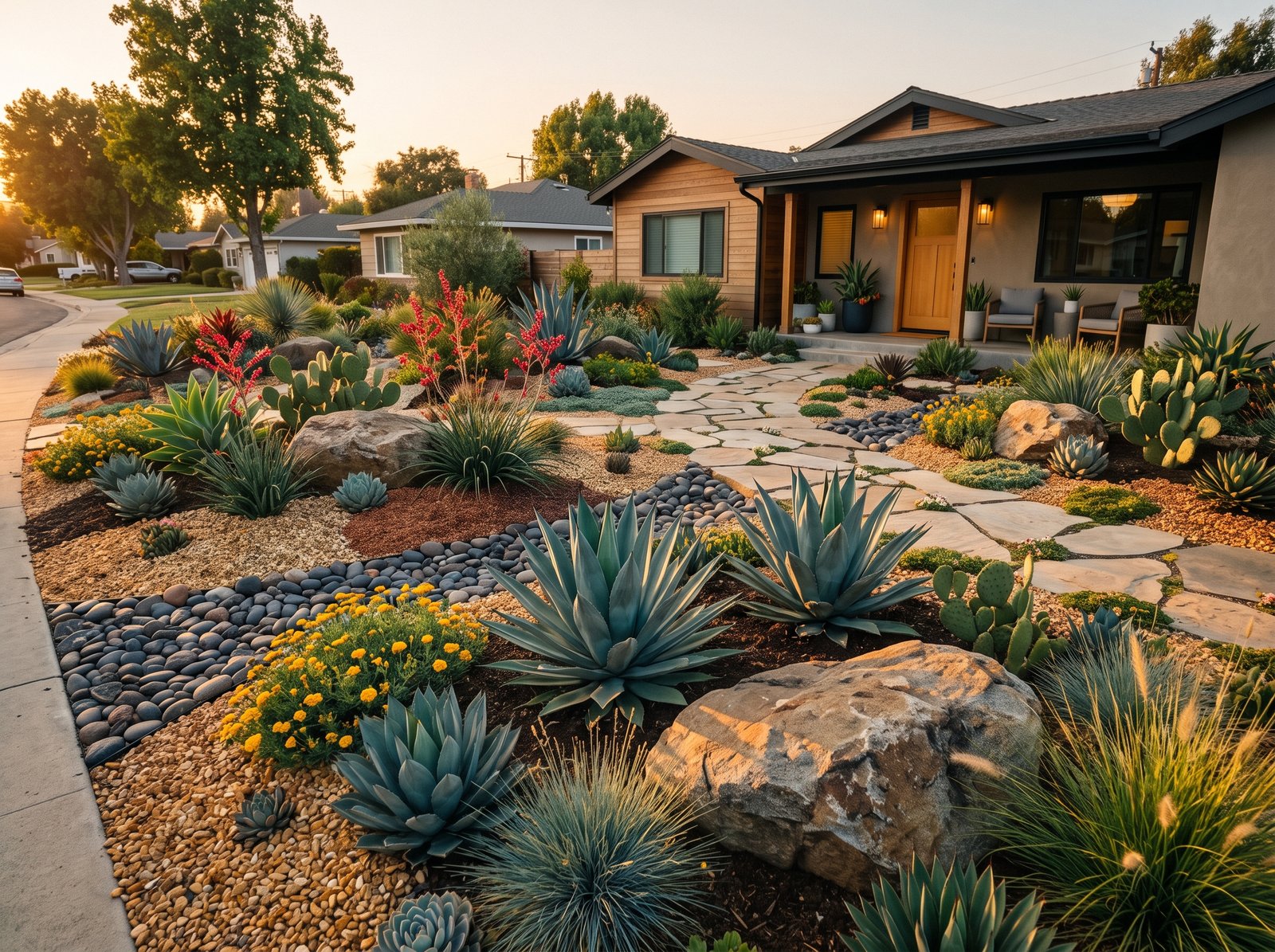
Examples:
- 500 sq ft: $5,500–$7,500
- 1,000 sq ft: $11,000–$15,000
- 1,200 sq ft: $16,000–$18,000
Cost drivers: Yard size, plant types (native vs. ornamental), site prep, whether you do the work yourself or hire a pro, and your location. Some sources cite much lower “annual cost per sqft” ($1.50–$2.50), but those numbers reflect ongoing maintenance, not installation (compare figures).
Note: No public sources currently break down xeriscape cost per square foot by specific US region or by install versus annual maintenance costs. Always get at least two local contractor bids and check for city or utility rebates on turf removal and native plants.
How to Plan & Budget Your Xeriscape: Step-by-Step Guide
- Measure Your Space: Calculate your front yard’s total square footage. Double-check irregular shapes, setbacks, and shared areas.
- Set Budget Bands: Decide which project tier fits:
- DIY, low materials: $5–$10/sq ft
- Pro installation, mid-tier plants/hardscape: $12–$18/sq ft
- Premium plant mix, complex shapes: $18–$25+/sq ft
- Expect Upfront Cost Components:
- Design/permit: 5–10%
- Hardscape (paths, rocks, boulders): 20–35%
- Plants (shrubs, groundcover, trees): 25–40%
- Irrigation/drip: 10–15% Irrigation/drip
- Mulch/rock groundcover: 10–20% Mulch/rock groundcover
- Labor (if hiring out): 30–50% of total
Material cost alone averages $9–$11/sq ft; plant quality and size create the biggest swings. High-quality drought-tolerant trees and shrubs can push totals beyond $25/sq ft (source).
- Factor Maintenance: Xeriscapes mean less frequent mowing and watering, but not zero work. Plan for annual irrigation checks, weeding, occasional pruning, and replacing plant losses, especially in the first three years.
- Get Local Quotes: Regional labor, material, and plant availability will affect your end price more than any “national average.” Ask local contractors for written, line-item bids—clarify what’s “turnkey” vs. your responsibility (cleanup, mulch, hauling, ongoing care).
- Look for Rebates & DIY Opportunities: Many water utilities offer rebates for turf removal and native plants. Compare pro install versus partial DIY to see where you can save. Not sure where to splurge? Focus budgets on proper site prep and quality irrigation install—you only get one chance to prevent drainage or watering errors.
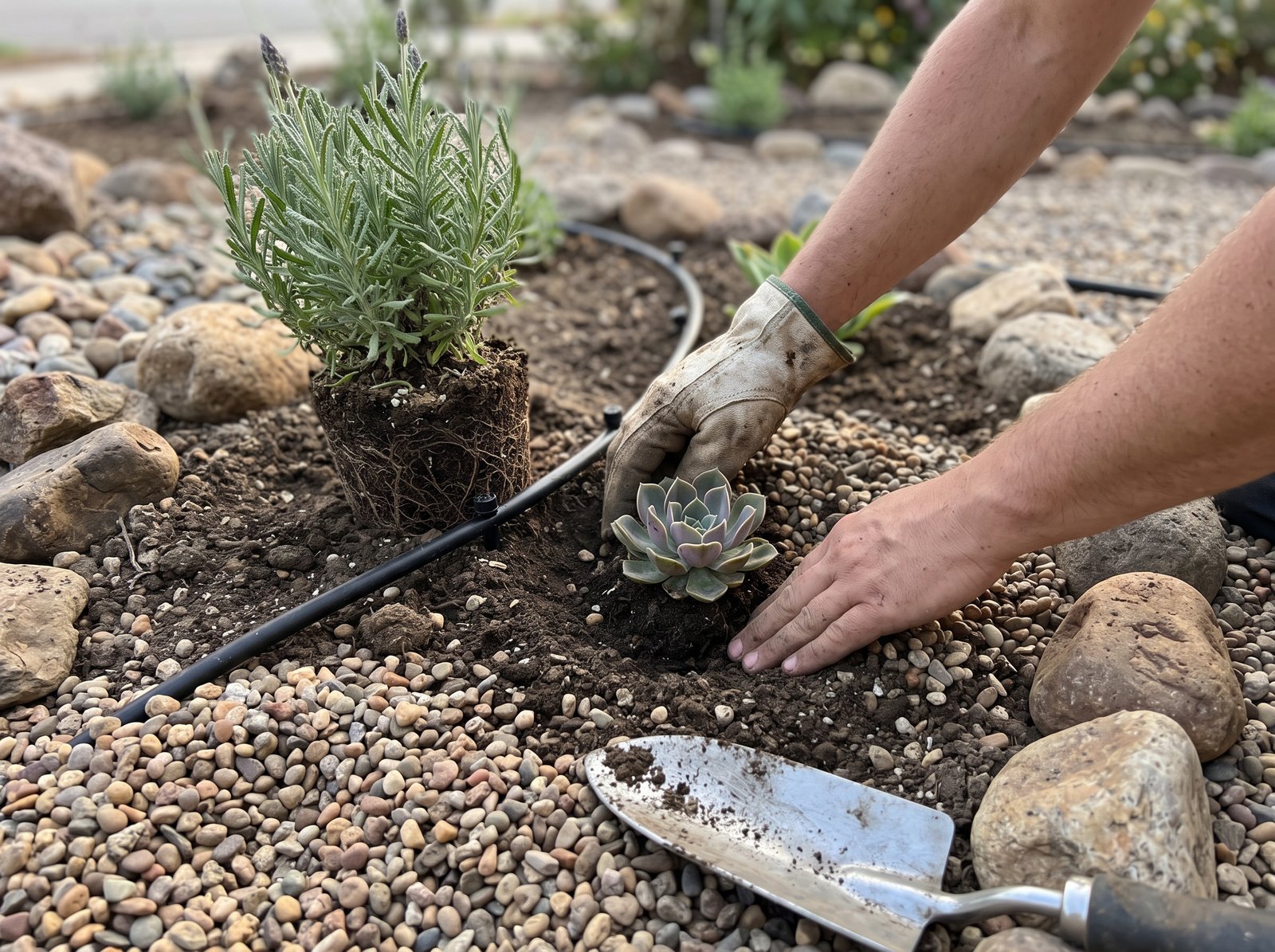
Need more eco-friendly landscaping context? See our guide to green renovation choices for additional water-saving options.
Considering energy upgrades too? Check out smart thermostat ROI as another way to reduce bills and build resilience against climate volatility.
Common Pitfalls, Advanced Tips & Real-World Problems
Xeriscaping front yards may look easy in photos, but real projects are rarely 100% smooth. Here’s where most cost overruns and headaches happen—and how to avoid them:
- Regional Cost Surprises: Plant costs can double or triple if you’re outside their ideal growing zone. Northeast and Midwest yards may require extra soil amendments; desert sites need more mulch and higher initial plant spend for true “no grass” success.
- Underestimating Maintenance: “Low maintenance landscaping no grass” doesn’t mean “no maintenance.” All xeriscapes require some irrigation system attention and seasonal weed removal. Expect the first year to be the hardest; plants often fail due to under-watering or poor placement.
- Reflective Heat and Rock Overuse: Excessive gravel or bare rock can create “heat island” effects around entries and windows, making homes hotter in summer. Mix in plenty of shade from drought-tolerant trees and shrubs wherever possible.
- HOA Pushback & Curb Appeal: Some home associations or neighbors may complain about appearance, especially if too much hardscape or debris is visible. Research what has passed in your area—tip: lush native groundcovers and meandering pathways tend to win more support than all-gravel installs.
- Water Runoff & Drainage Issues: Removing lawns changes how water moves—without careful grading, you risk flooding, pooling, or even foundation problems. Always defer to professional site prep if your lot isn’t flat and easy.
| Item | % of Budget | Low-End | High-End |
|---|---|---|---|
| Design/Permits | 5 – 10% | $250 | $1,800 |
| Hardscape | 20 – 35% | $1,100 | $5,800 |
| Plants | 25 – 40% | $1,400 | $6,800 |
| Irrigation/Drip | 10 – 15% | $600 | $2,800 |
| Mulch/Rock | 10 – 20% | $500 | $3,500 |
| Labor | 30 – 50% | $2,200 | $9,000 |
For more innovative approaches—especially with permeable pavements—read our permeable patio cost guide. If smart irrigation piques your interest, see our smart thermostat install guide.
- Want a backyard that matches your new xeric front? Explore DIY raised garden beds for more water-savvy landscaping ideas.
- For energy efficiency tie-ins, our readers save with modern window replacement to further slash bills.
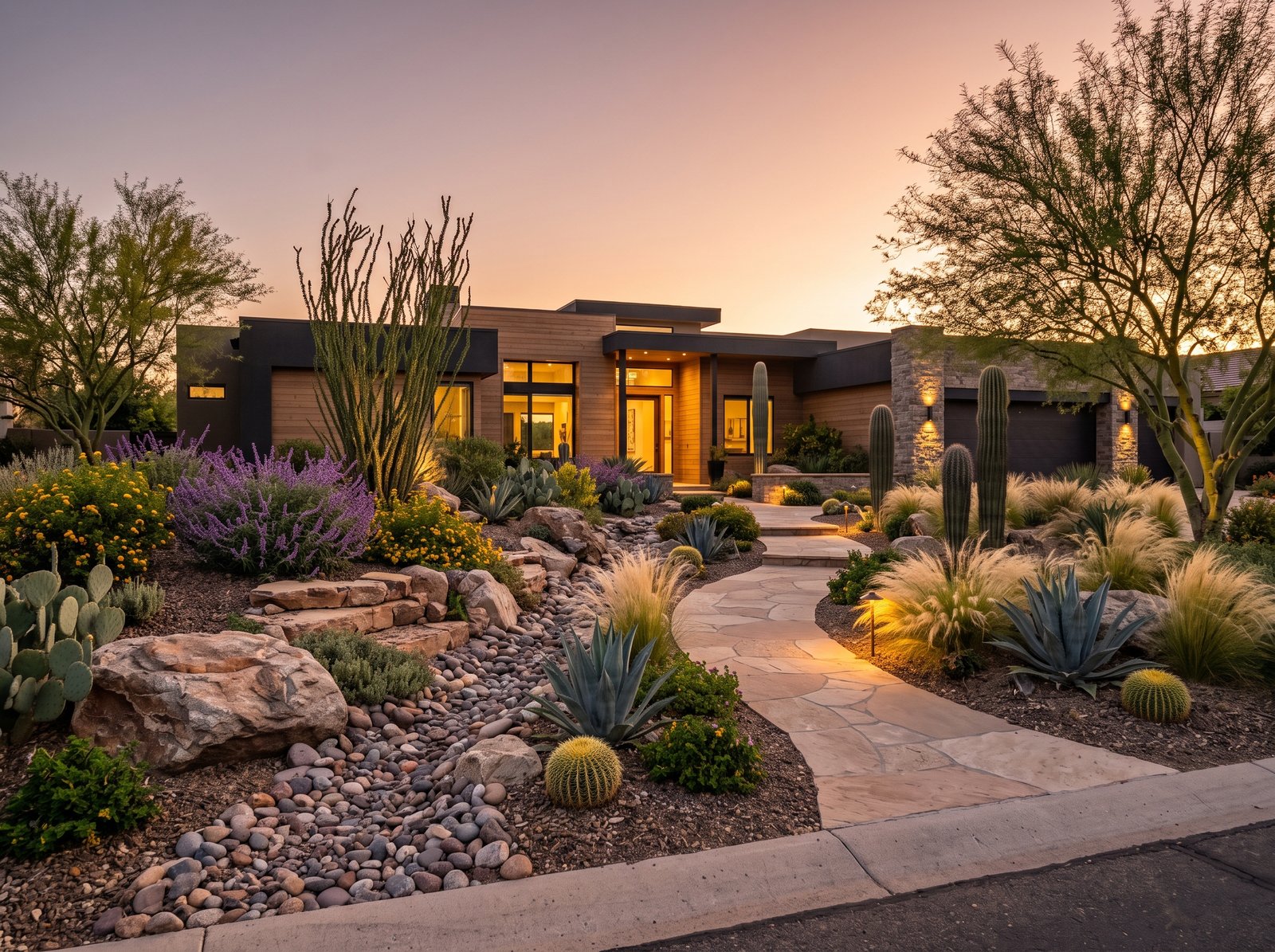
Conclusion: The Smart Path to Water-Saving Curb Appeal
In 2026, xeriscaping your front yard is one of the few upgrades that can dial down water bills, lessen weekend chores, and bump up your home’s appeal—if you budget smartly, beware the common pitfalls, and use regionally appropriate plants. Average project cost is $5–$20 per square foot in most US markets. DIY can save thousands, but pro help with design or grading can be money well spent. Explore every incentive, get local quotes, and use the xeriscaping front yard ideas in this guide as launch points for your own yard’s transformation.
Ready to make your curb appeal drought-tough and stunning? Start measuring your front yard now—and share your before/after saves with our community!
FAQs: Xeriscaping Front Yard Ideas, Costs & Results
How much does xeriscaping cost per square foot?
Most projects run $5–$20 per square foot, with the national material-only average close to $9–$11 per square foot. Premium plant palettes and labor can push costs higher. Always get a local bid to verify.
Will xeriscaping increase my home value?
It can, especially in drought-prone areas or HOAs open to waterwise lawns. A well-designed xeriscape often boosts curb appeal, lowers future water costs, and appeals to buyers seeking low maintenance landscaping with no grass.
How soon will I recoup my investment?
Payback depends on climate, water rate, and project size. Typical homes see ongoing landscape water savings start immediately, with most project investments recouped over 5–7 years compared to traditional turf upkeep.
Is xeriscaping truly zero maintenance?
No—though it slashes mowing and irrigation, you’ll still have to weed, prune, check irrigation lines, and replant losses every few years (especially year 1–2). Expect 10–25% of a standard lawn’s maintenance time annually.
Can I do xeriscaping myself or should I hire a contractor?
DIY is doable for flat lots with basic layouts and available plants, but consider a pro if you need major grading, irrigation install, or have complicated HOAs/permits to navigate. A mix of pro site prep and DIY plantings often works best—and saves budget.