

### Blog Post:
Fluted panel wall accent upgrades are trending for homeowners seeking a bold design move that “should” help tame echo in open spaces—but how do these panels really stack up on cost and sound control? This guide offers real numbers and clear answers so you know exactly when fluted panels are worth it for style, when to try DIY, what to budget, and when it’s time to choose real sound dampening wall panels for a home office or media room.
Key Takeaways
- Fluted panel wall accents are mainly decorative; true acoustic improvement requires NRC-rated panels and more coverage.
- DIY material costs can be as low as $3.50 per sq ft with MDF, but solid wood and professional install push accent wall projects into the $1,200–$4,500 range for 80–120 sq ft.
- Surface prep, fastener choices, and realistic expectations about sound dampening are critical for success and satisfaction.
- What a fluted panel wall accent actually is (and what it isn’t)
- Average fluted panel installation cost (US) — DIY vs professional
- UK pricing note and data gap
- Acoustic reality check — sound dampening wall panels vs fluted accents
- Real homeowner complaints from DIY fluted wood panels (what to watch for)
- When to DIY and when to hire a pro (time, cost, and quality tradeoffs)
- Cost comparisons — alternatives shoppers should consider
- Practical tips to maximize sound reduction if you want both style and function
- Quick maintenance and longevity checklist
- Bottom line + next steps (how to evaluate quotes and what to ask suppliers/installers)
- FAQ
What a fluted panel wall accent actually is (and what it isn’t)
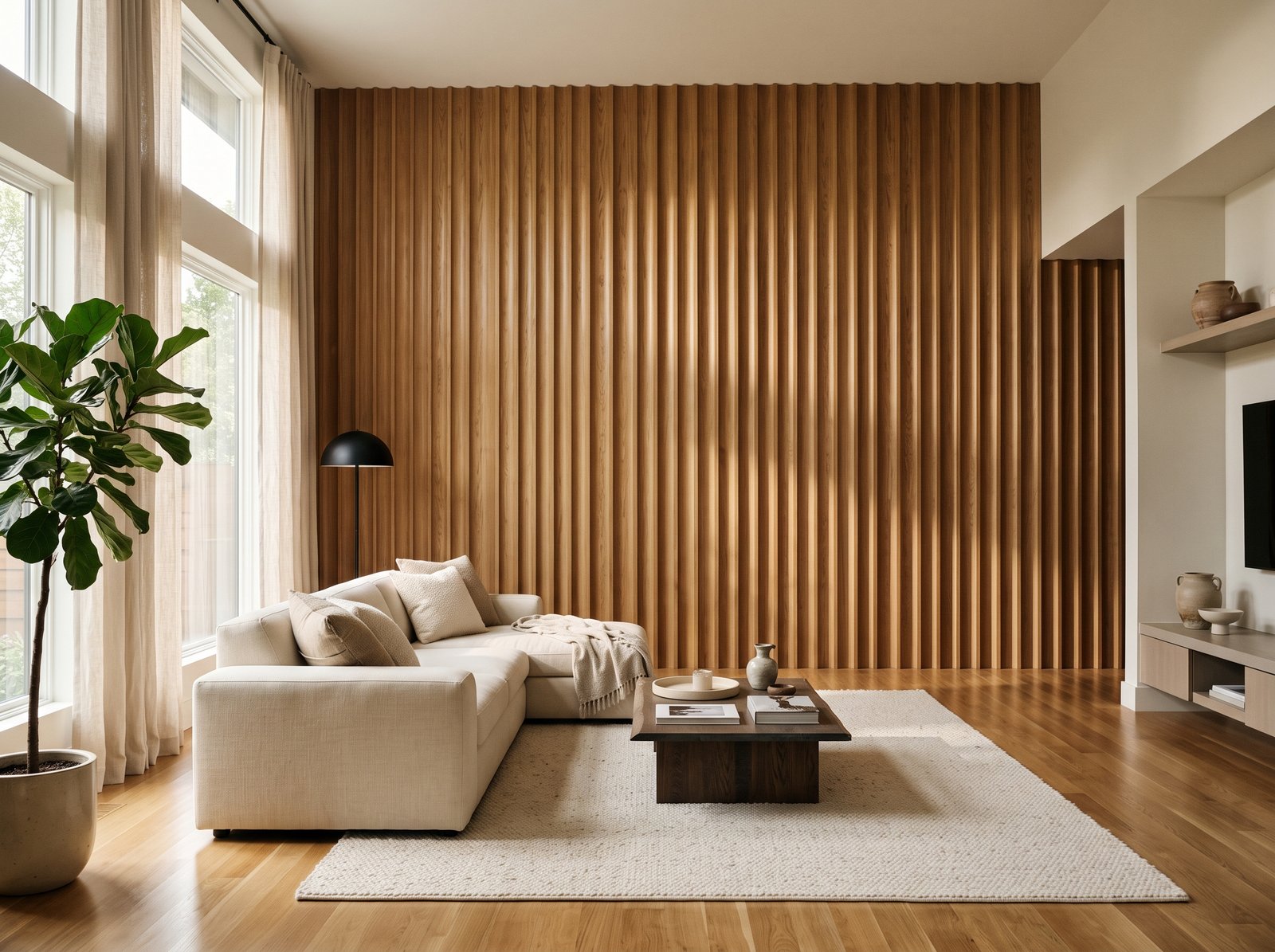
A fluted panel wall accent is a feature wall clad in narrow, regularly spaced, vertically grooved panels—usually in wood, MDF (medium-density fiberboard), WPC (wood plastic composite), or peel-and-stick formats. These panels deliver bold visual texture and architectural interest. However, most fluted wall panels are decorative by design—not engineered for high acoustic performance or robust sound dampening.
In the US, typical DIY material price ranges are:
- Premium solid wood: $15–$50 per sq ft
- Paint-grade MDF: $3.50–$8.00 per sq ft
- WPC (water and warp resistant): $7–$14 per sq ft
- peel-and-stick panels: $3–$8 per sq ft
Solid wood options (like oak, walnut, or cherry) cost the most and require special acclimatization and mounting to avoid warping. Paint-grade MDF is the budget pick. WPC resists moisture and temperature swings, so it’s ideal for tricky spots like bathrooms. Peel-and-stick products offer fast, renter-friendly style upgrades but don’t significantly alter room sound or offer much durability.
Average fluted panel installation cost (US) — DIY vs professional
For a standard 80–120 sq ft accent wall, expect the total fluted panel installation cost to range from $1,200 up to $4,500 if you hire a pro. That includes materials and labor. Here’s how it breaks down:
- DIY material cost: $3.50–$8.00 per sq ft for MDF, $15–$50 per sq ft for premium hardwood (source).
- Professional labor: Adds $8–$20 per sq ft, depending on wall condition, prep, and complexity (source).
Example: An 8×10 ft wall (80 sq ft), with midgrade MDF panels ($6/sq ft) and pro labor ($12/sq ft), totals about $1,440 for material and $960 for labor—$2,400 all-in. Using premium solid wood or choosing a larger wall can easily double this.
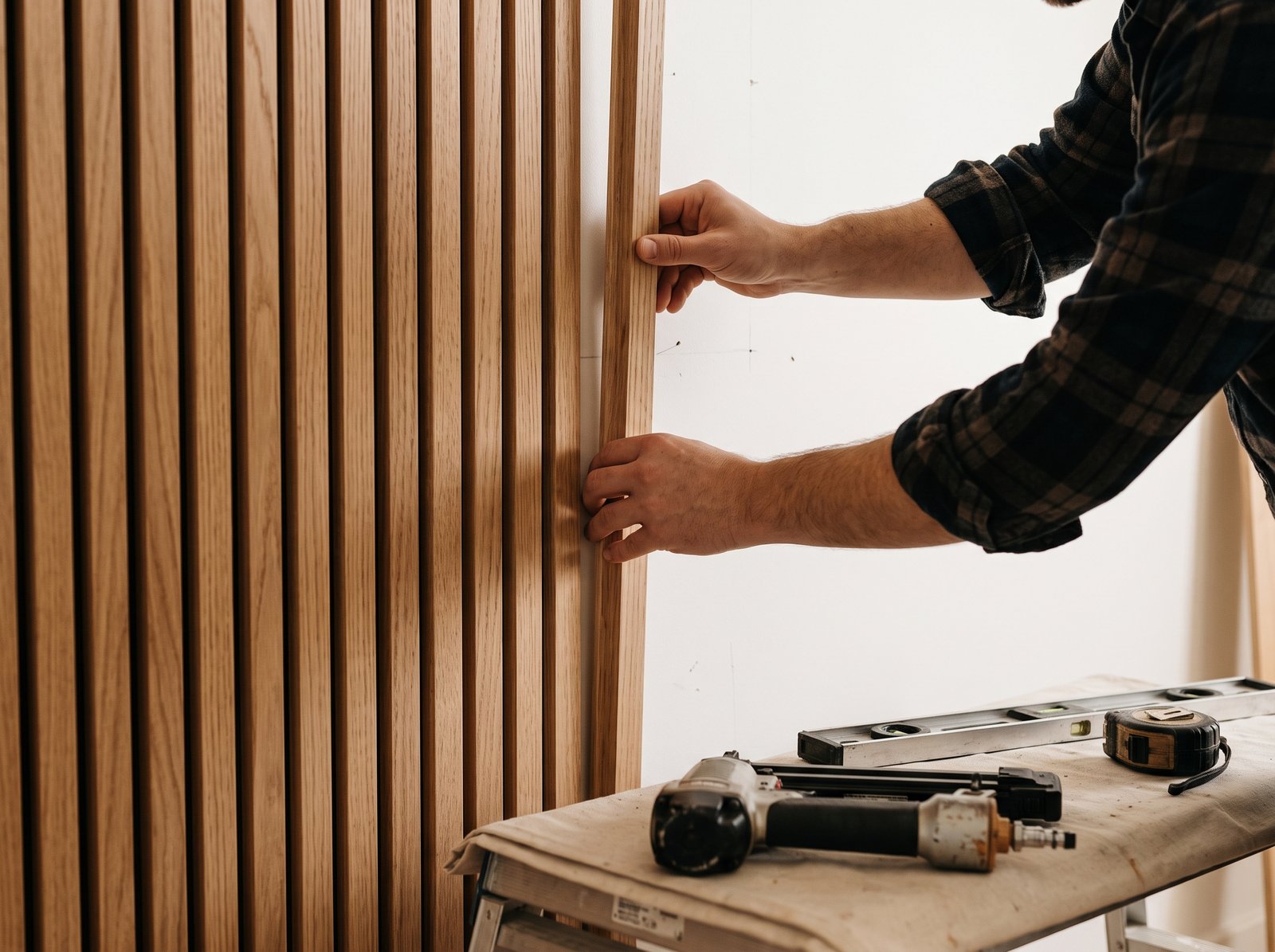
If you’re considering the DIY route, keep in mind that tools, wall preparation, and finishing (sanding, painting, caulking) can add hours of work. Start with a smaller section if it’s your first time.
Those wanting a quick, renter-safe project should check out peel-and-stick panels for kitchens or smaller wall areas.
UK pricing note and data gap
Current 2024 research does not provide fluted panel installation cost data specific to the UK. To estimate UK costs from US benchmarks, factor in:
- Currency exchange rate (USD to GBP)
- VAT (typically applied to full cost)
- Potentially higher labor rates and transport costs in urban centers
For a reliable quote, contact local joiners or interior fit-out specialists, and request a per-square-meter supply/install breakdown. Also refer to local resources for practical budget ranges, as pricing can vary widely.
Acoustic reality check — sound dampening wall panels vs fluted accents
Wondering how much sound improvement to expect from a fluted panel wall accent? The truth: most are not NRC-rated and offer minimal proven noise reduction.
- True sound dampening wall panels (used in home offices or media rooms) are rated by their Noise Reduction Coefficient (NRC). NRC of 0.80+ is ideal—these absorb 80% of sound striking them and noticeably reduce echo.
- Decorative fluted wall accents have no NRC ratings and absorb little sound due to lack of soft, porous core materials.
Studies recommend covering at least 15–25% of a room’s wall area with NRC-rated acoustic panels for tangible difference (source). Fluted MDF or solid-wood panels may knock down a bit of echo through surface irregularity but do not significantly quiet a room.
If you need proven acoustic results (for a recording space, busy home office, or media room), choose NRC-rated acoustic panels made of felt, dense foam, or mineral wool. They cost more but deliver measurable performance.
Want the best of both? Seek out hybrid “acoustic fluted panels” and verify the manufacturer lists a specific NRC rating (and fire safety classification) before purchase.
Real homeowner complaints from DIY fluted wood panels (what to watch for)
DIY fluted wood panels can create headaches if you skip prep or rely on shortcuts. Based on research and homeowner review sites, these are the most common pitfalls:
- Poor wall preparation: Uneven or dirty surfaces, skipped measurement, or failure to mark level lines cause visible gaps and misaligned panels.
- Wrong fastening methods: Failing to use adhesive and mechanical fasteners as directed means panels don’t stay put—especially for heavier, real wood styles.
- Acoustic expectation mismatch: DIYers often expect dramatic sound “proofing.” Decorative panels only reduce echoes slightly; true soundproofing needs specialized products.
- Wood acclimatization missed: Installing solid wood too soon after delivery leads to shrinking, warping, or cracking as panels dry out.
- Finish and caulking issues: Using standard caulk on wood, skimping on paint or sealer, or forgetting to fill nail holes makes results look “DIY” in a bad way.
One strategy to avoid frustration: start with small projects or test behind furniture, then scale up to an entire accent wall when you’re confident.
When to DIY and when to hire a pro (time, cost, and quality tradeoffs)
Here’s how to decide if you should tackle your own fluted panel wall accent or bring in a professional:
- DIY if: You’re working with MDF or WPC in a small/medium space; wall is smooth and free from major repairs; you want to save on labor; a “good-enough” acoustic improvement is OK.
- Hire a pro if: You want premium hardwood panels, require perfect seam alignment, desire NRC or fire safety ratings, have uneven/damaged walls, or want a warranty for peace of mind.
- Typical DIY time: 8×10 ft (80 sq ft) wall takes most first-timers 1.5–2 hours to install, plus extra for prep and finishing.
- Pro labor cost: $8–$20 per sq ft, with most installers charging per sq ft for straightforward installs or hourly for complex jobs.
For more on how complexity changes project cost, see our ADU renovation cost guide.
Cost comparisons — alternatives shoppers should consider
| Product | DIY Cost (per sq ft) | Installed Cost (per sq ft) | Acoustic Performance |
|---|---|---|---|
| Peel-and-stick panels (vinyl/PU) | $3–$8 | $4–$10 | Minimal |
| Fluted MDF panels | $3.50–$8 | $10–$26 | Decorative only |
| Premium solid wood | $15–$50 | $20–$70 | Decorative only |
| True acoustic panels | $12–$25 | $16–$35 | Rated, NRC 0.70–0.85+ |
For budget-driven, style-led projects, peel-and-stick or fluted MDF work well; for measurable acoustic improvement, opt for NRC-rated acoustic panels, even if that means smaller, more targeted placement—inspiration here: sound-insulating window treatments or acoustic panels for home office.
Practical tips to maximize sound reduction if you want both style and function
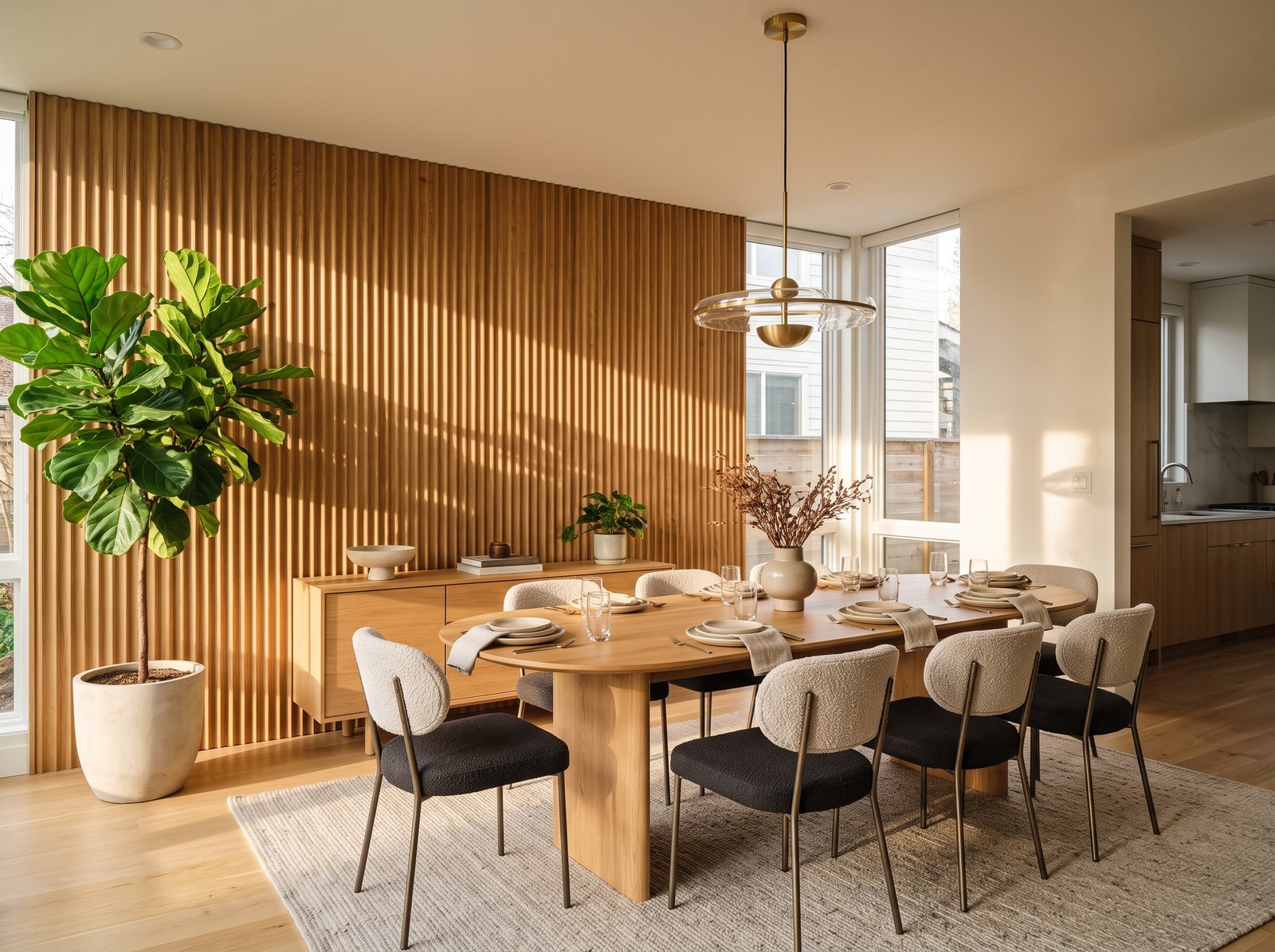
If both look and acoustic comfort matter, maximize results with these practical strategies:
- Add acoustic backers: Mount fluted panels over felt or mineral wool for improved absorption.
- Increase coverage: Treat 15–25% of the room’s wall area (NRC-rated panels only) for real change.
- Seal all gaps: Use adhesive, fasteners, and caulk to close voids that leak sound.
- Pick the right product: Look for hybrid acoustic slat systems (NRC published) and verify fire safety certification before buying.
- Use WPC panels in high-humidity or temperature-fluctuating spaces—they resist warping and need less care, as explained in our SPC flooring vs LVP guide.
For more on home upgrades that actually impact comfort and performance, see our guides on insulation upgrades and garage storage solutions.
Quick maintenance and longevity checklist
Most DIY fluted wood panels don’t require ongoing maintenance if installed right, but here are long-term factors:
- Solid wood: Acclimatize panels for 48+ hours; use specialty mounting hardware and seal with recommended products to prevent warping, shrinking, or cracking (source).
- WPC: No warping or rot, cleans with ordinary mild detergent, and resists minor impact damage (source).
- MDF: Avoid moisture, and touch up paint or caulk as needed.
Frequent issues reported by DIYers aren’t about maintenance—they trace back to install mistakes: visible gaps, warping from skipped acclimatization, or poor caulking at panel seams. Avoid shortcuts and you’ll avoid most headaches.
For zero-maintenance, splash-prone zones (bathrooms, entryways), WPC is your best bet. Get more durability tips in our washable rug care guide.
Bottom line + next steps (how to evaluate quotes and what to ask suppliers/installers)
Fluted panel wall accents shine when bold style is the goal and mild echo control is a nice bonus—not when you need proven, NRC-rated, sound dampening wall panels for focused work or recording spaces. To move forward confidently:
- For design, choose fluted panels based on budget, finish, and install skill—DIY can save hundreds.
- For measurable sound improvement, request NRC numbers and fire ratings from all suppliers, and prioritize acoustic panels with published data.
- Double-check all quotes: are material, labor, and prep separately listed? Is old wall repair or painting included?
Checklist for supplier/installer:
- What’s the per sq ft (or per sq meter) price for this wall condition?
- What’s the NRC rating, if any?
- What’s the warranty on install and product?
- What’s the fire safety classification?
- How is wall prep/removal handled?
Typical accent-wall budget: $1,200–$4,500 installed for 80-120 sq ft in the US. Always ask for NRC data before counting on acoustic results—a fluted panel wall accent does not substitute for certified acoustic panels.
FAQ
Do fluted panel wall accents really absorb sound?
Most decorative fluted panel wall accents do not have a published NRC rating and offer only mild echo reduction, not true sound absorption. For real acoustic improvement, use NRC-rated sound dampening wall panels.
Can I install fluted panels myself, or should I hire a pro?
You can DIY with MDF or WPC panels if your wall is in good condition and you’re comfortable with basic tools and prep. Hire a pro for solid wood, uneven walls, or when you need a warranty and premium finish.
What’s the cheapest way to get the fluted look?
Use paint-grade MDF strips or off-the-shelf peel-and-stick products. These start at $3.50–$8.00 per sq ft and are DIY friendly, but offer little actual sound reduction.
How do I prevent gaps or warping in DIY fluted wood panels?
Acclimatize solid wood panels for at least 48 hours, prep your wall thoroughly, use level lines, and secure with both adhesive and nails or screws as directed. Fill seams and nail holes before painting or sealing.
Is WPC or MDF better for high-moisture areas?
WPC is best for high-moisture or fluctuating temperature environments—it resists warping and rot, needs little maintenance, and costs less than solid wood.
—