

Sustainable building materials are no longer a niche trend—they are the new standard for homeowners and small builders seeking cost savings, long-term value, and real environmental impact. But no single material or method fits every project. What works in one region or budget might stall or cost extra elsewhere. This guide breaks down exactly how to make informed, purchase-ready choices and avoid the classic pitfalls everyone encounters in 2024 and beyond.
Key Takeaways
- The global sustainable building materials market is booming, doubling in value by 2030, but buyers face big gaps in data, standards, and regional supply.
- Recycled insulation options like mineral wool and cellulose now comprise nearly 20% of new European builds, yet sourcing and performance vary greatly by region.
- Homeowners should compare upfront cost, lifecycle performance, availability, and long-term incentives using a standardized framework to avoid costly mistakes.
- Market snapshot — size, growth and who’s shaping the market
- Adoption trends and regulatory drivers
- Recycled insulation — share, types and where it’s used
- The three biggest coverage gaps readers need to know (and how they affect decisions)
- A practical cost‑comparison framework for homeowners and small builders
- Regional availability, lead times and procurement checklist
- Quick decision rules for common eco‑friendly home improvement projects
- Where to get reliable data and next research steps
- FAQ
Market snapshot — size, growth and who’s shaping the market
The sustainable building materials sector is booming. In 2024, the market hit an estimated $332 billion, and forecasts point to a staggering $710 billion valuation by 2030. This equates to more than 13% annual growth, outpacing nearly every other construction segment.

Global growth is being steered by industry giants like Saint-Gobain, Owens Corning, Kingspan Group, Tata Steel, and Armstrong World Industries, according to recent market analysis. Startups like Holcim Sustainable Building Solutions and Rockwool are also accelerating innovation, especially in recycled insulation and low-carbon concrete mixes.
Importantly, recycled-content products now make up roughly 18% of all construction inputs in Europe. Homeowners and builders can no longer ignore these materials as effective, readily available options for both renovations and new construction.
For deeper data and annual performance updates, see the Global Status Report for Buildings and Construction 2024–2025.
Adoption trends and regulatory drivers
The demand for eco-friendly home improvement is being propelled by both consumer expectations and firm regulations. Green-building certifications now cover around 20% of new commercial projects in OECD countries, a jump from 15% just a few years ago. Circular construction techniques—such as reuse, modular design, and waste reduction—continue to spread, especially in Europe and coastal U.S. regions.
Major government policies are rapidly steering the market. The U.S. Buy-Clean mandate now requires lower embodied-carbon sourcing for federal projects, while the European Union’s Digital Product Passport will force suppliers to offer product-level lifecycle and carbon data starting in 2026.
For homeowners, this translates to greater product transparency, more incentives, and wider local availability—but only if you select materials or contractors who meet these evolving standards. On the flip side, policy-driven demand has caused supply constraints in certain regions, sometimes lengthening lead times or driving up short-term costs, especially for specialty or imported recycled insulation products.
If you’re considering a green renovation, policy changes could create more rebate opportunities. Check for updates in your region, or see current summaries in global green building market reports.
Recycled insulation — share, types and where it’s used
Recycled insulation is gaining real traction as both a retrofit and new-build material. In the U.S., about 15% of insulation installed in new homes is made from recycled content (most commonly cellulose, mineral wool, and reclaimed fiber). In Europe, the figure climbs to almost 20%.
Here’s how the main types break down:
- Cellulose: Produced from recycled newspapers and paper; excellent sound dampening and fire resistance. Most cost-effective in regions with strong paper-recycling infrastructure.
- Mineral wool (stone wool): Often includes recycled slag and stone dust; high fire resistance and vapor permeability. Broadly available in Europe, less so in rural North America.
- Reclaimed fiber (cotton/denim): Made from post-industrial clothing or fabric scrap. Good for retrofits but tends to be pricier and less common outside of specialty suppliers.
Performance and cost for recycled insulation vary with local climate and labor. For detailed head-to-head comparisons versus conventional foam or fiberglass options, review our guide on foam insulation vs fiberglass.
In Europe, suppliers must often disclose the percentage of recycled content and embodied carbon in their insulation materials. In the U.S., more states are joining this trend, but data may be inconsistent. This uncertainty highlights the importance of working with vendors who issue clear Environmental Product Declarations (EPDs).
Don’t overlook transportation costs: The closer your recycled insulation supplier, the lower your project’s overall embodied emissions and risk of shipment delays.
The three biggest coverage gaps readers need to know (and how they affect decisions)
Despite the rapid adoption of sustainable building materials, buyers and builders encounter three persistent information gaps. Understanding these now reduces your risk of budget overruns and product performance surprises.
- Lifecycle assessment and embodied-carbon data is patchy or inconsistent. Some product categories, especially imports or new formulas, lack credible, apples-to-apples lifecycle data. This adds uncertainty to environmental impact claims and makes comparison difficult. Ask for a third-party EPD or digital passport where possible.
- Regional availability, supply-chain clarity, and code compliance remain limited. Many eco-friendly materials are not evenly distributed. Urban and coastal regions are better served, while rural areas may experience longer lead times, higher shipping costs, or limited code familiarity among inspectors. For specialty items like recycled insulation, call vendors to confirm stock and delivery schedules before committing.
- No standardized framework for comparing true costs across materials and regions. Upfront expenses are only part of the story. Most calculators ignore operational savings, durability, and end-of-life considerations. Relying on sticker price alone could result in higher lifecycle spending.
If you’re adjusting your budget or plans due to market gaps, check out our related guides on window replacement costs or generator installation costs for examples of region-driven pricing and supply issues.
A practical cost‑comparison framework for homeowners and small builders
Making effective choices for eco-friendly home improvement starts with a realistic cost comparison—not just for today’s purchase price, but long-term financial and environmental factors. Use this step-by-step checklist to compare sustainable building materials confidently:
- Gather upfront pricing (per sqft or unit) from at least three local suppliers.
- Request embodied carbon or EPD data—this info will soon be standard with Europe’s Digital Product Passport requirements.
- Project anticipated energy and maintenance savings. Consider insulation R-value, HVAC needs, and expected years before replacement.
- Check for local incentives, rebates, or tax credits that offset costs. Several countries and U.S. states offer cash-back programs or energy credits for recycled insulation and low-carbon materials.
- Estimate end-of-life/disposal fees. Is the material recyclable again, landfill-bound, or accepted by local reuse centers?
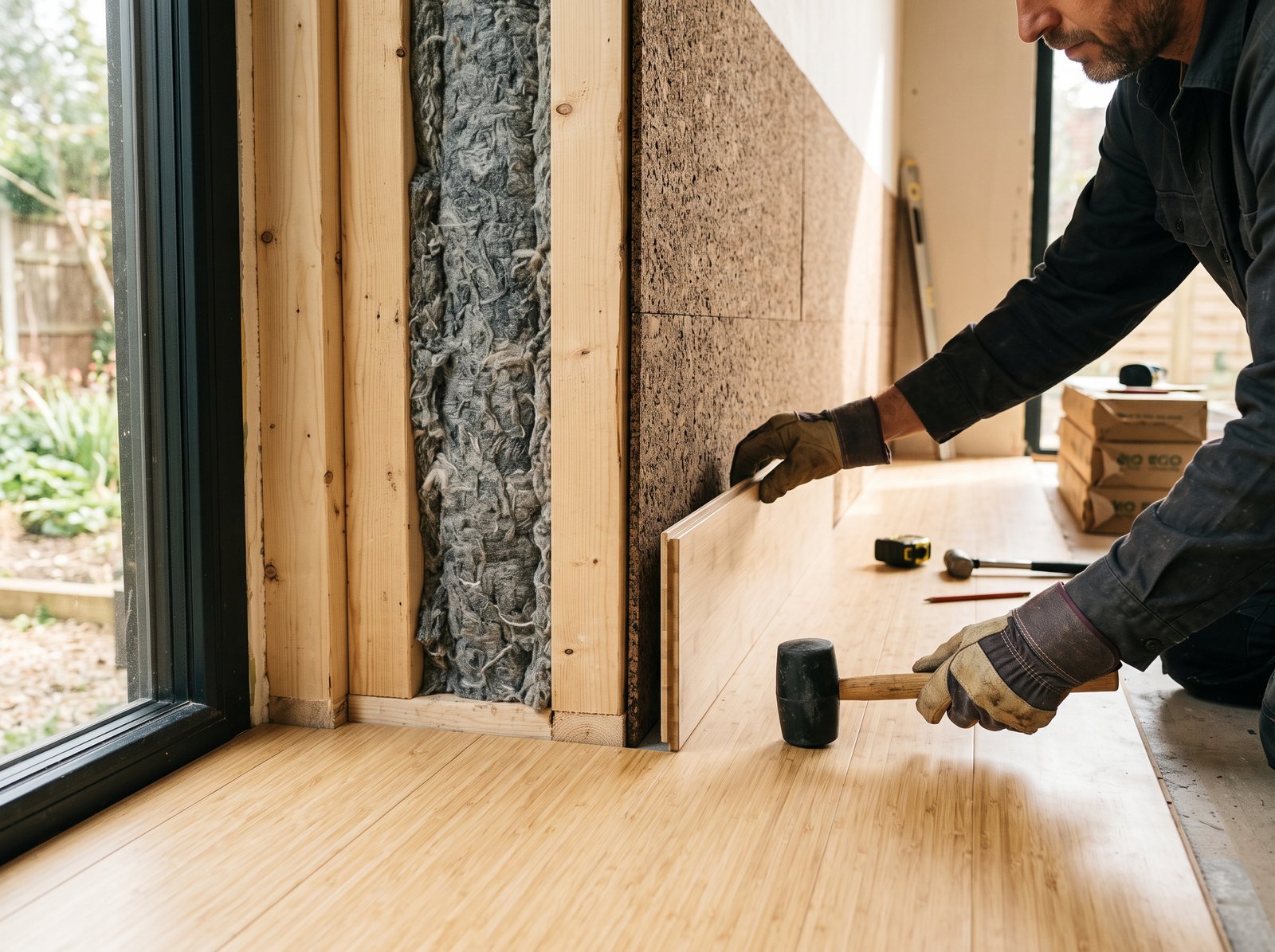
Finally, don’t forget to verify regional performance standards: In the humid Southeast U.S., for example, vapor permeability requirements may rule out certain recycled insulation, while colder regions should prioritize higher R-value per dollar invested.
Still on the fence? Browse examples of home upgrades in our piece on eco-friendly home renovation ideas for real-world payback scenarios and material cost breakdowns.
Regional availability, lead times and procurement checklist
Sustainable building materials are only as valuable as your ability to actually get them on time and on budget. Key challenges in 2024—2025 include:
- Spotty regional supply: Premium recycled insulation is readily available in major metropolitan areas but often limited in rural zones.
- Lead times fluctuate: High demand, shipping bottlenecks, or local regulatory reviews can push delivery from days to several months—especially after new policy rollouts.
- Vendor capacity varies: Small manufacturers may offer lower prices but have limited batch sizes. Large brands offer faster fulfillment but sometimes higher minimum orders.
Here’s a quick procurement checklist to save you from surprises:
- Confirm stock and lead times before placing a deposit.
- Request proof of regional code compliance and third-party certifications (such as GREENGUARD, Cradle to Cradle, or EPD).
- Ask for local installation references or case studies in your building climate zone.
- Source recycled insulation locally when possible to cut shipping and get faster delivery. Ask about batch tracking if using reclaimed or upcycled fiber products.
- Start material procurement as early as design stage—especially for large or custom home improvement projects.
If a supplier can’t give clear delivery times, shop around. Markets like Europe are making traceability easier, but gaps are common in North America. For more on navigating supply chain pitfalls or region-specific adoption, our guide on permeable patio pavers includes best practices from high-adoption regions.
Quick decision rules for common eco‑friendly home improvement projects
Facing tight budgets or short lead times? Use these practical decision shortcuts when selecting sustainable building materials:
- In most new builds, budget at least 15% of your insulation for recycled content in the U.S. (20% if in Europe). This benchmark helps set realistic expectations on cost and local supply. Focus on cellulose or mineral wool for the best combination of cost, R-value, and availability.
- For thermal upgrades on retrofits, prioritize insulating attics and crawlspaces first before replacing wall insulation. This yields the highest energy-savings return for the least expense.
- Choose recycled insulation over virgin products when the local price premium is less than 20% and third-party performance data is available. If the premium is higher, or if lifecycle or code data is missing, conventional options may be safer for DIYers on a tight budget—but with less long-term impact.
- For small, DIY-friendly projects, look for pre-cut, easy-fit options like recycled denim batts or cellulose loose-fill with simple installation guides.
- Always split your project into budget tiers: Low-budget (DIY recycled batts or blow-in cellulose), mid-budget (professionally installed mineral wool batts), high-budget (custom reclaimed fiber products plus performance air-sealing or smart sensor integration). For more on technology-enabled home upgrades, check our resource on smart thermostats.
Setting these ground rules can mean the difference between an on-budget, green renovation and stalled, unexpectedly expensive change orders.
Where to get reliable data and next research steps
Staying ahead in the sustainable building space means using verified, up-to-date resources. For comprehensive global trends and compliance requirements, consult the Global Status Report for Buildings & Construction and related datasets.
Key recommendations for homeowners and small builders:
- Ask all vendors for Environmental Product Declarations (EPD) or Digital Product Passport data, especially as the EU’s requirements will be partially enforced starting January 2026. The European Commission’s policy tracker can help with specifics.
- Use market reports such as BCC Research’s global green building materials report for the latest numbers and forecasts.
- Cross-check any local or supplier claims against up-to-date market stats, and request evidence for both recycled content and carbon footprint.
Finally, if you hit an information wall or need help, don’t hesitate to reach out to your local building inspector, regional green building council, or a specialty consultant. For material ideas beyond insulation, the repurposed materials buying guide covers clever, cost-effective strategies for other parts of your project.
FAQ
What are the most cost-effective sustainable building materials in 2024?
Recycled cellulose and mineral wool insulation top the list, offering high R-value for the price. FSC-certified wood, low-carbon concrete mixes, and reclaimed bricks or pavers are practical choices for structural or finishing needs. Always compare upfront cost to long-term utility and maintenance savings for your specific region.
How can I verify the recycled content or carbon footprint of my building materials?
Request an Environmental Product Declaration (EPD) or, in Europe, a Digital Product Passport. If your supplier can’t provide one, consider switching vendors. Policy changes in 2026 will make this data standard on all major building materials in the EU.
Is recycled insulation as effective as traditional insulation?
Yes, in most modern formulations. Recycled cellulose and mineral wool frequently meet or exceed the performance of regular fiberglass in terms of R-value and air sealing, provided proper installation. Always check climate suitability and vapor-permeability for your project.
Why do sustainable materials sometimes cost more upfront?
Sustainable building materials may require different sourcing or manufacturing, and regional supply chains are still maturing. However, operational energy savings, potential tax incentives, and lower long-term maintenance usually justify the investment, especially in markets with strong policy support.
Where can I find real-world project examples using recycled insulation?
The eco-friendly home renovation ideas guide features actual builds and payback timelines, including before and after cost breakdowns for recycled insulation projects in both small and larger homes.