

### Blog Post:
Robot lawn mower technology is changing how homeowners and small property managers maintain their yards, making full automation possible for those who value a clean, hands-off lawn. In this playbook, you’ll learn how to cut through the 2024–25 hype, pick the right model (or even design your own), and avoid expensive mistakes—before and after you bring one home.
Key Takeaways
- Robotic lawn mowers are now a mature and fast-growing market, with reliable models and big improvements in wireless mapping and app support.
- To really automate lawn care, buyers must weigh setup and service realities as much as features—look closely at install process, battery runtime, app dependability, and support.
- Wire-free boundary technology and bundled proactive service are the next big differentiators—don’t settle for yesterday’s solutions if you want a future-proof yard.
- Why automate lawn care now (quick market reality)
- What automation actually saves you (time, money, frequency)
- Market snapshot that matters to buyers (regions, leaders, product trends)
- Common user pain points with wireless/robotic mowers — and practical fixes
- The wire-free opportunity — why “no hardware” perimeter is a unique differentiator
- Three gaps top competitors still miss (opportunities to win)
- Must-show product specs and price bands for listings and reviews
- How to pick the best robot mower for a small yard (practical shortlist criteria)
- Setup & maintenance playbook (what installers and owners should expect)
- Service, warranty & total cost of ownership (TCO) — how to present it to convert buyers
- Closing CTA section — what to offer next (demo, free trial, trade-in, service bundle)
- FAQ
Why automate lawn care now (quick market reality)
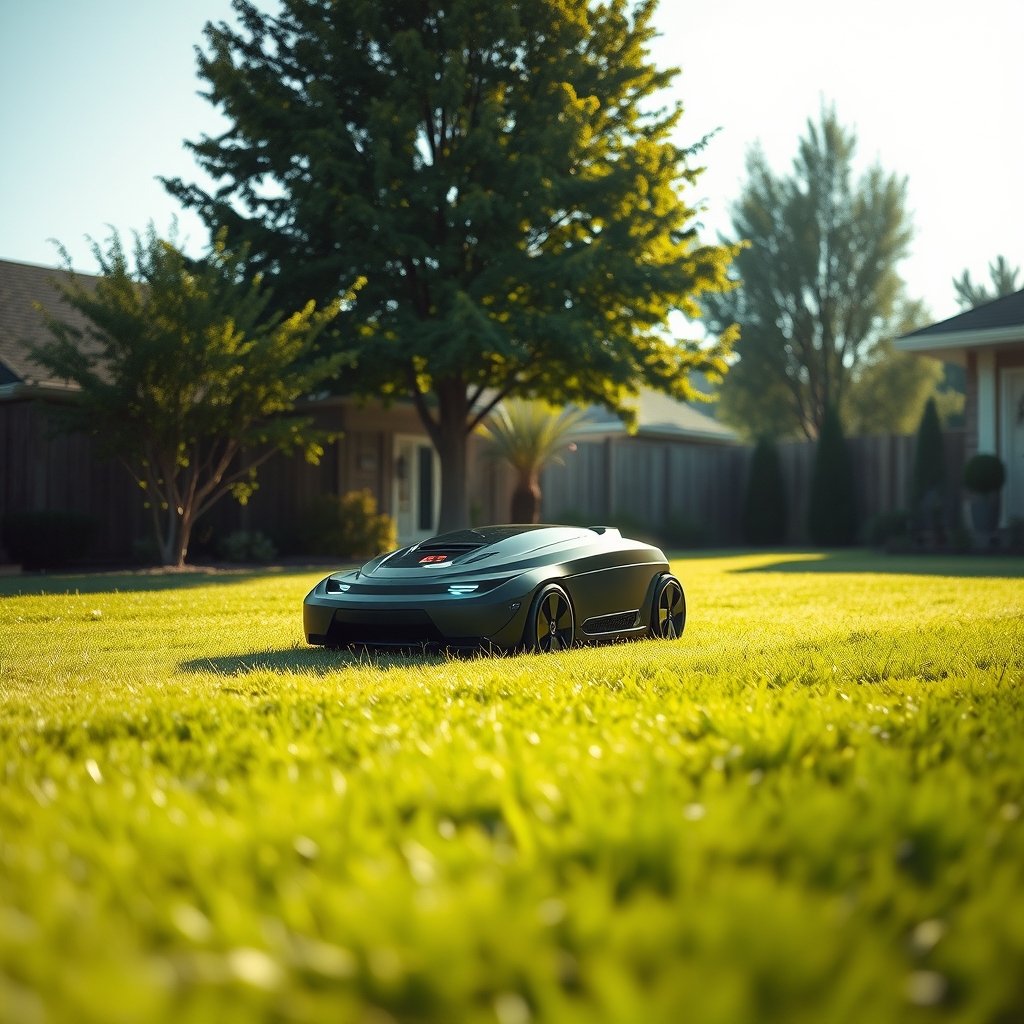
Robot lawn mowers have officially moved from “cool toy” to serious household investment. The global market reached nearly USD 2.5 billion in 2024 and is projected to hit USD 2.8 billion in 2025, fueled by a robust 12 percent annual growth rate.[1] Europe commands about 42 percent of the worldwide market, with North America now at nearly 30 percent (USD 1.21B in 2024 and expected USD 1.28B in 2025). The secret? More homeowners, HOAs, and facility managers are swapping weekend chores for automated, app-controlled maintenance—especially as models get smarter and labor costs rise. These numbers justify investing a bit more upfront in time-saving tech, even if setup isn’t always frictionless.
What automation actually saves you (time, money, frequency)
Homeowners weighing a robot lawn mower versus a traditional push or ride-on will notice automation shifts costs: from manual labor and time to a higher upfront bill, but much lower running expense. Charging a typical mower for a season costs about USD 10 to 15 per year; minor annual blade and sensor maintenance ranges from USD 20 to 50.[10] Expect initial pricing to range from USD 800 for a basic model to USD 5,500 for commercial-grade or top-tier. Compare that to hundreds per year on fuel, oil, or paid lawn services—not to mention 30-50 hours reclaimed each season. For most, the ROI isn’t instant, but over 3-5 years it’s actually competitive or even cheaper, especially factoring in “no more pushing a mower on Saturday.” If you’re wondering how this stacks up against other home upgrades, see battery backup for outages trends, where payback also hinges on ongoing utility, not just one-off installs.
Market snapshot that matters to buyers (regions, leaders, product trends)
Robotic lawn mower innovation moves fastest in Europe, where adoption, model variety, and dealer support are strongest (42 percent market share for 2025). North America is catching up, now seeing fast expansion in suburban and HOA-managed communities, while Asia-Pacific’s rapid growth comes from new “wire-free” models trending in 2024–25. The top five vendors—Husqvarna, STIHL, Bosch, Honda, and Deere—together represent 76 percent of market share, ensuring good parts, app support, and service.[2] Reliable support is crucial for tech-driven products, so sticking with leaders often reduces headaches. For more on how regional market patterns affect purchase choice, check out best solar lights for backyard, where regional climate guides product selection.
Common user pain points with wireless/robotic mowers — and practical fixes
Even smart automation has rough edges. Most real-world users vent about five recurring pain points:
- Difficult or frustrating perimeter wire setup—even “wireless” models may require intensive mapping or tagging.
- Battery runtime is often less than promised, meaning multiple charges needed for medium-to-large lawns.
- Mobile apps may disconnect or require frequent updates, making remote management unreliable.
- Self-cleaning, anti-clog blades and sensors need frequent cleaning or replacement, especially after mowing wet grass or during rainy spells.
- Boundary-detection failures leave uncut edges or stray stripes, particularly in irregular yards.
Most fixes in next-gen mowers now include:
- Plug-and-play or quick-swap batteries offering 3–4 hours per charge
- More user-friendly apps supporting over-the-air updates and clear scheduling alerts
- Self-cleaning, anti-clog blades to reduce hands-on maintenance
- Rain-sensing that triggers pause/resume
- AI-assisted mapping with “tap to set” virtual boundaries
For comparison, see the design trade-offs in DIY peel and stick tiles, where initial install is easy, but corners and edges are the true test of quality over time.
The wire-free opportunity — why “no hardware” perimeter is a unique differentiator
Today’s biggest commercial and user experience breakthrough is genuine “wire-free” mapping. No more digging or staking boundary wires—instead, these robot lawn mowers use GPS, lidar, and/or a few quick “perimeter taps” with your app. The upside? Install time drops from hours to minutes, and coverage in irregular or sloped yards is now practical. Major brands like Husqvarna are launching new wire-free lines for 2025 and pushing the segment forward (as shown in this recent market report). Asia-Pacific, in particular, is seeing rapid uptake as these new models increase accessibility. For homeowners with complex lots, this is a true game-changer—much like the shift towards waterproof garden lights that require little to no wiring.
Three gaps top competitors still miss (opportunities to win)
The next great robot mower won’t simply add a feature—it will solve three pain points that even top brands have missed:
- Zero-hassle wire-free install—true “no hardware” virtual perimeters for odd-shaped or large properties, not just simple lawns.
- Reliable performance on slopes and mud—most stall out above 40 percent grade or slip when wet; adaptive traction and variable cut-height are key.
- Integrated service bundles—proactive battery replacement, predictive AI maintenance tied to weather and grass growth, and self-scheduling save even more hands-on work and future cost surprises.
Few brands hit all three today. If you’re shopping now, ask specifically about these—don’t just check a box for “app control.” If you want to see how big gaps in product support and warranty can impact TCO, compare with service models in elemental systems, where lifecycle support is crucial for sustained success.
Must-show product specs and price bands for listings and reviews
To make side-by-side comparisons easy—and avoid paying for features you don’t need—insist that every listing or review covers these specs:
- Cutting width: 20–30 cm (up to 35 cm for commercial)
- Max runtime: 3–5 hours per charge, dual-battery option is ideal
- Max lawn area: About 2,000 m²
- Slope capability: Up to 45 percent grade
- Noise below 55 dB(A)
- Battery: 48 V Li-Ion (about 4 Ah capacity)
- Connectivity: Wi-Fi, Bluetooth LE (plus optional LTE for remote control)
- Price: USD 800 entry to USD 5,500 premium
- Warranty: 2–5 years, must cover motor and battery
Ask for demo confirmations—especially around run time, slope handling, and App reliability, which are points of frequent mismatch. For a similar side-by-side approach, see our solar fence lighting ideas specs grid.
How to pick the best robot mower for a small yard (practical shortlist criteria)
If your main goal is “unattended mowing” for a small or awkwardly-shaped suburban yard (200–2,000 m²), prioritize:
- Shorter cutting width (20–30 cm)—easier handling and less risk of missed sections
- Battery run time of at least 3 hours per charge
- Design intended for small to medium areas (not a compromised commercial motor on a domestic chassis)
- Slope handling—should be rated for at least 30 percent if you have uneven ground
- Worx Landroid Vision and ease of scheduling (prefer units with OTA updates, not “beta” apps)
- Minimal manual setup—seek wire-free or semi-wireless setup whenever possible
- Service and warranty: 2 years minimum, battery replacements easily available
Models like the Worx Landroid Vision and Mammotion LUBA mini AWD are now purpose-built for these smaller, irregular yards at prices starting near USD 800. Also, see core system alignment for more small-property automation ideas.
Setup & maintenance playbook (what installers and owners should expect)
Here’s what to expect as you adopt and maintain a robot mower, step by step:
- Initial install: Traditional models still require laying perimeter wire or stakes—plan for 2–4 hours (more if hilly/irregular). Wire-free? You’ll map the yard’s borders using the app in under 30 minutes.
- First-run mapping: Most mowers will “learn” the map over 1–3 cycles. Be patient—expect some missed edges at first.
- Routine maintenance: Clean undercarriage every 1–2 weeks, check/replace blades every 6–8 weeks, especially after wet periods. App will often prompt.
- Battery management: Quick-swap batteries mean minimal downtime (3–4 hour charge window). Expect a new battery every 3–5 years (cost: USD 100–300).
- Updates: Accept OTA (over-the-air) app and firmware updates as recommended. This keeps mapping, safety, and scheduling accurate without manual intervention.
- Spring/fall prep: Clean, inspect, and store mower properly in off-season. Ask service provider for “proactive” maintenance if offered.
Service, warranty & total cost of ownership (TCO) — how to present it to convert buyers
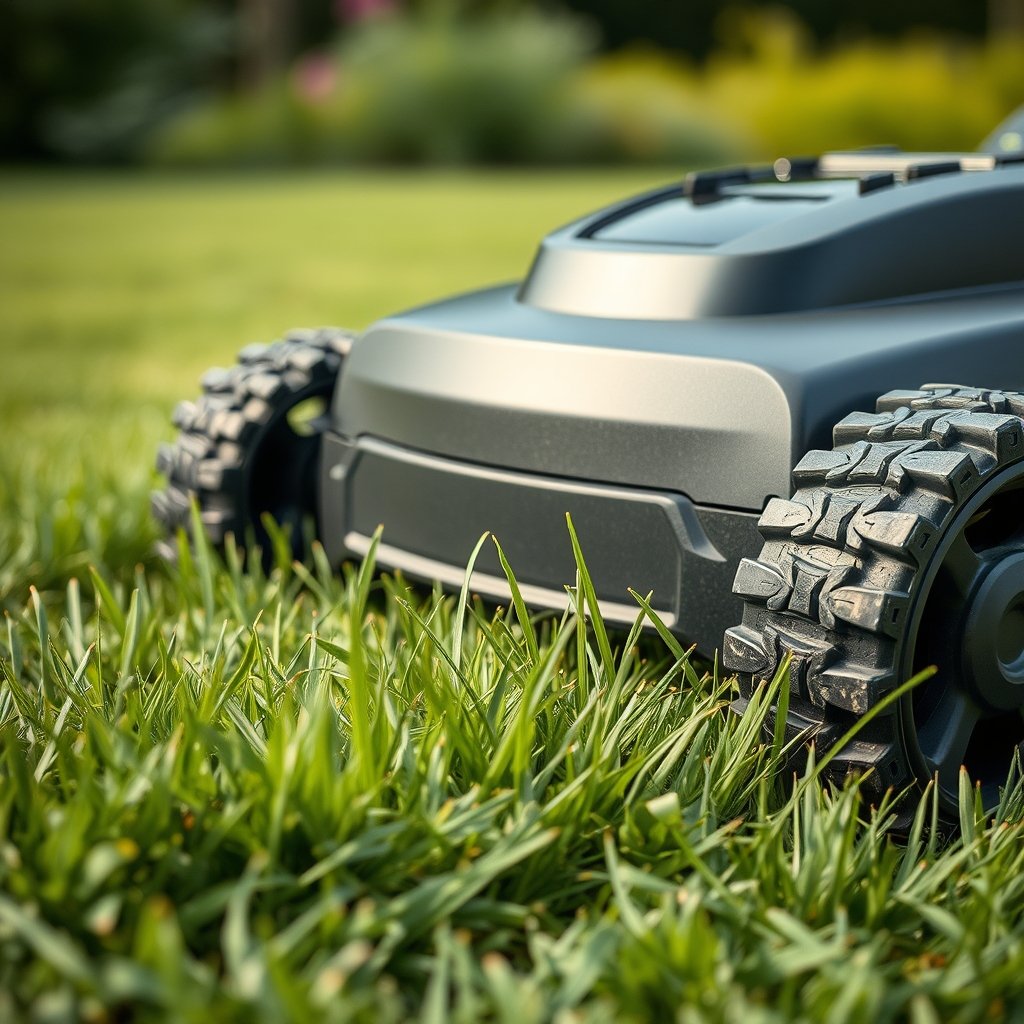
Warranty and predictable costs are major conversion levers. Expect 2–5 years of coverage, including both drive motor and battery. Battery replacement should be necessary only every 3–5 years (budget USD 100–300). Annual costs: about USD 10–15 to charge and USD 20–50 for small parts—much lower than gasoline or electric push mowers.[10]
| Category | Robot Lawn Mower | Push Mower (Gas/Electric) |
|---|---|---|
| Initial Cost | USD 800–5,500 | USD 200–900 |
| Annual Charging/Fuel | USD 10–15 | USD 40–150 |
| Routine Maintenance | USD 20–50 | USD 50–200 |
| Battery/Parts Replacement | USD 100–300 (every 3–5 years) | USD 100–300 (battery/parts) |
| Time Spent Annually | 4–8 hours | 30–50 hours |
Bigger savings come from service bundles that include proactive maintenance, regular blade/battery swapouts, and predictive AI alerts—these plans cut risks, simplify budgeting, and mean you spend almost zero time thinking about your lawn for years. For an example of full TCO planning, check out strategies behind bundled home upgrades.
Closing CTA section — what to offer next (demo, free trial, trade-in, service bundle)
If you’re ready to automate your lawn and claim those lost weekends:
- Request a wire-free demo: Hands-on or video proof of boundary-free setup for irregular yards makes all the difference—don’t buy on specs alone.
- Test slope and edge performance: Ask for a no-risk trial, especially if you have hilly sections or tricky corners.
- Look for bundled service options: The best providers now offer plans that cover proactive battery replacement, predictive AI scheduling, and maintenance alerts tied to your local weather—turnkey, fully automated, and budgetable.
Reach out now to see which robot lawn mower partners in your area support these offers—and step confidently into full yard automation. No more patchy schedules, no more frustration—just a tidy lawn, season after season.
FAQ
Do robot lawn mowers work on complex or sloped yards?
Yes, the newest wireless robotic mower models handle irregular layouts and slopes up to 45 percent grade. Look for models with adaptive traction and wire-free mapping for best results.
How much setup does a robot lawn mower require?
Older models need perimeter wire installation, which can be time-consuming. The latest “wire-free” mowers allow for quick mapping via app—usually under 30 minutes, even on unusual yards.
What are the ongoing costs of owning a robot lawn mower?
Expect to spend around USD 10–15 a year for charging and USD 20–50 for blade or minor maintenance. Batteries need replacing every 3–5 years (USD 100–300), which is lower TCO than most traditional mowers over time.
Are service and maintenance plans worth it?
Yes, bundled service helps prevent downtime and unplanned expenses. Choose providers that offer proactive battery swaps, app updates, and regular maintenance checks tied to your location and weather.
Can I integrate a robot lawn mower with other smart home tech?
Many modern robot lawn mowers connect through Wi-Fi or Bluetooth and can be monitored via mobile app. Integration with whole-yard smart systems is improving, though check compatibility before purchase.
—