

### Blog Post:
Upgrading your home office with a standing desk converter can be one of the most impactful changes for reducing neck and back strain, boosting focus, and future-proofing your workspace. This concise, data-driven guide walks you through what makes a great converter—and reveals the key buying factors most guides leave out.
Key Takeaways
- Know the specs that truly matter—weight limit, range, tray layout, VESA support, and mechanism—before choosing a standing desk converter.
- Don’t overlook sustainability, true ergonomic setup, and smart feature compatibility when future-proofing your home office.
- Mid-range converters ($150–$350) now dominate the market, favored by hybrid and remote professionals seeking quality and flexibility.
- Market snapshot — why converters matter right now
- Price bands and what each gets you
- Hard specs every buyer must compare (quick spec table)
- Electric vs manual vs compact clamshell — picking the mechanism
- Three commonly omitted but critical subtopics
- Ergonomic calibration checklist (step-by-step)
- Sustainability, build quality and lifecycle considerations
- Smart features, presets and ecosystem integrations
- Buyer archetypes and matching recommendations (3 quick profiles)
- Quick buying checklist & final recommendations
- FAQ
Market snapshot — why converters matter right now
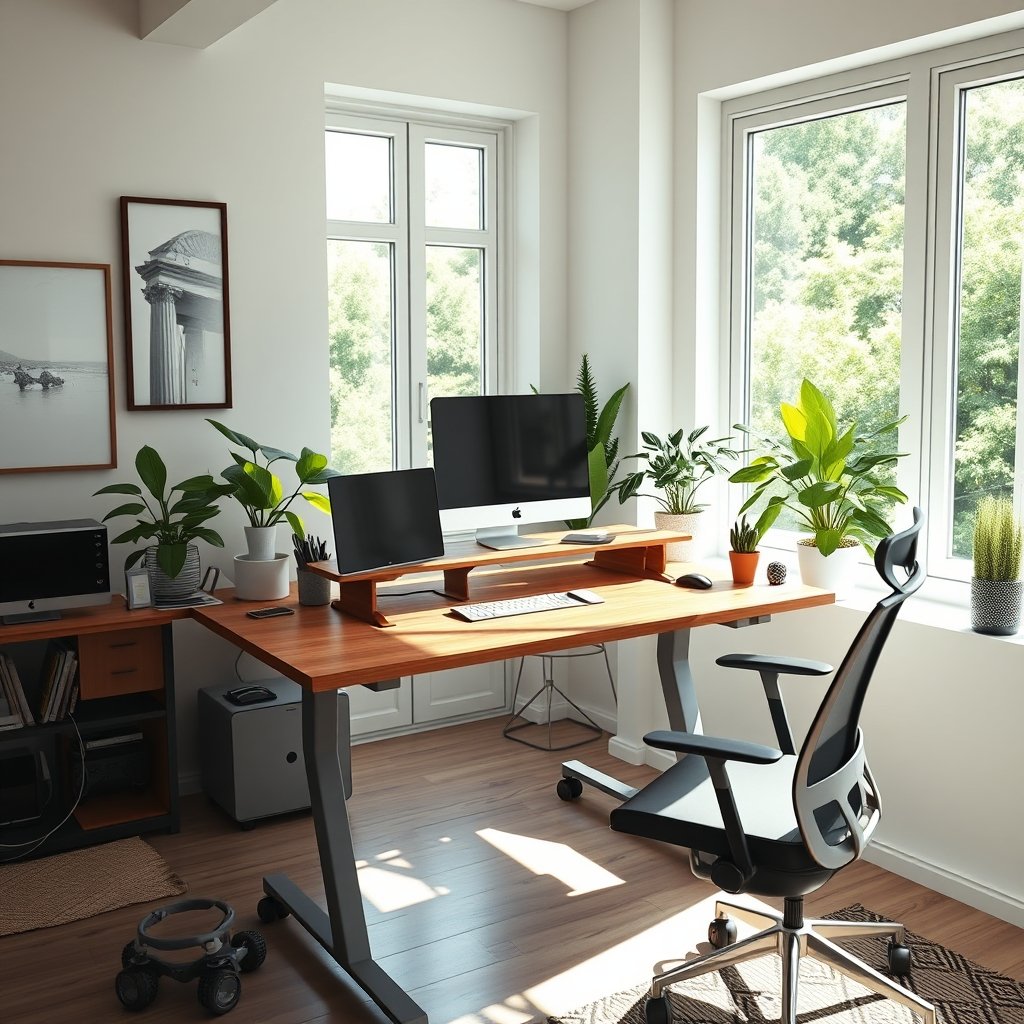
The standing desk converter market is experiencing remarkable growth, with global revenue hitting an estimated $1.45 billion in 2024 and forecasted to reach $2.9 billion by 2025—roughly 34% of the broader standing desk market. According to recent industry reports, around 45% to 50% of converter sales are now driven by remote work adoption as professionals seek a practical work from home desk upgrade.
Converters remain popular because they easily retrofit existing desks, require no major assembly, and provide flexibility for multi-user households or compact home offices. North America leads the market thanks to wellness initiatives and hybrid work policies, but Europe and Asia Pacific are catching up fast. Source
Price bands and what each gets you
Understanding pricing tiers helps you quickly set realistic expectations. The standing desk converter market has three clear price bands:
- Low-cost (<$150): Basic adjustable desk riser, usually manual lift, limited height/weight, small workspace, little to no warranty.
- Mid-range ($150–$350): Most popular—stronger build, better adjustability, wider workspace, VESA 75/100 mount options, some with basic smart features or accessories.
- Premium (>$350): Electric lift, memory presets, advanced smart integrations, larger formats for multiple monitors, superior build, longer warranties.
The mid-range ($150–$350) segment captures the largest share—striking a balance between cost, durability, and ergonomic features for most urban remote workers and commuters. Industry outlook here.
Hard specs every buyer must compare (quick spec table)
Not all adjustable desk risers are created equal. Always compare these hard specs side by side before you buy a sit stand desk accessory:
| Spec | Ideal Range / Population Norm | Why It Matters |
|---|---|---|
| Weight Capacity | 30–100 lb (max 150 lb for heavy use) | Supports your full monitor + laptop + accessories setup |
| Height Adjustment Travel | Manual: 4–20 in Electric: up to 20 in |
Ensures proper posture whether sitting or standing at any height |
| Main Footprint (WxD) | 20–30 in wide × 12–16 in deep | Fits on your desk and accommodates monitor/laptop stands |
| Keyboard Tray | Wide, stable, removable/slidable, negative tilt if possible | Key for wrist and shoulder comfort |
| Monitor Mount/VESA | 75×75 mm, 100×100 mm, up to 32″ and 20 lb Dual/Triple options for advanced users |
Prevents wobble and allows dual monitor support |
| Warranty | 1–5 years (look for 3+ years if investing above $200) | Signals build quality and seller confidence |
If you want a deeper breakdown, browse this external converter test and comparison.
Electric vs manual vs compact clamshell — picking the mechanism
Choosing the right mechanism is crucial. Here’s how they stack up for adjustable desk riser buyers:
- Electric: Smooth, push-button lift with programmable presets. Great for heavier setups or multiple users, but costs more—typically the preferred option for those seeking future-proof smart features. Fastest growing by revenue.
- Manual: Lighter, cheaper, fastest growing by volume. Ideal for single-user, budget, or compact setups. Manual risers (spring or lever) often adjust faster but may require both hands and effort with heavier gear.
- Compact clamshell: Slim, portable, quick-fold risers. Good for laptop-first users or occasional standing but may not support dual monitors or heavy loads.
- Mid-range manual converters cost $150–$350 and cover most home office needs.
- Premium electric models start near $350—worth it for advanced adjustability, heavy use, and integrated smart features.
- Manual options are fastest growing with small businesses and home users seeking value and portability. Explore key trend data.
Three commonly omitted but critical subtopics
After reviewing dozens of top guides, three vital factors are almost always ignored:
- Sustainability & Recyclability: Ask about recycled content, sustainable wood, non-toxic coatings, repairability, and whether packaging is minimal and recyclable. Look for certifications like FSC, GREENGUARD, or equivalent. If you’re curious about eco-friendly upgrades around the house, explore options like solar outdoor lights or raised garden beds.
- Full Ergonomic Calibration (not just “adjustable”): Most converters are never set up right. An ergonomic calibration checklist—monitor at or just below eye level, keyboard angle for neutral wrists, arms at 90°, feet flat or on a mat—is essential for healthy use. See the dedicated checklist below.
- Smart Features & App Ecosystem: Features like Bluetooth-connected posture alerts, memory presets, usage tracking, and openness to third-party automation now distinguish premium converters. If you already use a smart thermostat, a “smart” converter could be the next step in streamlining your work-from-home tech stack.
A truly future-proof standing desk converter will serve you for years, not months—so take these subtopics seriously.
Ergonomic calibration checklist (step-by-step)
Setting up your best ergonomic desk setup pays off fast. Here’s a science-backed, step-by-step approach for both standing and sitting (apply these for maximum health impact):
- Monitor height: The top third of the screen should align with your eyebrows. Use the VESA mount or stack books if needed.
- Eye-line distance: Sit or stand so your eye-level is 20–30 inches from the screen (about an arm’s length).
- Keyboard and mouse height: Forearms parallel to the floor; wrists straight and relaxed. Use a negative tilt tray if available for typing comfort.
- Feet: Flat on the floor or anti-fatigue mat in standing mode. Wear shoes for support—standing barefoot for hours strains arches.
- Transition schedule: Alternate sitting and standing every 30–60 minutes. Build up gradually (simply starting with 30 minutes total per day is fine).
Troubleshooting: Headaches, tingling, or lower back discomfort? Recheck that monitor isn’t too high, your wrists aren’t bent up, and you aren’t craning forward. Shoulder strain often means your keyboard tray is too high or deep.
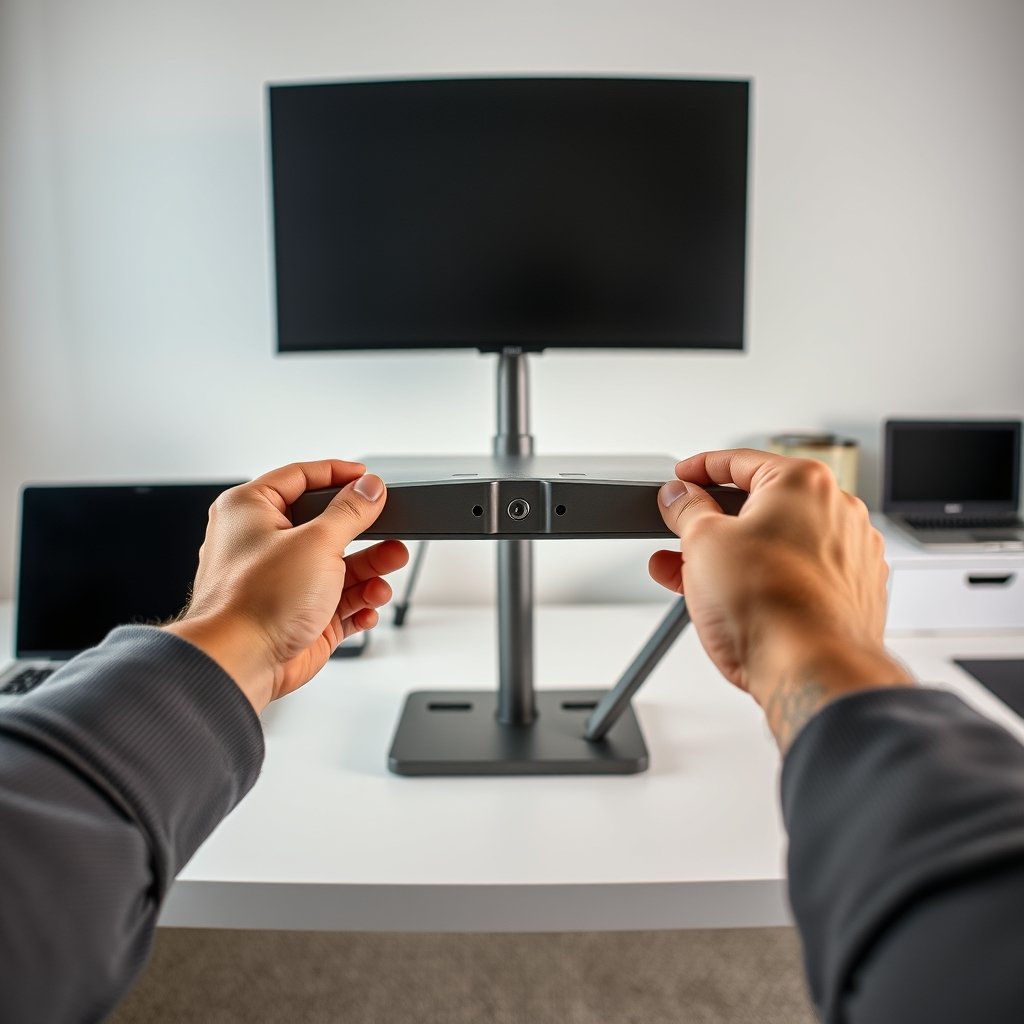
For workspace arrangement, see additional home productivity upgrades like DIY peel and stick backsplash and how small layout tweaks can make a big difference.
Sustainability, build quality and lifecycle considerations
Sustainability is not just a buzzword—it’s a real value signal for standing desk converters. Check these factors:
- Materials: Ask what percentage of recycled plastic or steel is used. Prioritize FSC-certified wood or eco-friendly MDF.
- Repairability & Warranty: Can you replace parts (springs, feet, trays)? A longer (3–5 year) warranty signals quality and reduces landfill waste.
- Packaging: Look for compact, recyclable packaging to lower the carbon impact of shipping (especially important for remote work desk upgrades).
- Certifications: GREENGUARD, FSC, or similar marks matter—especially for those concerned with home air quality and allergen exposure. If you’re also concerned about home wellness, consider pairing with an air quality monitor.
According to market research, sustainability and recyclable-material sourcing are now among the top three priorities missing from most guides—but increasingly important to buyers like Emma.
Smart features, presets and ecosystem integrations
Not every user cares (yet), but Bluetooth and “smart” sit stand desk accessory features are now the fastest growing premium category. Options to consider:
- Bluetooth connectivity: Pairs with health apps or integrated posture tracking for reminders and usage data.
- Programmable presets: Save custom sit and stand heights for multiple users at the push of a button.
- Posture alerts: Some models buzz your phone or desktop if you’ve been sitting or standing too long—a key benefit for remote professionals prone to “deep work” marathons.
- Companion apps + API: High-end ecosystems let you automate transitions (like with smart lighting), track daily standing goals, and even integrate with wellness initiatives at work.
Pays off for tech-savvy users, multitaskers, or anyone already running a smart home. For more guidance on smart home upgrades, check out the portable power station buying guide or our deep dive on smart thermostats.
Buyer archetypes and matching recommendations (3 quick profiles)
Here’s how to match your buyer profile to the right standing desk converter specs and price band—no brand bias, just what works:
1. Budget Remote Worker
- Price band: $100–$200 (mid-range manual is best value)
- Specs: 25–35 lb capacity, 20–24 in wide, manual height, basic tray, VESA not required (single monitor/laptop)
- Best for: Solo home offices, renters, casual use, compact desks
- Model archetype: Manual riser, 2-tier design, 1-year warranty
2. Hybrid/Commuter Professional
- Price band: $150–$350 (mid-range trending to premium)
- Specs: 35–75 lb capacity, 24–30 in wide, Keyboard Tray, VESA 75/100 mount, optional dual monitor
- Best for: Shared desk or family/home office, monitors plus laptops
- Model archetype: Gas-spring or basic electric, memory preset, 3-year warranty
3. Multi-Monitor Power User
- Price band: $350–$600 (premium electric or advanced manual)
- Specs: 75–150 lb capacity, 30+ in wide, triple monitor VESA, Bluetooth/app integration, deep keyboard tray, 5-year warranty
- Best for: Content creators, gamers, tech-forward remote professionals
- Model archetype: Electric lift, full smart features, heavy-duty frame
Remember, remote work is driving a surge in home-office purchases and compact, easy-to-ship risers are now standard. For even more space-saving tips, see our garage storage system DIY guide.
Quick buying checklist & final recommendations
Use this one-page buying checklist before making any standing desk converter purchase. Screen this list on your phone at the point of sale:
- What is your price band? (Mid-range $150–$350 is typically best value.)
- Does the weight capacity cover your setup? (Aim for 30–100 lb as a safe norm.)
- Is there enough height adjustment travel? (Manual: 4–20 in; Electric: up to 20 in.)
- Will the footprint fit your desk space (20–30 in wide by 12–16 in deep)?
- Monitor compatibility: VESA 75/100; for screens up to 32 inches and 20 lb
- Smart features: Bluetooth, memory presets, posture reminders, app integration?
- Sustainability flags: recycled/recyclable materials, repairability, packaging
- Warranty: Minimum 1 year; 3+ years preferred for higher cost
- Clear ergonomic transition plan (review checklist above)
To recap: most readers will be happiest with a mid-range standing desk converter offering 30–100 lb capacity, a travel range of at least 15 inches, VESA support, solid ergonomic features, and a warranty. Use this guide to future-proof your purchase and avoid buyer’s remorse.

Conclusion
Standing desk converters are a smart, flexible investment—especially for remote professionals seeking a quick, ergonomic home office upgrade without replacing their entire workstation. As you shop, use this guide to check specs, confirm sustainability and smart features, and prioritize your ergonomic setup for years of pain-free work. If you’ve experienced neck or back strain or want to future-proof your remote or hybrid workspace, a quality standing desk converter will deliver immediate and long-term benefits. Take action—your spine will thank you!
FAQ
What is the main difference between a standing desk and a standing desk converter?
A standing desk replaces your whole desk, usually with dedicated height-adjustable legs. A standing desk converter sits atop your current desk, lifting your monitor(s) and keyboard so you can work sitting or standing without replacing your furniture.
Can I use a standing desk converter with two monitors?
Yes, but check that the converter supports sufficient weight capacity and includes VESA 75/100 mounts or enough surface space for both screens. Premium and mid-range models often offer dual or triple monitor support.
How long does it take to get used to standing and sitting through the day?
Most users feel comfortable alternating after a week or two. Start with 30 minutes at a time standing and gradually increase as your legs adapt. An anti-fatigue mat and proper shoe support will help significantly.
Are standing desk converters worth the investment?
If you experience back or neck pain, want to improve focus, or share a desk with others, converters are a low-commitment upgrade that pay off quickly. Choosing one with good specs and ergonomic options is crucial to seeing real health benefits.
Do smart features really matter in a standing desk converter?
For tech-forward users or those who like tracking health metrics, smart features can help maintain healthy habits and automate sit-stand transitions. They are less critical for basic users but add convenience and future-proofing for many hybrid professionals.