

### Blog Post:
Under sink water filter systems are rapidly becoming a must-have for homeowners who demand safer, great-tasting water at their kitchen tap without cluttering the countertop.
Key Takeaways
- Under sink water filter systems, especially reverse osmosis system units, deliver powerful contaminant removal at the kitchen tap but require consideration of true long-term costs and maintenance.
- Understanding the balance between upfront price, annual filter expenses, wastewater generation, and installation complexity is essential to choosing the best kitchen water filter system.
- Selecting the right model—traditional, Tankless RO, or quick-change—depends on your water quality, daily usage, space, and comfort with DIY versus professional install.
- Why an under sink water filter (and when you need one)
- Market snapshot — prices, adoption and regional trends (2024–2025)
- What an under-sink reverse osmosis system actually costs (upfront + annual)
- Top 5 user pain points (and how to mitigate them)
- Hidden performance costs most guides skip (wastewater ratio, membrane life, energy)
- Performance comparison: RO vs non-RO under-sink filters (what they remove and when RO is required)
- Installation & maintenance: DIY vs professional, time and hassle expectations
- Choosing the right system for your home (selection criteria & quick checklist)
- Cost-saving tips & high-value features to prioritize
- Model recommendations + who each is best for (format: use-case callouts)
- FAQ — quick answers to buyer’s top questions
- Final decision checklist & next steps (water testing, quotes, installation booking)
Why an under sink water filter (and when you need one)
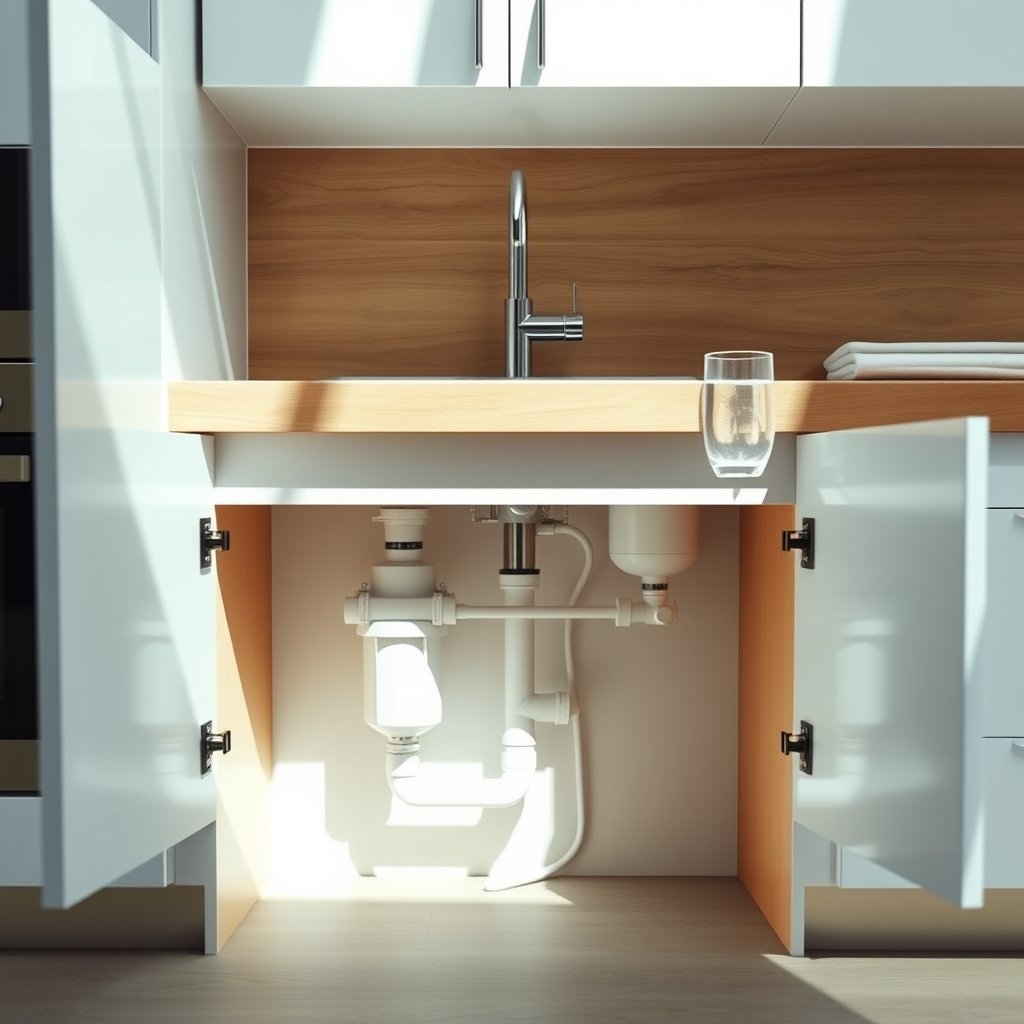
An under sink water filter is a point-of-use system that delivers cleaner, better-tasting water right where you need it—at the kitchen faucet. Unlike pitcher filters or bulky countertop units, these systems remain hidden under your cabinet, maximizing countertop space and minimizing visual clutter. This makes them ideal for homeowners who prioritize both water quality and kitchen aesthetics.
The key benefit is direct contaminant removal at the tap. Whether your water is supplied by a municipality or a well, local testing increasingly reveals issues like chlorine byproducts, PFAS, heavy metals, and microplastics. If you live in an area with aging infrastructure, inconsistent city water, or you have infants, young children, or anyone immunocompromised in your home, targeted under-sink water filtration is a sound investment.
In 2024, the global point-of-use water treatment segment reached $10.7 billion in value and is expected to climb to $15.4 billion by 2030, driven largely by rising consumer demand for practical, hidden water solutions for the kitchen.
Market snapshot — prices, adoption and regional trends (2024–2025)
The North American under sink water filter system market is estimated at $1.7 billion in 2024, with strong growth in both traditional and tankless reverse osmosis system sales. The Asia-Pacific region—led by rapid urbanization and water quality concerns—accounts for about 41.2% of global market share for 2025.
Unit prices vary: standard multi-stage under sink water filter systems (without RO) typically cost $150–$400, while high-efficiency, tankless under-sink reverse osmosis systems often retail for $800–$1,200.
The competitive landscape is robust, with recognized brands like iSpring, Aquasana, Culligan, and 3M holding roughly 15% of market share. This opens up plenty of choice and downward pressure on long-term filter replacement pricing.
What an under-sink reverse osmosis system actually costs (upfront + annual)
Thinking of a reverse osmosis system as a long-term investment means looking beyond just initial price. Entry-level 3- or 4-stage RO kits with storage tanks range $300–$600, while sleek tankless units with pumps and digital controls often list from $800 to $1,200.
Annual spend on filter cartridges (sediment, carbon, post-filter) is typically $100–$200. Most RO membranes—especially those using thin-film composite (TFC) technology—last 24 to 36 months and may cost $60–$120 to replace. Add professional installation ($200–$400, about 2–4 hours for most setups) and you can quickly map out a realistic five-year total cost of ownership.
- Tankless RO (5 years): $1,000 (unit) + $800 (filters) + $100 (membrane) + $300 (install) = $2,200
- Traditional RO (5 years): $500 (unit) + $700 (filters) + $60 (membrane) + $250 (install) = $1,510
Factor in potential water waste (3:1 ratio means three gallons discarded for every purified gallon) as part of your running cost.
Top 5 user pain points (and how to mitigate them)
Based on user surveys and market reports, these are the main frustrations faced by new buyers of under sink water filter systems:
- High upfront price (especially tankless RO models)
- Recurring filter & membrane replacement costs—can add up quickly
- Wastewater generation—about three gallons wasted per purified gallon in most RO systems
- Reduced water pressure/flow—RO can cause slower dispensing, impacting convenience
- Perceived installation/maintenance complexity—many worry about leaks, parts, and time spent
Luckily, each pain point can be addressed:
- Upfront cost: Seek out brand promotions, rebates, or look at non-RO under sink filters for basic taste/odor improvement.
- Replacement costs: Some providers offer subscription pricing or multi-pack discount programs, similar to kitchen upgrade services.
- Wastewater: Prioritize low-waste units or add a permeate pump for improved efficiency, much like investing in efficient gardening systems for water savings.
- Pressure/flow: Tankless or pump-boosted RO options can eliminate this issue—with modern systems providing nearly faucet-rate flow.
- Simplicity: Choose Quick-change cartridges models or opt for professional installation to save time and stress.
Hidden performance costs most guides skip (wastewater ratio, membrane life, energy)
Too many under sink water filter buying guides ignore critical numbers that can affect cost and user satisfaction:
- Wastewater ratio: Most RO systems discard about three gallons for every purified gallon (see source). Some new-generation units or permeate pumps can improve this to as low as 1.5:1.
- Membrane life varies: Thin-film composite (TFC) membranes commonly last 24–36 months; cellulose triacetate options tend to be less robust under chlorine exposure.
- Energy demand: Tankless and pump-equipped systems use some electricity (about 24–50W running), which is minor but worth calculating for true lifetime cost, especially if you want “set-and-forget” convenience similar to installing smart home systems.
Understanding these performance metrics will help you justify your purchase—whether to yourself, your spouse, or your landlord.
Performance comparison: RO vs non-RO under-sink filters (what they remove and when RO is required)
| Contaminant | Non-RO (Carbon, Sediment, Multi-stage) | Reverse Osmosis (RO) |
|---|---|---|
| Chlorine, Chloramine | ✔️ Removes | ✔️ Removes |
| Lead, Heavy Metals | ⚠️ Partial/depends on filter | ✔️ Removes |
| Fluoride | ❌ Rarely removes | ✔️ Removes |
| Nitrates | ❌ Rarely removes | ✔️ Removes |
| PFAS, Microplastics | ⚠️ Partial/limited | ✔️ Removes (with RO membrane and carbon stage) |
| Microbes, Cysts | Some filters (check claim) | Generally removes |
| Taste/Odor | ✔️ Removes | ✔️ Removes |
Bottom line: If your water contains heavy metals, TDS, fluoride, or nitrate concerns, a reverse osmosis system is recommended. For taste, chlorine, or visible sediment alone, a high-quality carbon block under sink water filter may be enough. No surprise that the dedicated RO point-of-use market is forecast to reach $9.26 billion in 2025.
Installation & maintenance: DIY vs professional, time and hassle expectations
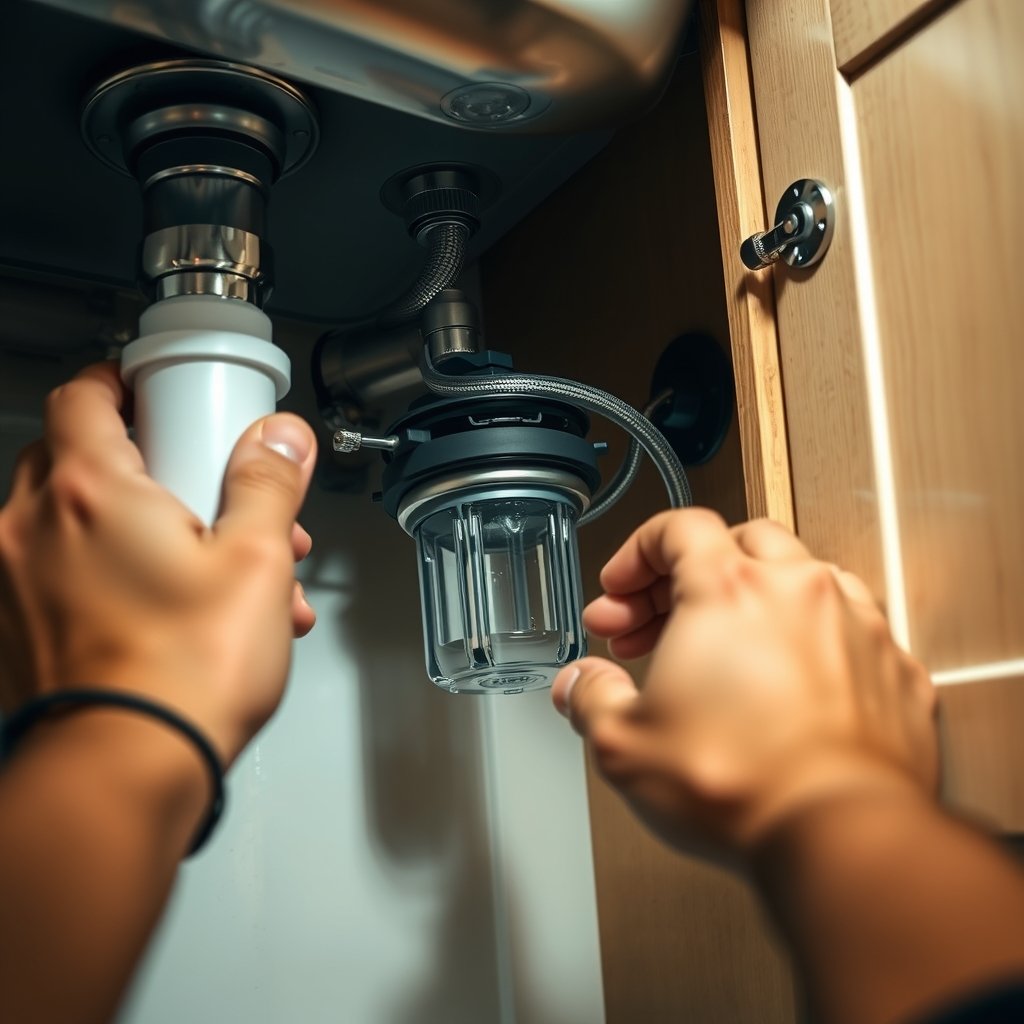
Installing an under sink water filter involves cutting into the cold water supply line, possibly drilling the countertop or sink for a dedicated faucet, mounting filter modules, and connecting everything leak-tight. If you’re moderately handy, a standard RO unit takes 1.5–4 hours DIY with household tools. Expect basic wrenches, a bucket, tubing cutter, and possibly a drill.
Tankless RO and larger systems with electronics or boosters may be best left to the pros. Professional installation is usually completed in 2–4 hours and costs $200–$400. Maintenance for most under sink water filter models simply means turning off the valve, twisting out cartridges (for quick-change systems), and swapping a new filter in—no need for channel locks or heavy plumbing, and the process is easier than servicing garage storage systems.
Choosing the right system for your home (selection criteria & quick checklist)
- Get your water tested: Know if you need heavy-metal or nitrate removal (RO) or just taste/sediment improvement (carbon filter).
- Calculate daily use: Households using 2+ gallons per day should consider systems with higher gallons-per-day ratings.
- Wastewater tolerance: If you’re in a drought zone, prioritize low-waste RO units or consider non-RO filters.
- Check cabinet space: Tankless RO is ideal for tight cabinets; tanked systems need more room.
- Budget: Add up upfront + annual filter replacement (typically $100–$200); check warranty and support response time.
- Replacement ease: Quick-change cartridges mean less mess and no tools needed for annual service.
- Warranty & support: Ask about replacement part availability and response time—think ahead like you would with smart home tech.
Cost-saving tips & high-value features to prioritize
- Low-waste RO: Modern designs and permeate pumps can cut waste by half—good for your utility bill and the planet.
- Quick-change cartridges: Look for filter heads with twist-in, no-hassle action, making replacements quicker than changing a lightbulb.
- Tankless designs: Higher upfront, but more space under the sink and faster flow—fewer moving parts equals less maintenance.
- Filter subscriptions: Some brands auto-ship the right replacements at a discount—no hunting for models or missed replacements.
- Shop off-season: Buy during spring or Black Friday sales, just as you would when searching for energy saving upgrades.
Remember: Your best kitchen water filter system is the one whose ongoing costs (typically $100–$200 per year) you can reliably manage and maintain.
Model recommendations + who each is best for (format: use-case callouts)
- Budget, non-RO under-sink filter: Best for renters and city dwellers who want improved taste/odor but don’t face significant contaminants. Easy install water filtration, low maintenance, and typically $120–$200 upfront.
- Standard 3–4 stage RO with tank: Best for most families with mixed water quality challenges and moderate under-sink space. Good balance of cost and purification; fits most kitchens.
- Tankless under-sink RO: Best for modern kitchens, tight cabinets, larger families, or those needing high daily throughput. Expect to pay a premium for performance.
- Quick-change cartridge systems: Best for busy, time-pressed owners who want no-tool maintenance and the least hassle. Ideal if you want spouse- or landlord-friendly upgrades.
Competition is intense; popular brands like iSpring, Aquasana, Culligan, and 3M make up about 15% of the market, so shop for support and filter cost as much as for logos.
FAQ — quick answers to buyer’s top questions
How often should I change filters and RO membranes?
Most filters need replacing every 6–12 months; TFC RO membranes typically last 24–36 months. Always check your model’s guidelines.
How much wastewater does a reverse osmosis system produce?
Standard RO units generate about three gallons of wastewater per purified gallon, though high-efficiency models can lower this ratio.
Can I install an under sink water filter myself?
You can install most units DIY in 1.5–4 hours if you’re comfortable with basic plumbing. Tankless or advanced systems may be best left to professionals.
Will my water pressure drop after installing a filter?
Basic filters cause little change, but most RO systems reduce flow slightly. Modern pump-boosted or tankless designs help maintain strong pressure.
Is a reverse osmosis system overkill if I have good city water?
If your only concern is taste or chlorine, a non-RO under sink water filter will suffice. For fluoride, heavy metals, or extra peace of mind, RO makes sense.
Final decision checklist & next steps (water testing, quotes, installation booking)
Ready to pick the best kitchen water filter system? Use this checklist to move forward:
- Get a water test for your kitchen tap.
- Compare at least three quotes for both equipment and installation.
- Calculate 5-year total cost—consider upfront price ($300–$1,200), annual filters ($100–$200), membrane life (24–36 months), expected wastewater (3:1 ratio), and installation hours required (2–4 hours typical).
- Decide: Professional install or DIY—go easy-install if you want minimal disruption.
- Order your chosen system; schedule installation or prepare your toolbox.
For other smart kitchen improvements, you might also consider our actionable guides on easy kitchen backsplash ideas or smart thermostat savings.

Investing in an under sink water filter pays off in health, convenience, and peace of mind. Take the next step today and enjoy safer, better-tasting water at every meal.
—