

### Blog Post:
Air quality monitor devices have become essential tools for anyone serious about maintaining a healthy home. But which one should you trust, and how do you set it up so the data actually helps you breathe easier? This actionable guide cuts through flashy marketing to help you choose, install, and maintain an indoor air quality monitor you can rely on for the long haul.
Key Takeaways
- Choose an air quality monitor with reliable PM2.5, NDIR CO2, and metal oxide VOC sensors—don’t get distracted by extra app features you won’t use.
- Regular calibration and proper device placement are essential to avoid sensor drift and maintain trustworthy indoor air data over time.
- Be alert for common coverage gaps: many monitors miss certain pollutants or lack good smart-home integration—always check before buying.
- Why an air quality monitor matters for your home
- 2024–2025 market snapshot: what the numbers mean for buyers
- Typical price tiers and what you get at each level
- Core sensor suite — what sensors matter and common specs
- Top 3 coverage gaps in leading products (the buying risk)
- Most common user pain points in real reviews (last 18–24 months)
- Buying checklist — how to choose the best air quality monitor for your home
- Setup, calibration and maintenance guide to minimize drift and inaccuracy
- App & smart‑home integration: what to expect and demand from vendors
- Quick recommendations by use case (budget, accuracy‑first, smart‑home)
- Appendix — quick facts, troubleshooting, and further reading
Why an air quality monitor matters for your home
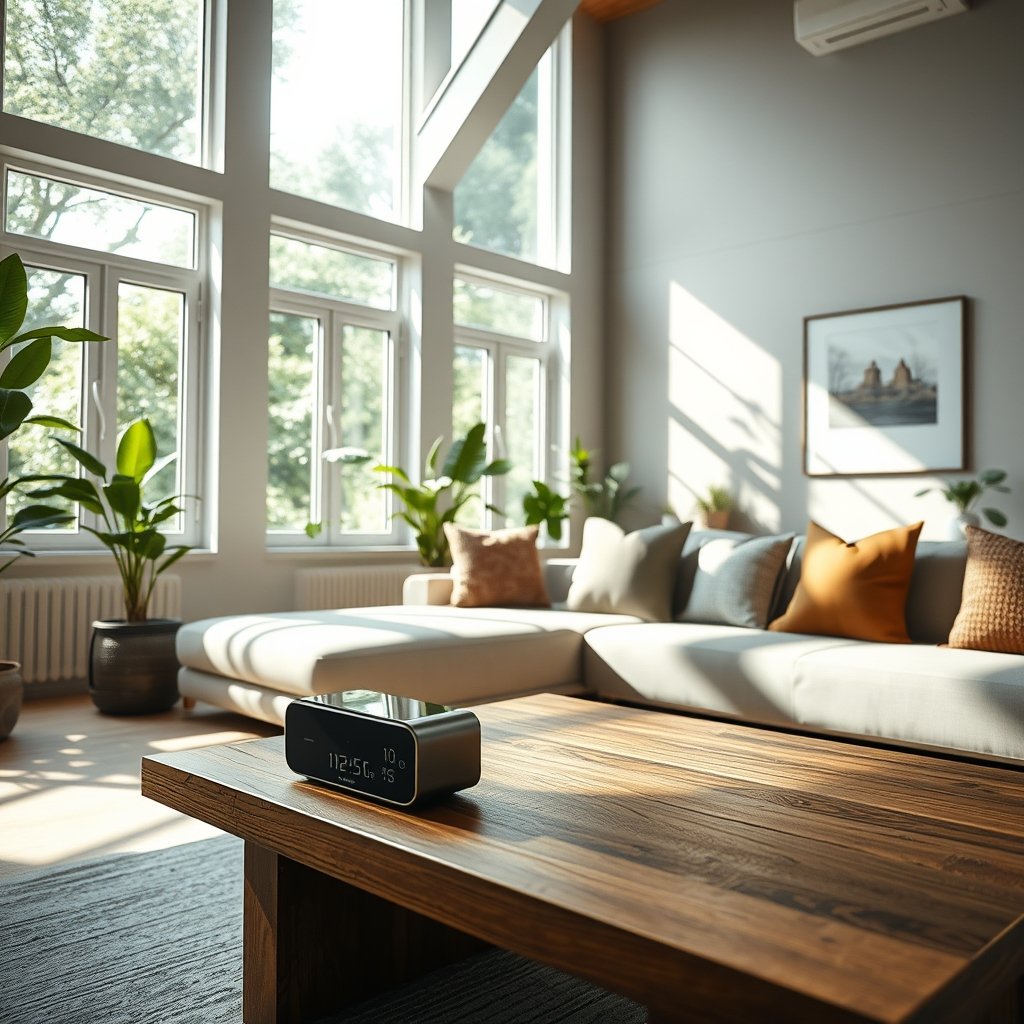
Everyday activities introduce pollutants into your indoor air: cooking sends a spike in tiny particulates (PM2.5), breathing and sleeping build up CO2, and cleaning can unleash volatile organic compounds (VOCs). Even seemingly fresh-smelling homes often harbor pollen, dust mites, and invisible gases that aggravate allergies and respiratory issues. An air quality monitor or indoor air pollution detector helps you identify what’s in your air in real time—so you know when to ventilate, purify, or adjust your habits. For example, a simple roast chicken dinner can send PM2.5 readings soaring—if you catch the spike, you’ll know to open windows or run your hood fan longer.
The market is booming, too: “Consumers are increasingly adopting connected indoor monitors—market revenue grew from about USD 5.0B in 2024 to roughly USD 5.4B in 2025,” according to market research. That means there’s more choice—and more noise—than ever before.
2024–2025 market snapshot: what the numbers mean for buyers
Here’s what the growth means for you as a buyer: the “Global consumer indoor‑AQ monitor market ≈ USD 5.4 billion in 2025 (up from USD 5.0 billion in 2024) with an implied CAGR of ~7.9% and an estimated 25–30 million units shipped in 2025 (assuming ASP ~$180–$220),” per SNS Insider. More consumer demand produces a flood of both budget and premium products—but quality differences (especially sensor longevity and reliability) are widening. This growth brings price competition and faster feature upgrades, but also plenty of lookalike devices with vastly different calibration and accuracy performance.
In short: monitor models are multiplying fast. Don’t assume a higher price or snazzier app equals more trustworthy data for your home. Instead, plan to judge by sensor set, long-term reliability, and real-user reviews.
Typical price tiers and what you get at each level
Understanding price tiers helps set realistic expectations:
- Entry ($80–$150): Basic smart air quality sensor options, typically track PM2.5 only, maybe humidity/temperature, often lack CO2 or full VOC coverage; limited calibration features.
- Mainstream ($150–$250): Most popular segment for the best air quality monitor for home. Includes PM2.5, NDIR CO2, and metal oxide (MOX) VOC sensors; improved apps; some smart-home support.
- Premium ($300–$350): More advanced pollutant detection (sometimes formaldehyde, radon, or ozone), better enclosures, more robust calibration, and multi-platform integrations.
Price points typically span $80–$150 (entry), $150–$250 (mainstream), and $300–$350 (premium). Check out our portable power station guide for similar tier breakdowns in other home tech categories.
Core sensor suite — what sensors matter and common specs
For reliability, focus on three essentials:
- PM2.5 sensor: Detects fine particulate matter from cooking, candles, pets, or traffic. Quality monitors use a laser-scattering sensor—fast, sensitive, but can drift if ignored.
- NDIR CO2 sensor: Non-dispersive infrared (NDIR) sensors for carbon dioxide. Key for monitoring sleep and crowded rooms—high CO2 means poor ventilation.
- Metal oxide VOC sensor: Tracks volatile organic compounds (VOCs) from cleaning, off-gassing, or new furnishings. Not all VOC sensors are the same—look for reputable brands.
Most models also monitor humidity and temperature. “Most devices combine a laser‑scattering PM2.5 sensor, an NDIR CO2 sensor and a metal‑oxide/VOC sensor (often supplemented by temperature and humidity probes).” That’s the starter kit for reliable measurement—anything less is a compromise. If you want to monitor humidity and CO2 alongside particulates, aim for mainstream models or above.
Top 3 coverage gaps in leading products (the buying risk)
Even leading smart air quality sensor brands have blind spots. Market research shows three recurring risks you should factor into your decision:
- Incomplete pollutant panels: Many omit formaldehyde, ozone, ultrafine particles—so you won’t get the full exposure story, especially in newer homes or cities with ground-level ozone spikes.
- Weak calibration/drift compensation: Accuracy can degrade in just months without robust on-device recalibration. Some brands only support manual recalibration or require app actions you may forget to do.
- Limited smart-home support: Many monitors don’t natively link to Apple HomeKit, Google Assistant, or Zigbee/Matter, which means your automations (e.g., having a purifier kick on when PM2.5 spikes) may not work as expected.
“Three frequent coverage gaps: (1) incomplete pollutant panels (many omit formaldehyde, ozone or ultrafine particles); (2) inadequate on‑device, automated calibration/drift compensation; (3) limited native integration with major smart‑home ecosystems (Apple HomeKit, Google Assistant, Zigbee/Matter).”
Avoiding these gaps makes the difference between actionable, long-term data and another gadget gathering dust. For alternatives, see our solar outdoor lights piece for how to spot similar ecosystem issues in adjacent product areas.
Most common user pain points in real reviews (last 18–24 months)
Thousands of buyers have shared what actually trips them up, most of which aren’t advertised on the box. Some true quotes from recent reviews include:
- “My PM2.5 readings lag by up to 10 minutes behind my kitchen cooking smoke.”
- “After six months, VOC numbers started to ‘stick’—required manual recalibration.”
- “The app takes forever to load real-time graphs and sometimes fails to sync outside WiFi range.”
- “Lost four days of data when the WiFi dropped out.”
In summary: “Reviews consistently cite: perceived inaccuracy/lag in PM2.5 and VOC vs reference instruments; periodic manual recalibration required to curb sensor drift; clunky/slow mobile apps; intermittent Wi‑Fi/Bluetooth connectivity disrupting continuous monitoring.” If this sounds like a deal-breaker, remember: manual calibration and app updates are important as build quality. For more tips on troubleshooting connectivity issues, see our recurring shred of advice in robot mower reviews.
Buying checklist — how to choose the best air quality monitor for your home
- Sensor Essentials: Prioritize laser-scattering PM2.5, NDIR CO2, and credible metal oxide VOC sensors. Avoid models with only “odor” or “dust” labels.
- Calibration Policy: Look for devices with automated or app-guided calibration features and check vendor FAQs for sensor drift warnings.
- Update Cadence: Ask about firmware and app update schedules for bug fixes and data export improvements.
- Smart‑home Support: Check if the monitor has native Apple HomeKit, Google/Matter, or open API support. Integration lets you automate purification or HVAC actions.
- Warranty & Spares: Confirm 1+ year warranty, and ask about sensor longevity and replacement part availability—especially for CO2 and PM modules.
- Price/Value Fit: Expect PM2.5 laser scattering, NDIR CO2 and metal‑oxide VOC in most mainstream devices; price tiers typically $80–$350.
- Red Flags: Avoid no-name brands with vague specs, no sensor breakdown, or promises of “calibration-free for life.”
Take these same principles you’d apply to other smart devices—see our DIY backsplash guide about product reliability and setup tips that also apply here.
Setup, calibration and maintenance guide to minimize drift and inaccuracy
- Pick an open space out of direct sunlight and away from vents for initial placement.
- Plug in the air quality monitor and let sensors “warm up” per manufacturer’s instructions (usually 1–2 hours for best accuracy).
- Document initial baseline readings in a note or app. Consider comparing to a neighbor’s monitor for a sanity check, if possible.
- Check for firmware or app updates and apply them before regular use.
- Schedule routine calibration every 3–6 months, or whenever readings appear unstable—follow the manual, or refer to online support guides.
- Gently wipe the device exterior and vents with a microfiber cloth every few months (never use liquids directly).
- Periodically compare to outdoor air data (from a reputable local air station) to spot obvious anomalies, like “zero” PM2.5 on a bad-smog day.
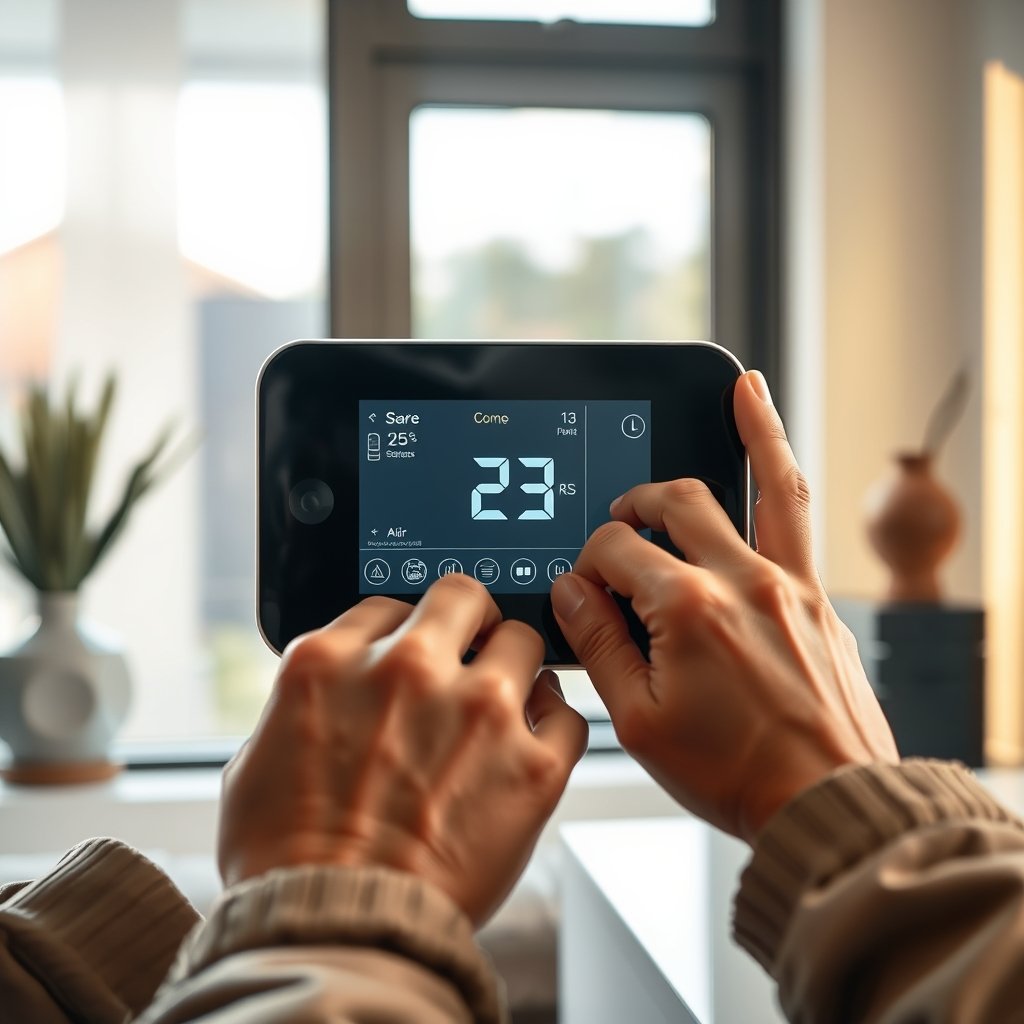
Research shows inadequate automated calibration is a common vendor gap—users frequently must manually recalibrate to curb sensor drift (a common complaint in reviews). For step-by-step maintenance reminders, see how we organize similar tips in our home systems article.
App & smart‑home integration: what to expect and demand from vendors
The best air quality monitor for home isn’t just about the hardware—it’s about the app and ecosystem. Look for:
- Real-time charts that update every minute—not just hourly summaries.
- Downloadable/exportable data for long-term tracking or sharing with your physician.
- Local data option in case you want to reduce cloud uploading for privacy.
- Actionable notifications for high PM2.5, CO2, or VOCs, not just daily “score” updates.
- Smart‑home integrations: The ability to automate air purifiers, HVAC, or window openers via Apple HomeKit, Google/Matter, or open APIs.
“One of the top gaps is limited native integration with major smart‑home ecosystems (Apple HomeKit, Google Assistant, Zigbee/Matter), causing friction for automated mitigation.” Before you purchase, ask vendors specifically: “Does this device have HomeKit/Matter/Google integration out of the box? Are data logs exportable? How often do you update the app?”
For comparison, check our review of smart outdoor lighting and how open APIs can make—or break—the value of connected devices.
Quick recommendations by use case (budget, accuracy‑first, smart‑home)
| Use Case | Core Features to Prioritize | Recommended Price Tier | Why Choose |
|---|---|---|---|
| Budget | PM2.5 + humidity sensor | $80–$150 | Essential coverage for most households, no frills. |
| Accuracy‑First | Laser PM2.5 + NDIR CO2, proven app, calibration option | $150–$250 | Best for allergy/asthma management, long-term reliability. |
| Smart‑Home Power-User | Full API/smart-hub support (HomeKit, Matter), all key sensors | $300–$350 | Integrates with automations for truly responsive mitigation. |
Match needs to typical price tiers: entry $80–$150, mainstream $150–$250, premium $300–$350. For further insight on aligning features to life stage or budget, see our comprehensive home tech resource.
Appendix — quick facts, common troubleshooting steps, and recommended further reading
- Quick baseline numbers: PM2.5: 0–12 µg/m³ (good), CO2: < 800 ppm (safe), RH: 30–50% (comfortable), VOC: as low as possible.
- Common troubleshooting: Reboot device if offline, reset WiFi, recalibrate when numbers get “stuck,” clean intake grill monthly, check for firmware updates quarterly.
- Further reading: See these trusted sources for more independent validation and tips:
Market size ~USD 5.4B in 2025, reflecting growing consumer adoption and product variety.

Conclusion
The right air quality monitor is the one you can trust—day in and day out. Skip feature bloat. Focus on proven sensors, calibration transparency, and real-user data. Take control: test, calibrate, and integrate to make your indoor air not just monitored, but healthy. Ready to upgrade your home? Start your search today and breathe smarter for years to come.
Frequently Asked Questions
What does an air quality monitor actually measure?
Most devices track fine particulates (PM2.5), carbon dioxide (CO2), and VOCs (volatile organic compounds). Mainstream monitors also record humidity and temperature for a full snapshot of indoor conditions.
How often should I calibrate my air quality monitor?
Check calibration every 3–6 months, or when readings appear unusual. Some devices offer auto-calibration; others require manual adjustment via the app or a dedicated button.
Where should I place my air quality monitor?
Place it in a central living area, away from direct sunlight, vents, and doors. For best results, spend a week each in key rooms like the bedroom and kitchen to detect different pollutant sources.
What if my readings seem way off?
Try rebooting the device, ensuring WiFi connectivity, and performing a manual calibration. If results stay “stuck,” compare with a second monitor or an outdoor reference station—then contact vendor support.
Which indoor air pollution detector is best for allergies?
Look for a model with accurate PM2.5 and CO2 sensors, strong review history, and an app that quickly alerts you to spikes. Mainstream ($150–$250) monitors usually hit the right balance.
—