

### Blog Post:
Aging in place home modifications are more important than ever for families who want to help loved ones remain safe, comfortable, and independent at home. But most houses aren’t ready, and planning the right projects — on a budget, on a timeline — is challenging. This guide prioritizes steps and helps you avoid costly surprises.
Key Takeaways
- Most older adults want to age in place, but only about one third of homes are ready — early planning minimizes emergencies and overspending.
- Know the installed costs, lead times, and how to vet contractors to avoid rework, delays, and out-of-pocket maintenance headaches.
- Start with safety essentials (like grab bars), plan access upgrades, and address comfort last — then fund smartly using proven local and national options.
- Why act now? The gap between desire and readiness
- Adoption patterns by age and region — who’s already upgrading?
- Cost-by-item: realistic installed prices
- Cost-by-item continued: ramps and stairlifts (access solutions)
- Top real-world pain points families face
- Project prioritization: what to do first (safety, access, comfort)
- Timelines and a sample 3-month and 6-month plan
- How to vet and hire contractors (reduce risk of rework/delays)
- Maintenance, warranties, and lifecycle costs to plan for
- Funding and financing options (practical sources)
- Actionable next steps + printable checklist
- FAQ
Why act now? The gap between desire and readiness
There’s an urgent gap between where families are and what they need. Recent research shows, “Roughly three-quarters of U.S. adults age 50+ say they want to age in place, yet only about one-third report their homes are already ‘aging-ready.’”[1] If you wait until a fall or emergency, costs spike, choices shrink, and you’ll be forced to make rushed decisions, often at a premium. Starting aging in place home modifications early gives families time to plan the right projects — not just the fastest band-aid fix.
Adoption patterns by age and region — who’s already upgrading?
Adoption of aging in place home modifications rises with age — and where you live also matters. “About 55% of households with a resident aged 65–74 have added at least one safety feature; approximately 70% for those 75+; around 80% for the 80+ group, with higher uptake in the Northeast and West (~68% of older-adult households) versus the South and Midwest (~55–60%).”[3]
This means families in high-adoption regions may face longer waits for qualified contractors — start early, and benchmark your project against regional trends.
Learn about related trends with our guide to accessory dwelling unit garage conversion for multi-generational living.
Cost-by-item: realistic installed prices
Unplanned upgrades often turn into wallet-draining emergencies. Here’s what you need to budget for the most common safety upgrades:
| Item | Installed Cost Range | Median Cost |
|---|---|---|
| Walk-in tub for elderly / shower (pro) | $12,000 – $15,000 | $13,500 |
| Grab bars bathroom installation | $100 – $400 | $250 |
These numbers are for professional installation and apply to most average homes. Always get multiple quotes and request written breakdowns of labor, materials, and warranty.[4]
For other bathroom projects on a budget, see our cost breakdowns for small bathroom remodels.
Cost-by-item continued: ramps and stairlifts (access solutions)
Access upgrades like ramps and stairlifts are often the most crucial (and costly) for preserving independence. Wheelchair ramp cost varies by length, material (wood, aluminum, concrete), and site prep. “Wheelchair-access ramps: $1,000–$5,000 (median ≈$2,800); Residential stairlifts: $3,400–$27,000 (straight-run median ≈$6,200; curved models median ≈$15,000).”[3]
DIY kits can save money on some ramps, but mistakes lead to wasted material and failure to meet code. Straight stairs cost far less than custom curved or spiral layouts — and permit/inspection fees add to your stairlift installation cost.
See also our in-depth guide on aging in place home modifications for a full feature checklist.
Top real-world pain points families face
According to leading studies, families consistently report three pain points with aging in place home modifications:
- Long lead times — walk-in tubs can take 3–6 months; ramps and stairlifts, 4–8 weeks
- Unreliable or under-qualified contractors, leading to rework, code issues, project delays, and extra fees
- Ongoing maintenance demands, including stairlift servicing, walk-in tub seal replacement, ramp surface wear/tear — usually not covered by warranty
These challenges can upend plans and budgets if not anticipated. Experienced families recommend focusing on both moisture-resistant solutions in wet areas and surface upgrades that minimize trip hazards.
Project prioritization: what to do first (safety, access, comfort)
With limited budget and time, project order is critical. Use this simple 3-tier approach:
- Immediate Safety Fixes: Grab bars bathroom installation, non-slip flooring, handrails — quick, affordable, highly impactful.
- Access/ADL (Activities of Daily Living) Solutions: Ramps, stairlift installation cost, walk-in tub for elderly — higher cost, major function improvement.
- Comfort/Long-Term Investments: Wider doorways, smart lighting, lever-style doorknobs — plan these after the core needs are met.
Example: “Since grab bars are low-cost ($100–$400, median ≈$250), they’re high-impact, low-effort first steps before higher-cost installs like walk-in tubs (~$12,000–$15,000).”
Need inspiration for a layered upgrade? Our ADU conversion planning guide shows how to sequence projects for maximum independence.
Timelines and a sample 3-month and 6-month plan
Here’s what realistic project timelines look like:
- Walk-in tubs/showers: 3–6 months (from assessment to install, including ordering and permitting)
- Wheelchair ramp cost and stairlift installation cost: about 4–8 weeks, sometimes longer for curved or customized models
- Grab bars, handrails: Usually 1–2 weeks from order to completion
Example action plan for families:
| Action Step | 3-Month Plan | 6-Month Plan |
|---|---|---|
| Safety Audit | Week 1 | Month 1 |
| Obtain Bids | Weeks 2-3 | Months 2-3 |
| Finalize Contractor | Week 4 | Month 4 |
| Order Materials | Week 5 | Month 5 |
| Installation & Inspection | Weeks 7-12 | Month 6 |
How to vet and hire contractors (reduce risk of rework/delays)
Don’t skip due diligence — “Unreliable or under-qualified installers are a common source of costly rework and code issues that cause delays and extra fees.”[1]
- Require proof of state/municipal contractor license (verify with issuing authority).
- Request at least 3 recent references (ask about reliability and results, not just price).
- Ask for a portfolio of similar aging in place home modifications — not just “general” work.
- Demand a written scope, clear payment schedule, and warranty documentation.
- Confirm who handles permits and city inspections.
- Look for red flags: evasive answers, pressure sales tactics, or refusal to put terms in writing.
Our garage storage system guide has extra tips on hiring reputable, insured installers for large home projects.
Maintenance, warranties, and lifecycle costs to plan for
“Families report routine maintenance needs — regular mechanical servicing for stairlifts, seal replacement for tubs, and ramp surface wear — often outside warranty coverage and driving unexpected out-of-pocket expenses.”[8] Neglecting this side of the budget leads to unwelcome surprises:
- Stairlifts: Annual or bi-annual mechanical/track service (avg. $200–$500/year not covered by basic warranties)
- Walk-in tub for elderly: Seal and pump maintenance every two to three years (often $150–$300 per visit if not included)
- Ramps: Non-skid strip replacement, repainting for wood, surface checks for wear ($100–$300/year average)
Before signing, clarify what’s covered and for how long. Be sure to document servicing needs in your annual calendar to avoid crisis repairs.
Funding and financing options (practical sources)
Covering aging in place home modifications does not have to mean draining savings. Explore these sources:
- Medicaid Home & Community-Based Services (HCBS) Waivers: If your parent qualifies, these may cover certain safety access modifications — check your state’s options.
- Local Grants or “Safe at Home” Programs: Many city/county governments and nonprofits support lower/moderate-income seniors — contact your Area Agency on Aging.
- VA and ADA Home Modification Programs: Veterans and qualifying disabled homeowners may receive partial or full reimbursement.
- Required Minimum Distributions (RMD) Reinvestment: “Many seniors reinvest RMDs into aging-in-place home modifications.”[10] Check with your tax advisor on penalty-free use.
- HELOC or Cash-Out Refinance: For larger projects, some opt for a home equity loan (always check total repayment costs and eligibility).
Want to compare funding smartly? Our home equity loan for renovation guide breaks down pros, cons, and rates in plain English.
Actionable next steps + printable checklist
Ready to move forward? Here’s a 6-point checklist you can start this week:
- Perform a basic home safety audit (doors, floors, bath, lighting) — enlist a trusted friend or trusted occupational therapist.
- Draft a prioritized budget using the cost-by-item tables above.
- Get at least 3 detailed quotes from area contractors, plus check for local grant eligibility.
- Verify contractors’ insurance, license, and experience with aging in place home modifications.
- Set a shared timeline for each project, accounting for lead times and material delivery.
- Build a recurring maintenance plan (calendar reminders for service and warranty checks).
Download our free planner and printable checklist for budgeting and contractor interviews — keep your process organized and stress low.
With about 75% of adults wanting to age in place but only around 34% “aging-ready,” a quick audit and prioritized plan can close that gap before needs become urgent.
What are the most cost-effective aging in place home modifications?
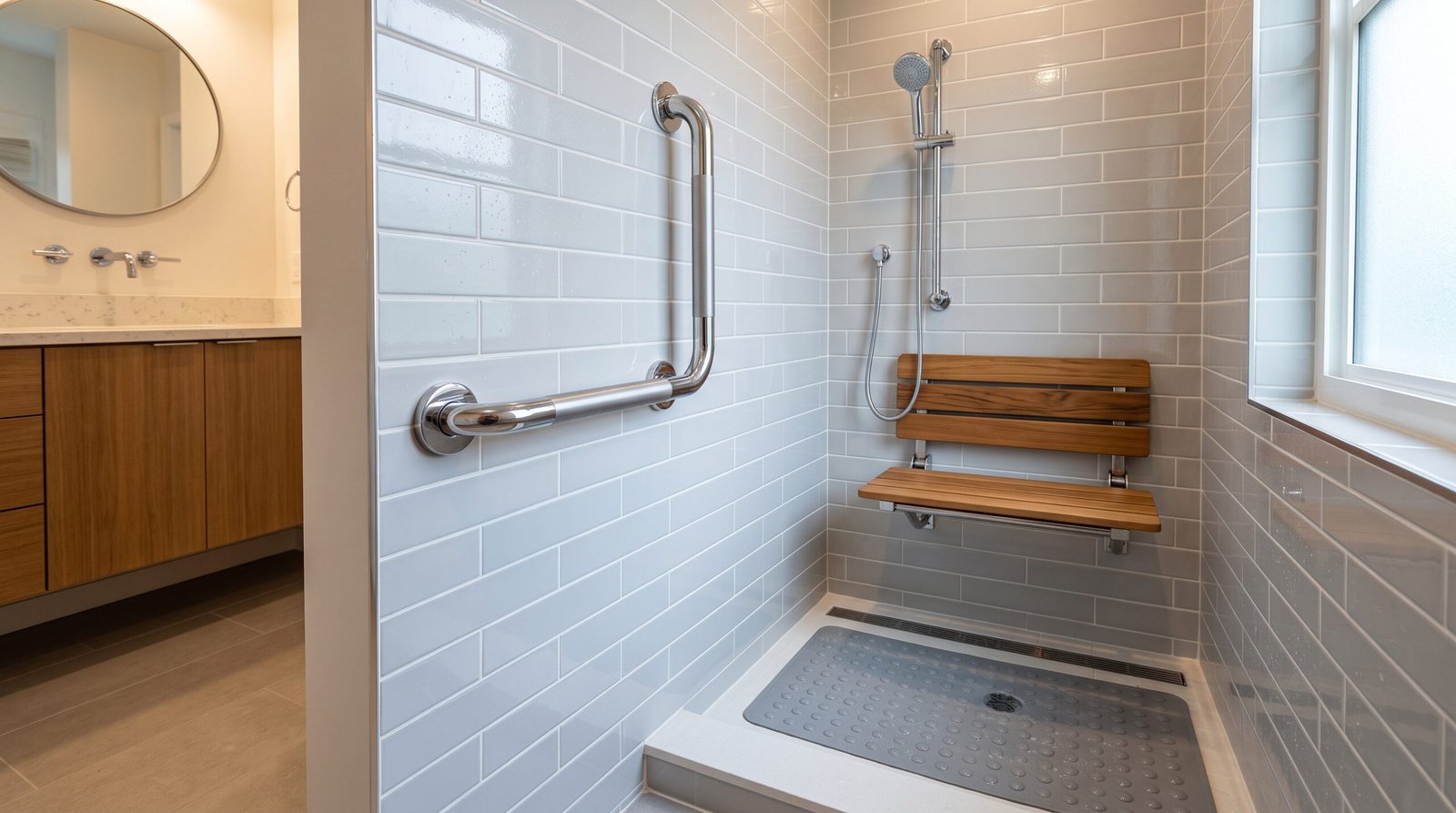
Grab bars in the bathroom, improved lighting, and non-slip flooring typically deliver the most safety for the lowest cost. These can often be installed with minimal lead time and no major structural work.
How long does it really take to install a walk-in tub, ramp, or stairlift?
Walk-in tubs or showers usually take 3–6 months from assessment to final inspection. Ramps and stairlifts are faster (about 4–8 weeks) but may stretch longer in the winter or in high-demand regions.
How can I tell if a contractor is qualified for aging in place home modifications?
Ask for a copy of their contractor license, confirm experience with accessibility projects, request references from the last 6 months, and ensure they provide a detailed written scope with warranty info.
Are maintenance costs for things like stairlifts and ramps covered by warranty?
Usually, only major defects are covered. Routine servicing (like stairlift checks or tub seal replacement) is often excluded — budget $200–$500/year for out-of-pocket upkeep.
What funding is available if my parent is not low-income?
Explore Veteran and ADA programs, tax-advantaged use of Required Minimum Distributions (RMDs), home equity loans, or local rebates. Some market-rate grants are open to all, depending on your county or municipality.
—